Article 87 · Sabine Pass LNG expansion and Europe's Russian gas ban
Cheniere's newly approved Louisiana gas expansion ships from 2030, three years after Europe's Russian LNG ban starts
US regulators let Cheniere, which calls itself the leading US exporter of liquefied natural gas, add three production lines in Louisiana. Europe has to replace more than 20 billion cubic meters of Russian LNG a year from January 1st, 2027, with plants already running.
What Sabine Pass is, and why Europe cares
Liquefied natural gas, or LNG, is natural gas cooled into a liquid so that ships can carry it across oceans. Sabine Pass, in Cameron Parish, Louisiana, is an LNG export terminal on the US Gulf Coast.
Cheniere Energy runs it. Cheniere calls itself the leading producer and exporter of LNG in the United States. Its six existing production lines at Sabine Pass, called trains, can make more than 30 million metric tons a year, per its third-quarter report.
Europe is why this matters far from Louisiana. About 56.6% of the EU's LNG imports in 2025 came from the US, per S&P Global Energy CERA data. Russia was second, with about 13.9% (Figure 1).
From January 1st, 2027, the EU bans the rest of the Russian LNG it still buys. The new US supply that regulators approved on November 19th is due in 2030.
Where the EU's LNG came from in 2025
What the US regulator approved
The Federal Energy Regulatory Commission (FERC) is the US agency that licenses LNG terminals. On November 19th, 2026, it voted unanimously to let Cheniere build and run Trains 7, 8 and 9 at Sabine Pass.
Cheniere estimates the three trains could add up to about 20 million metric tons a year. The Center Square, a US news service, says that would raise the terminal's capacity by roughly two-thirds.
The same order covers two pipelines that bring gas to the terminal. Sabine Crossing Pipeline may build a new 55.6-mile line from near Moss Bluff, Texas, at an estimated $1.63 billion. Cheniere Creole Trail Pipeline may expand its line, at an estimated $390 million.
FERC's chairman, Laura V. Swett, said the commission was "bringing critical new energy supplies online." The main players on both sides of the Atlantic are pictured below.

Laura V. Swett
Chairman, Federal Energy Regulatory CommissionPresident Donald Trump appointed her in October 2025. She said the commission approved 61 natural gas projects over the past 12 months.
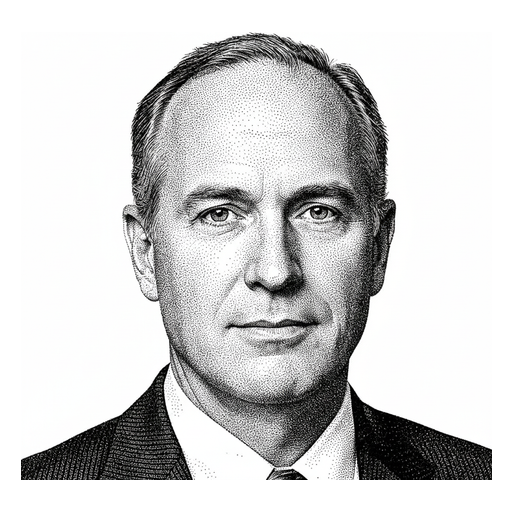
Jack Fusco
Chief executive, Cheniere EnergyHe told investors in October that Cheniere would decide on the first phase very quickly once approvals arrive.

Dan Jørgensen
European Commissioner for EnergyIn late September he asked EU member states to reduce demand for gas and electricity, Corbeau writes.
Why the new gas waits until 2030
The approval is a license, and the trains are not built. Cheniere still has to take a final investment decision, the point at which a company commits to build.
Cheniere says that decision depends on regulatory approvals and on acceptable commercial and financing arrangements. One approval is still missing. The US Department of Energy has not ruled on exports to countries without a US free trade agreement, per its public docket, No. 24-27-LNG.
Cheniere plans to build in phases. The first phase is one train, Train 7, with more than 6 million tonnes a year of capacity. Cheniere signed its construction contract with Bechtel Energy in May 2026.
Jack Fusco, Cheniere's chief executive, told investors in October that the company would decide "very quickly thereafter" once approvals arrive. Cheniere expects first exports from Train 7 in 2030 (Figure 2).
Part of one sales deal depends on that decision. In October, Cheniere's Sabine Pass and Corpus Christi units agreed to supply QatarEnergy of Qatar with up to 4 million tonnes a year. The deliveries run from the early 2030s through 2054, and 1 million tonnes a year of it depends on a positive investment decision.
From license to first gas
- November 2025The Department of Energy lets Cheniere export from the three new trains to countries with a US free trade agreement.
- January 26th, 2026EU governments give final approval to the ban on Russian gas and LNG.
- April 25th, 2026The EU ban on Russian LNG under short-term contracts applies.
- May 2026Cheniere signs the construction contract for Train 7 with Bechtel Energy.
- October 2026Cheniere agrees to supply QatarEnergy with up to 4 million tonnes a year from the early 2030s.
- November 19th, 2026FERC votes unanimously to authorize Trains 7, 8 and 9 and two pipelines.
- January 1st, 2027The EU ban on Russian LNG under long-term contracts applies.
- 2030Cheniere expects first exports from Train 7.
What Europe loses on January 1st, 2027
The Council of the EU, where member governments vote, gave final approval to a stepwise ban on Russian gas on January 26th, 2026. Russian LNG under short-term contracts was banned from April 25th, 2026. LNG under long-term contracts follows on January 1st, 2027.
Anne-Sophie Corbeau is a global research scholar at Columbia University's Center on Global Energy Policy. She says the EU imported more than 20 billion cubic meters of Russian LNG in 2025. She writes that the ban takes away about one-sixth of the EU's LNG supply. That gas goes to Belgium, France, the Netherlands and Spain.
Buyers with long-term contracts include TotalEnergies in France and Naturgy in Spain. Ivan Hortal Sanchez of the campaign group Razom We Stand named them to The Parliament Magazine.
Europe goes into winter with low gas storage, Corbeau writes. EU storage was 71.25% full on November 12th, per Gas Infrastructure Europe data cited by S&P Global. Corbeau expected about 75% at the start of winter, against a 90% target in the EU's 2022 storage rules.
Where Europe's replacement gas can come from
Europe has to replace the Russian cargoes with gas from plants that already run. US plants have little room left. In March, US terminals ran at roughly 94% of peak capacity, per a Bernstein note cited by Investing.com.
New supply before the end of winter is thin. Corbeau writes that only two to three new trains worldwide are expected to start, including Golden Pass LNG Train 2.
The war around the Strait of Hormuz has also cut LNG from Qatar and the United Arab Emirates this year, she writes. Europe will have to compete directly with Asia for cargoes, in her words.
On November 12th, Platts, part of S&P Global Energy, assessed that sending US Gulf Coast cargoes to north Asia did not pay. That favors delivery to Europe's side of the Atlantic.
What to watch, and by when
Two decisions are still open in the US, and one date is fixed in Europe.
- A final investment decision on Train 7, in a Cheniere press release or filing. Cheniere has given no date.
- The Department of Energy's order on exports to countries without a US free trade agreement, in docket 24-27-LNG.
- January 1st, 2027, when the EU ban on Russian LNG under long-term contracts applies. In a declared emergency, the European Commission may suspend the ban for up to four weeks.
- EU storage levels after January 1st, in Gas Infrastructure Europe's data.