Hormuz Is Open for Oil and Shut for Gas. Europe's Winter Pays the Bill.
Eight months into the Iran war, Gulf crude has found its way out but Qatari gas has not. Physical oil trades far above the futures most hedges use, war cover swings with every attack, and the market is pricing a return to normal it already got wrong once.
Special report October 21, 2026 Vektora
Sources76 cited
As of21 Oct 2026
10.9million barrels a day
Oil through the Strait of Hormuz, by quarter as the EIA measures it1,2, and in September as the IEA measures it3. Before the war about 20 million barrels a day passed through4.
The Strait of Hormuz is neither closed nor open: it is open for crude and nearly shut for gas. In September 10.9 million barrels a day of oil moved through the Strait, against about 20 million before the war3,4. Counting the pipelines that run around the Strait, Gulf crude exports reached over 75% of pre-war levels3. Qatari and UAE liquefied natural gas (LNG) supply is set to fall about 45% this year5.
The cost has landed where a futures screen does not show it. Physical North Sea crude traded near $134 a barrel in mid-October while Brent futures sat near $1073. Dutch gas settled at 86.64 euros per megawatt hour on 20 October, up 169% on a year earlier6, with European storage at 74.6% against a five-year average of 89.2%7. War-risk cover for a tanker cost 6% to 10% of its hull value in October, against about 0.25% before the war8.
The rules now bite as hard as the war. Paying Iran for passage, or taking its "safe passage" guarantees, is not authorised under US sanctions9, and the EU has listed the naval command that runs the toll system10. Shipowners' insurers end cover where a voyage becomes sanctionable11. On 1 January 2027 the EU's ban on Russian LNG under long-term contracts takes effect12.
The market is pricing a war that fades in 2027, as it did in July. The IMF assumes the Strait starts to reopen in March 2027 and reads futures as pointing to a gradual return of flows from early 202713. The June memorandum that last opened the Strait collapsed within weeks14. Our call: buy winter gas cover and price war risk voyage by voyage now. Keep both in place until Qatari LNG is seen moving through the Strait in volume, after a truce that holds.
Crude is leaving the Gulf at about half its pre-war rate through the Strait, but gas and refined products are not coming back.
Fig. 1Oil has ways around the Strait. Qatar's gas does not
Chokepoints and sea lanes
Pipelines and export ends that avoid the Strait
Damaged gas plant
Red SeaPersian GulfGulf of OmanGulf of AdenRiyadhAbqaiqJeddahDohaSaudi ArabiaYemenIranOmanEthiopiaIraq
200 km
Pipeline and lane lines are drawn to show the direction of flow, not the exact path. Borders: Natural Earth.
Sources: insurancebusinessmag.com, October 14, 20268; hellenicshippingnews.com15; eia.gov4; hellenicshippingnews.com1
Before the war, about 20 million barrels a day of oil passed through the Strait of Hormuz: about a fifth of world petroleum consumption and more than a quarter of seaborne oil trade4. About a fifth of the world's trade in liquefied natural gas passed the same way, and most of both went to Asia: 84% of the crude and 83% of the LNG4.
The flow collapsed in the spring. The US Energy Information Administration (EIA) puts flows through the Strait at 21.6 million barrels a day in the last quarter of 2025 and 4.9 million in the second quarter of 20261. By 11 March exports through the Strait were below 10% of their pre-conflict level16. That day the 32 members of the International Energy Agency (IEA) agreed to release 400 million barrels from emergency stocks, the largest release in their history16.
September brought much of the crude back. The IEA puts September flows through the Strait at 10.9 million barrels a day, with Gulf crude exports at 13.9 million barrels a day, over 75% of pre-war levels3. Pipelines that carry oil around the Strait did much of the work: exports through them rose to 5.6 million barrels a day3. Lloyd's List counted at least 477 transits by ships not linked to Iran in September, the most since the war began17.
Fig. 2
Where Gulf oil went in September
Million barrels a day. Gulf crude exports include crude sent around the Strait by pipeline.
Gas and refined products did not come back. Middle East exports of refined products were 1.9 million barrels a day in September against 4.7 million before the war, and liquefied petroleum gas was at less than half its pre-war level3. Kpler counted 21 LNG cargoes leaving the Strait in September, up from 15 in June; S&P Global's analyst said the pace could reach about a quarter of pre-war levels in October18.
October went backwards. Kpler data cited by Al Jazeera show 20.8 million barrels passing through the Strait on 8 October and 2.9 million on 11 October19. Lloyd's List recorded at least 13 attacks on tankers or gas carriers since 28 September17.
Trackers disagree because they count different things. Lloyd's List and Kpler count ships and cargoes, including those that cross with their transponders switched off. IMF PortWatch counts transponder signals only, and recorded one commercial transit on 16 August against a pre-crisis median of about 73 a day20. In this report, flows are the IEA's and transits are Lloyd's List's.
02Oil: Two Prices for One Barrel
The physical barrel trades far above the Brent futures contract most hedges are written against, and the official forecasts sit far apart.
Brent futures closed at $108.97 a barrel on 20 October21. The physical North Sea price, Dated Brent, averaged $116.89 in September and traded near $134 when the IEA wrote its October report3. Diesel reached all-time highs of about $220 a barrel in Europe and the United States3. A company that hedged physical crude or diesel with Brent futures has carried that gap.
Dated Brent was $71.32 on 27 February, the day before the war began, and peaked at $138.21 in the second week of April22. Futures peaked at $126.41 intraday on 30 April23. After the June memorandum Dated Brent fell below its pre-war level, then climbed back to $135.51 on 2 October as attacks resumed22.
Fig. 3
Dated Brent through the war
Dollars a barrel, last trading day of each week, from the day before the war to mid-October.
EIA daily spot series. The ceasefire began on 8 April, the Islamabad memorandum on 17 June; attacks resumed on 6 to 7 July and again from late September.
Official forecasts sit far apart, and each assumed an earlier reopening than has happened. The EIA's October outlook has Brent averaging $105 in the fourth quarter and $96 for 202624. The European Central Bank (ECB), working from futures prices to 19 August, assumed $89.5 for 202625. Its severe scenario has oil near $130 and gas at 130 euros per megawatt hour in the fourth quarter, with euro area inflation peaking at 5.4% in 202725. The IMF assumes an average crude price of $95.74 for 202613.
03Gas: Europe's Winter Is the Weak Point
The Gulf's LNG loss is concentrated in Qatar and lands on a Europe entering winter with the emptiest stores on record and a Russian LNG ban due on 1 January.
The IEA expects LNG supply from Qatar and the United Arab Emirates to fall about 45% this year, about 54 billion cubic metres (bcm)5. The world as a whole lost far less: global LNG output fell 4% from March to June, because other producers covered about three quarters of the Gulf loss5. The IEA's forecast assumed the Strait would fully reopen in the third quarter of 20265, which did not happen. Each month without LNG cargoes through the Strait costs about 10 bcm of supply26.
The Dutch TTF benchmark settled at 86.64 euros per megawatt hour on 20 October, up 169% on a year earlier, after topping 88 euros on 19 October, the highest since December 20226. In February it was closer to 32 euros27.
Europe's stores were 74.6% full on 19 October, against 82.8% a year earlier and a five-year average of 89.2%7. The gas grid operators' winter outlook sees a shortfall of 12% to 15% of demand if a severe cold snap meets a disruption of Russian supply and a tight LNG market28. IEEFA estimates the EU may need to use 7% less gas than last winter29. Filling the gap with imports instead would cost about 3 billion euros, 12% more than the same volume cost last year29.
Two dates tighten it. QatarEnergy has extended force majeure on LNG deliveries through November, and for Italy's Edison into early December; Edison says as many as 35 cargoes have not reached Italy this year30. And from 1 January 2027 the EU's ban on Russian LNG applies to long-term contracts as well12.
04Freight and Cover: Who Pays to Move a Cargo
Crude tankers earn record rates while LNG ships earn less than before the war, and war-risk cover swings with every attack and truce without making underwriters money.
Crude shipping is the war's clearest winner. On 15 October the benchmark route for a very large crude carrier from the Gulf to China paid a round-trip $1,412,594 a day31. Frontline, one of the largest tanker owners, reported its best quarterly profit ever, $659.2 million, in the second quarter32.
LNG shipping is the opposite. Spark's Atlantic charter rate was $25,750 a day on 6 October, 91% below its early-March peak of $287,500 and below the $42,750 it stood at just before the war33. With Qatari cargoes trapped and new ships delivered, there are more LNG carriers than cargoes. For gas buyers the pain is the price of the gas, not the cost of moving it.
War-risk insurance never disappeared; its price moved with each attack and truce. Before the war, Gulf trips paid 0.15% to 0.25% of a ship's hull value. On 10 March most Hormuz transits paid 2.5%, ships with US, UK or Israeli links 5%, and high-risk business was quoted at 7.5%34. Rates fell to about 2% after the June memorandum and rose to about 5% in July35. Marsh put them at 7.5% to 10% on 22 July36. In late August they were 3% to 8%20, and in October brokers put tanker premiums at 6% to 10% of hull value8.
The Joint War Committee lists the areas where underwriters charge extra for war risk37. It will not take the Gulf off its list without sustained incident-free passage, a settled geopolitical picture and formal proof that mines have been cleared20.
Higher rates are paying for losses, not producing a windfall. Beazley's profit before tax fell 52.7% to $237.7 million in the first half38, and its chief executive named the political violence and marine war books39. The broker Howden Re estimated the war could generate $2 billion to $3 billion of war, terror and political violence claims40. The US government's $40 billion reinsurance facility had written no business by mid-May, because it covers only ships under US naval escort41.
05Who Wins, Who Pays
Crude shippers, US gas exporters, Saudi Arabia and Europe's refiners are earning from the war; Qatar, European industry and import-dependent Asia are paying for it.
US LNG exporters gain from the gap between American and European gas prices. Cheniere's net income was $3,068 million in the second quarter against $1,626 million a year earlier, and it raised its full-year guidance42. Saudi Arabia gains on price: Aramco's adjusted net income was $33.4 billion in the second quarter, with the East-West pipeline carrying exports away from the Strait43.
Qatar is the largest single loser. It lost about $24 billion of LNG sales in the first six months, shipping 18 cargoes against 509 a year earlier44. On 19 October its deputy prime minister said transit fees "should not be applied" and that "We haven't reached the peak with respect to energy"45.
Two expected winners are not. Russia's oil and gas budget revenue fell 22% year on year in September, to 452.4 billion roubles46. China's imports of Iranian crude through the Strait fell 48% below pre-war levels in July and August, according to Kpler47, which gives Beijing a reason to want the Strait reopened.
Importers pay. Japan's trade deficit was 1.106 trillion yen in August against 294.1 billion yen a year earlier, with crude imports up 58.7% and LNG imports up 29.7%48. In Europe, chemical plants ran at 75% of capacity49.
About $24bn
Qatar's lost LNG sales
$3,068m
Cheniere net income, Q2
-22%
Russia's oil and gas revenue, September
-48%
China's Iranian crude via Hormuz
06The Rules That Bite
The legal exposure operators most underestimate is not the war peril but sanctions contamination of the voyage, which can void cover after the fact.
The US Treasury's Office of Foreign Assets Control (OFAC) says payments to, and guarantees from, Iran's government or the Islamic Revolutionary Guard Corps (IRGC) for passage are not authorised9. The rule covers US persons, US banks and the foreign companies they own or control9. Its alert of 24 August extended the risk to accepting Iranian insurance or answering Iran's information demands, even when nothing is paid50.
Europe followed. Since 8 June the EU lists the IRGC Navy's Hormozgan Provincial Command, which runs the screening and toll system, so an EU operator that pays risks breaching the asset freeze10. On 8 October OFAC designated 17 vessels and 17 companies and warned foreign banks they could lose access to US correspondent accounts51.
Insurers have their own trigger. Shipowners' mutual insurers end cover where business becomes sanctionable, so a voyage that paid the toll may have no claims paid on it11. That exposure runs back up the chain to cargo buyers, lenders and insurers who cannot see what a ship did in transit.
Contracts shift the war loss to the charterer. Under the standard war clause, owners may refuse any area where, in their reasonable judgement, the ship may be exposed to war risks, and it "appears highly likely" they need not transit Hormuz52. War cover itself was cancelled on 72 hours' notice: Gard's cancellation took effect on 5 March, with cover reinstated outside Iran, the Gulf and the Gulf of Oman53.
The Russian LNG ban carries heavy penalties and a stated position on contracts. Member states must allow fines for a company of at least 40 million euros, or a share of its worldwide turnover or of the transaction's value12. The EU calls the ban "a sovereign act of the Union beyond the control of gas importers"12.
07How It Ends
A signed truce is not a safe passage: the path back runs through mine clearance, escorts, crews and the insurers' list, and gas returns after crude.
The war so far
28 February
Strike.
The United States and Israel begin bombing Iran54.
11 March
Announcement.
IEA members agree to release 400 million barrels from emergency stocks16.
18 to 19 March
Strike.
Strikes damage two LNG trains at Qatar's Ras Laffan, about 17% of its exports15.
US midterm elections; an adviser to Iran's speaker said in August Iran must raise tension "focused on oil" before them60.
1 January 2027
Sanctions.
The EU ban on Russian LNG extends to long-term contracts12.
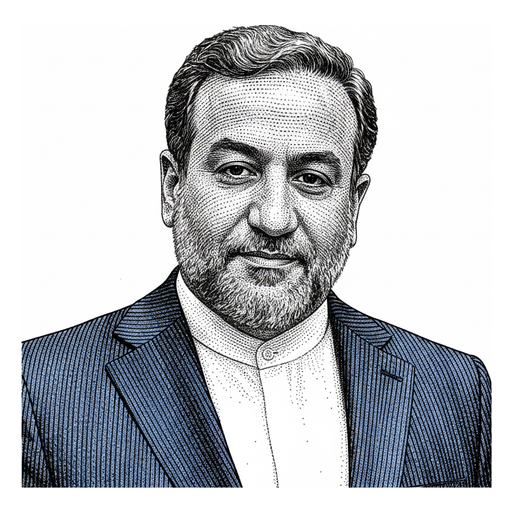
The diplomacy has no date. Iran's foreign minister says the Strait would reopen on the sixth day of his plan and talks would begin on the seventh61. His terms are an end to the US naval blockade, relief from oil sanctions and a ceasefire on all fronts61.
Iran
Abbas Araghchi
Foreign Minister of Iran
Sets Iran's terms: the Strait reopens on the sixth day of his plan, after an end to the US blockade, oil sanctions relief and a ceasefire on all fronts61.
What to watch
Any date attached to the plan's first day
Whether the US answers the blockade demand
United States
Brad Cooper
Commander, US Central Command
Said in late August that US forces had cleared Iranian mines from the transit routes62; his command escorted up to 40 vessels in one day on 1 September56.
What to watch
Independent confirmation of mine clearance that insurers accept
How many ships a day escorts sustain
Qatar
Saad Sherida al-Kaabi
Qatar's Minister of State for Energy Affairs
Says Qatar's LNG could return to normal within a couple of weeks of reopening, apart from the two damaged trains15.
What to watch
QatarEnergy's monthly force-majeure notice
The weekly count of LNG carriers leaving the Strait
Portraits after photographs. Abbas Araghchi: IAEA Imagebank, via Wikimedia Commons, CC BY 2.0; Saad Sherida al-Kaabi: Press Service of the President of the Republic of Azerbaijan, via Wikimedia Commons, CC BY 4.0.
Mine clearance is now a question of proof. The commander of US Central Command said in late August that US forces had cleared Iranian mines from the transit routes62. Iran's deputy foreign minister replied that "no one except Iran knows the locations of these mines"62, and US allies believe the Strait is likely still mined63. The US retired its last four Gulf minesweepers in September 202564.
Escorts can surge crude but cannot run a normal day. Experts told Lloyd's List in March that escorts would cap tanker transits at just under 10% of normal volumes65. Yet on 1 September the US escorted up to 40 vessels carrying about 18 million barrels56. Crews may refuse to sail into the area, which seafarers' unions and employers designated a warlike operations area on 6 March66.
Gas comes back after crude. Qatar's energy minister says LNG could return to normal "within a couple of weeks" of reopening15. That excludes the 17% of exports lost with two damaged trains, which may take up to five years to repair15. A source at QatarEnergy said in June that the bottleneck would be bringing ships in and loading them, with shippers asking for assurances that mines were cleared67.
Cover comes back last. War-risk premiums fell from about 5% to about 2% within six days of the June truce68, and never went lower before attacks resumed. After the Red Sea ceasefire of October 2025, premiums took about two months to fall from 0.5% to around 0.2% of hull value69.
History says the premium and the price spike are not new; the volume lost is. War-risk rates for trips to Kharg reached 7.5% in May 198470, yet the Tanker War never disrupted more than 2% of the ships passing through the Gulf71. In 1990 oil went from about $17 a barrel in June to $40 in mid-October and back to about $20 after Desert Storm began72. When supply was physically withdrawn in 1973, the price went from $3 to almost $12 a barrel and stayed high73.
08Three Ways the Winter Ends
Our scenario run on Europe's year-end gas price finds no path back to a calm market before January, and splits on whether a new shock arrives.
We put the question that carries the most money for this winter through Vektora's scenario method: where the Dutch TTF front-month contract settles on 31 December 202674. The run played out twelve worlds against three price bands: calm below 65 euros per megawatt hour, strained from 65 to 95, and severe above 9574.
None of the twelve worlds lands in the calm band74. Most of the worlds assume a catalyst happens, such as a new strike on Gulf supply, a cold snap or a breakdown in European coordination. They show where those shocks lead, not how likely they are. The run's ordinary path, where the standoff simply continues, settles in the low to mid 70s, and in the mid to upper 80s if Europe's brakes on demand keep working74.
The market sits near the ordinary path. ICE settlements on 29 September priced the winter 2026/27 strip at 68.77 euros75, and the front month settled at 86.64 euros on 20 October6. The brief for this run, with every world, its reasoning and its signposts, is at vektora.md/briefs/ttf-year-end.
Whether the front-month contract settles at or above 78 euros on 6 November, which ten of the twelve worlds expect74.
Whether the first-quarter 2027 contract settles at or above 90 euros on 16 November, which ten of the twelve worlds expect74.
Whether Lloyd's List reports no new tanker attack in the Strait between 21 October and 23 November, which nine of the twelve worlds expect74.
Whether EU storage is below 75% in the week ending 20 November, which only four of the twelve worlds expect74.
09What Each Ending Means for Each Reader
A truce helps oil buyers within weeks, gas buyers within months and insurers last, while a wider war hits every reader at once.
Reader
A truce that holds
The standoff continues
A wider war
European gas buyers and utilities
Prices ease from January as Qatari LNG returns; winter cover bought now costs more than it had to.
Prices stay high through the winter; cover bought now pays off, storage stays thin into spring.
Prices spike toward the severe band; demand cuts become likely; cover bought now is the only protection.
Asian LNG buyers
Qatari cargoes resume first to long-term buyers; spot competition with Europe eases.
Asia keeps bidding against Europe for spot cargoes; long-term contracts stay under force majeure.
The bidding war with Europe sharpens; Indian and Japanese import bills rise again.
Shipowners and charterers
Crude tanker rates fall from record levels; owners of LNG carriers gain as trapped ships return to work.
Crude tanker earnings stay high; owners keep the right to refuse the Strait under standard war clauses.
Voyages through the Strait stop again; crews invoke their right to refuse; war cover may be cancelled at short notice.
Marine and war-risk insurers
Premiums fall fast at first, then stall above pre-war levels until passage stays safe for months.
Premiums stay at several percent of hull value; losses keep pace with premium income.
Claims rise again; capacity may be withdrawn; the US facility only covers escorted ships.
Corporates with Gulf or European exposure
Energy costs fall with a lag; disclosure of the risk is still required in 2026 accounts.
European industrial users keep running below capacity; physical crude and diesel keep their premium over futures.
Energy rationing in Europe becomes possible; supply contracts face force majeure and sanctions questions at once.
10The Other Reading
The strongest case against this report is that the market has already adapted and that a truce would unwind the shock faster than we allow.
The case is real. Crude has largely found its way out: Gulf crude exports reached over 75% of pre-war levels in September3. The world lost far less LNG than the Gulf did, because other producers covered about three quarters of the Gulf loss5. US exporters shipped 10.9 million tonnes of LNG in September, 54% of it to Europe33. The IMF reads futures as pointing to a gradual return of flows from early 202713.
History supports it too. In 1990 oil fell back to about $20 a barrel soon after Desert Storm began72. In this war Dated Brent fell below its pre-war level within weeks of the June memorandum22, and war-risk premiums fell from about 5% to about 2% within six days of it68.
Our reply is that the adaptation is in oil, and the exposure is in gas. Europe enters winter with stores far below their five-year average7, the Russian LNG ban tightens supply on 1 January12, and Qatar's minister says two damaged trains are out for years15. The June truce that drove the fastest unwind collapsed within weeks14. A truce now would ease prices, but it would arrive after this winter's buying decisions are made.
11Vektora Assessment
Buy winter gas cover and price war risk voyage by voyage now; keep both until Qatari LNG is moving through the Strait in volume after a truce that holds.
Confidence: medium. The mechanism is well documented: the shock sits in gas, refined products and insurance, not in crude, and every official forecast assumed a reopening that has slipped. Confidence on timing is lower, because the war's end depends on talks with no fixed date.
Where we differ from the consensus. The futures curve, the IMF and the ECB all price a war that fades in 2027. We think that understates the time from a signed truce to normal trade. Mine clearance has to satisfy insurers, crews can refuse the area, and Qatar's own estimate leaves part of its capacity out for years.
What would change the call. Qatari LNG seen moving through the Strait in volume, after weeks with no merchant ship lost. That is what cut war-risk rates in 199176 and, briefly, in June 202668.
12Forecast Watch
Our dated calls: a year-end gas price in the strained band, Qatari force majeure into December, and no early return of the Gulf to normal insurance terms.
Confidence on the mechanism is high: the supply loss is in Qatari LNG, and Europe's stores are low. Confidence on the horizon is medium, because a truce could come at any time. The first three calls are one set and sum to one; the last three stand alone.
Analyst assessment. Each call is scored once its date passes.
15%
The ICE Endex Dutch TTF front-month contract settles below 65 euros per megawatt hour on the last trading day of 2026.
Settles 31 Dec 202671 days left
55%
The ICE Endex Dutch TTF front-month contract settles between 65 and 95 euros per megawatt hour on the last trading day of 2026.
Settles 31 Dec 202671 days left
30%
The ICE Endex Dutch TTF front-month contract settles above 95 euros per megawatt hour on the last trading day of 2026.
Settles 31 Dec 202671 days left
75%
QatarEnergy's force majeure on LNG deliveries is reported as extended into December 2026 or later.
Settles 1 Dec 202641 days left
15%
A broker or trade publication reports war-risk premiums for Hormuz tanker transits below 2% of hull value.
Settles 31 Dec 202671 days left
5%
Lloyd's Joint War Committee removes the Persian Gulf or the Gulf of Oman from its listed areas.
Settles 31 Mar 2027161 days left
13Client Implications
Act on gas and insurance now, and on contracts and disclosure before the year-end accounts.
European gas buyers and utilities: buy winter and first-quarter 2027 cover now, sized for stores near three quarters full and the 1 January Russian LNG step. Watch the weekly count of LNG carriers leaving the Strait, not transponder trackers.
Energy traders and refiners: hedge physical crude and diesel against physical or product prices, not Brent futures alone. The gap between the two has been the largest single cost of the war for physical holders.
Shipowners and charterers: price war risk voyage by voyage and keep it out of annual terms. Write a no-toll, no-Iranian-cover, no-information-response rule into every charter and cargo contract that touches the Gulf, and ask counterparties to warrant it.
Marine and war-risk insurers: expect premiums to fall fast on a truce and then stall; do not price a return to pre-war terms until passage has stayed safe for months and the listing changes.
Corporates with Gulf or European exposure: prepare the geopolitical-risk disclosure for 2026 accounts now, and test supply contracts for how force majeure and sanctions clauses interact if the war widens.
 Iran