Article 86 · Iran
A US staff of about 20 in Tampa, Florida, is meant to stop Iran's weapons supplies over land and the Caspian Sea
Task Force Iron Gate, a new unit of US Central Command, the US military command for the Middle East, has announced no troops and no partner countries.
What Task Force Iron Gate is
US Central Command, or CENTCOM, oversees US military operations across the Middle East. On November 7th, 2026, its commander, Admiral Brad Cooper (pictured below), set up a new unit called Task Force Iron Gate.
The unit is small. CENTCOM calls it "an internal staff" of about 20 civilian and military personnel, based in Tampa, Florida. It will work with other US government agencies.
Its job is to stop four kinds of cargo crossing Iran's land borders and the Caspian Sea: advanced weapons, dual-use technology, sanctioned materials and illegal revenue. Dual-use goods have both civilian and military uses.
The unit is part of a wider pressure campaign. The United States and Israel launched their war against Iran on February 28th. Washington has since imposed a naval blockade on Iranian ports. Figure 1 sets out the dates.
From the war to the task force
- February 28th, 2026The United States and Israel launch their war against Iran.
- November 7th, 2026Admiral Cooper orders Task Force Iron Gate. A US aircraft disables the cargo ship M/V Huda for breaking the naval blockade.
- November 8th, 2026A spokesman for Iran's Revolutionary Guards says the US will never impose the economic blockade it seeks.
- November 10th, 2026Gulf Business reports the White House post saying the task force is "in full force and effect".
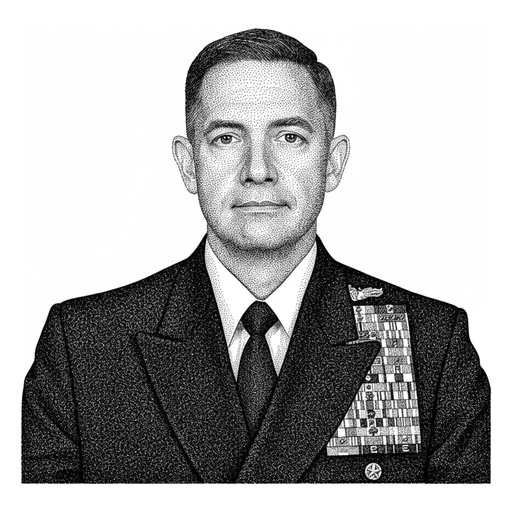
Brad Cooper
Admiral, commander of US Central CommandOrdered the formation of Task Force Iron Gate on November 7th, 2026. He says it "reinforces the success of our ironclad blockade against Iran at sea."
Why Washington is looking at the land routes
CENTCOM says its naval blockade has stopped Iran exporting more than $25 billion in crude oil in recent months. Ports are only one way in, however.
Days before the announcement, a Reuters investigation found that Iran had imported at least $2 billion in hardware since January 2025. The goods included explosives and heavy-duty lorries.
The National reported the findings. Goods came across the Caspian from Russia and by lorry from Central Asia, Reuters found. Freight planes brought more from China.
China's foreign ministry rejected what it called attempts to link regional hostilities to China. The task force now targets those land and Caspian routes.
Seven land borders and an inland sea
Iran has seven land neighbors: Afghanistan, Armenia, Azerbaijan, Iraq, Pakistan, Turkmenistan and Turkey. The longest border, with Iraq, runs 1,599 kilometers, The Jerusalem Post reports. Figure 2 shows each one.
CENTCOM did not say which crossings it will watch. A CENTCOM graphic pointed to the borders with Afghanistan, Pakistan, Turkmenistan and Turkey, according to The National.
The Caspian Sea is a different problem. Iran shares it with Azerbaijan, Kazakhstan, Russia and Turkmenistan. It gives Iran a sea route that avoids the Strait of Hormuz.
The US has no established naval presence on the Caspian. Mahjoob Zweiri, a professor of politics at Qatar University, says America has no access to that sea unless neighbors such as Azerbaijan or Armenia help. He says they are not helping because they do not want to upset Russia.
Iran's land borders, by length
The claims on each side
CENTCOM has announced no plan to station troops along Iran's land borders or to close its crossings. It has not said how the unit will enforce its remit, The National reports.
Michael Mulroy was a US deputy assistant secretary of defense for the Middle East. He told Al Jazeera the unit is "primarily a coordination body." It will look for where weapons come in and "how they could potentially be cut off," he said.
The White House said in a post on X that the task force is "in full force and effect." President Donald Trump went further on Truth Social. He claimed that, with the blockade, it had shut off almost all trade into and out of Iran.
Iran's Revolutionary Guards, the military force that answers to the supreme leader, reject the plan. Their spokesman, Hossein Mohebbi, called it "merely a wordplay." He also said: "We have made the necessary arrangements to maintain trade and connections with our neighboring countries."
Analysts quoted by Al Jazeera doubt the unit can close every route. Rami Khouri, a fellow at the American University of Beirut, calls it "virtually impossible for the US to seal off every one" of Iran's contacts. The National reports that the unit may still raise the cost of military parts that are hard to replace, and slow their delivery.
What to watch, and by when
Two public signs would show whether the task force does more than coordinate. Both come from our alert on the unit, published on November 10th, 2026.
- By December 10th, 2026: does CENTCOM, the White House or the US Treasury Department name a specific land or Caspian Sea shipment that Task Force Iron Gate stopped?
- By December 31st, 2026: does the government of Azerbaijan, Turkmenistan, Kazakhstan or Armenia publicly commit to help the US police trade with Iran?