Article 78 · Iran
AP reports a US strike on Iran's Qeshm Island on November 17th, the day our three-strike-day count opened
The US-Iran war, which began on February 28th, has been stuck for months. Our test of whether it widens counts US strike days inside Iran, and the first one came on the day the count began.
A war that has stalled
The United States and Israel attacked Iran on February 28th, and the war began. A two-week ceasefire came in April and a wider memorandum in June, Al Jazeera reports. The memorandum collapsed in early July. Since then the war has ground to a stalemate, Reuters reports.
The fight now turns on the Strait of Hormuz, the waterway between Iran and Oman. It carried about one-fifth of global oil and liquefied natural gas supplies before the war, and Iran now partly blocks it. The US keeps a naval blockade on Iranian shipping.
President Donald Trump decides whether US forces strike. After meeting Qatar's prime minister, he called further strikes "quite unlikely" and said the military side of the war was "effectively over," Al Jazeera reports. He added that the military stays "locked and loaded."
Qatar, a Gulf state, mediates between Washington and Tehran. Vice President JD Vance, a chief negotiator in earlier ceasefire talks, broke with Trump after the November 3rd midterm elections. "The reason we lost is the war," he posted, the Associated Press reports. Trump and Iran's foreign minister are pictured below.
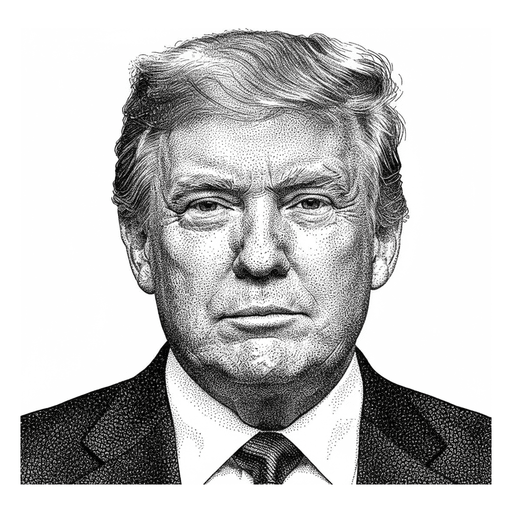
Donald Trump
President of the United StatesHe orders US strikes. He has called new ones "quite unlikely" and keeps the blockade on Iran.

Abbas Araghchi
Foreign Minister of IranHe held talks in Oman on November 17th on keeping shipping lanes open and preventing escalation.
The bar we set
Our brief on the standoff asks one question that the public record will answer. Does AP report US strikes inside Iran on three separate days within any seven-day span, between November 17th, 2026 and January 2nd, 2027?
We set that bar ourselves. One strike can be a reply to a single attack. Strikes on three days in one week look like a campaign.
Limited US strikes had already begun before the count opened. The Wall Street Journal reported that a November 2nd strike on Qeshm Island was the latest of a series of limited strikes Washington had secretly carried out. Qeshm is Iran's largest island, and the Revolutionary Guards launch drones and missiles from it. On November 6th Trump confirmed strikes on an air defense system near the strait and called the action "minor." Figure 1 sets out the months since February.
From open war to small strikes
- February 28thThe United States and Israel attack Iran, and the war begins.
- April to JulyA two-week ceasefire in April and a wider memorandum in June. The memorandum collapses in early July.
- November 2ndUS forces strike Qeshm Island, the latest of a series of limited strikes, the Wall Street Journal reports.
- November 6thTrump confirms strikes on an Iranian air defense system near the Strait of Hormuz.
- November 15thA third US aircraft carrier, the USS Theodore Roosevelt, arrives in the Middle East.
- November 17thIran fires drones at a US radar in Bahrain. Hours later a US jet strikes Qeshm Island. The count opens.
- January 2nd, 2027The question settles on what AP has reported.
The first strike day came on the first day
On November 17th, Iran's Revolutionary Guards said they fired drones at a US radar at Sheikh Isa Air Base in Bahrain. Bahrain, home to the US Navy's Fifth Fleet, said it intercepted them. It was Iran's third attack on American military targets in Bahrain in five days, AP reports.
Hours later, a US fighter jet struck a Revolutionary Guards missile launch site on Qeshm Island, a US official told AP. The official said the strike used "precision munitions" and answered "aggression" toward US personnel. A local official said it caused no damage to residential or commercial areas.
That strike fell on the first day of our count. The US described it through an official who would not be named, not in a public statement. Two more US strike days inside the same week would meet the bar.
Attacks went on into November 18th. Kuwait said it was countering "hostile drone attacks," and Bahrain said its air defenses intercepted more attacks from Iran, the Straits Times reports. Iran said its army targeted US drone and missile sites at Kuwait's Ali Al Salem air base, CNBC reports.
What the possible outcomes show
We tested how the standoff could unfold, each test starting from a different shock. In our tests, US strikes stay at an isolated day only while talks hold. Every other shock we tried puts US strikes on more days, and the roughest ones end in a sustained campaign.
If nothing unusual happens, talks drag on or a freeze brokered by Qatar holds. Both of those quiet paths end with at most an isolated strike day before January 2nd, 2027. Both assume the limited strikes on Qeshm Island stop.
Two analysts at the International Crisis Group, a research group on conflicts, read the risk from Tehran's side. "The risk of renewed war no longer depends solely on whether Trump decides to attack Iran again," Hamidreza Azizi, its senior Iran analyst, wrote on X, AP reports. Ali Vaez of the same group told Al Jazeera that both sides are caught in "a perilous game of chicken."
Oil has fallen from its wartime high. Brent crude, the global benchmark, was $92.76 a barrel on November 17th, Reuters reports. That is well below April's wartime peak of $126.41, as Figure 2 shows.
Brent crude, dollars a barrel
What to watch, and by when
Five public checks come before the question settles. The first may answer yes with no escalation, because limited strikes are already reported.
Congress has its own lever. Under the War Powers Resolution, US forces must stop within sixty days of a required report to Congress unless Congress authorizes the use or extends the period. Democrats won both chambers on November 3rd.
- December 10th, 2026: does US Central Command's press release page confirm at least one strike inside Iran?
- December 15th, 2026: does a Kalshi contract on a US strike inside Iran trade above 50 cents?
- December 18th, 2026: has AP reported US strikes inside Iran on three separate days within one seven-day span?
- December 19th, 2026: does the EIA's weekly Brent price close above 130 dollars a barrel?
- December 22nd, 2026: does the official website of Congress show a War Powers Resolution on Iran introduced or passed?
- January 2nd, 2027: the question settles on what AP has reported.