Article 65 · Iran
Trump calls new strikes on Iran "highly unlikely" three days after promising a decision soon
President Trump said on November 5th that he would soon decide whether to hit Iran harder in a war over its nuclear program and the Strait of Hormuz. On November 8th he told CNN new strikes were "highly unlikely" if talks progress, while Secretary of State Marco Rubio said no breakthrough was near.
What the war is about
The United States and Israel went to war with Iran on February 28th, 2026. Trump wants to end Iran's nuclear program. Iran says the program is for energy and calls it a matter of national sovereignty.
The war reaches people far from the Gulf through the Strait of Hormuz, the sea route where one-fifth of the world's oil passed before the war. Iran attacks tankers there, and the US blocks Iran's ports. The Associated Press tied higher US energy prices to the disruption in the strait. AAA, which publishes the US national gasoline average, put it at $4.03 a gallon on November 7th.
A major new US assault would need Trump's order. Qatar, a Gulf state that has mediated since early in the war, carries messages between Washington and Tehran. The people most involved are pictured below.
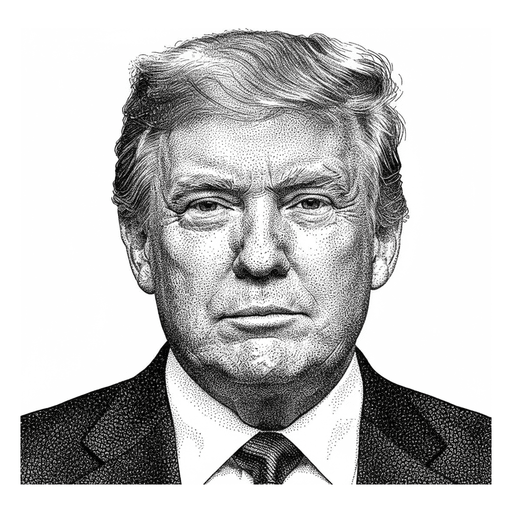
Donald Trump
President of the United StatesHe decides whether to order new strikes. On November 5th he said he would decide soon.
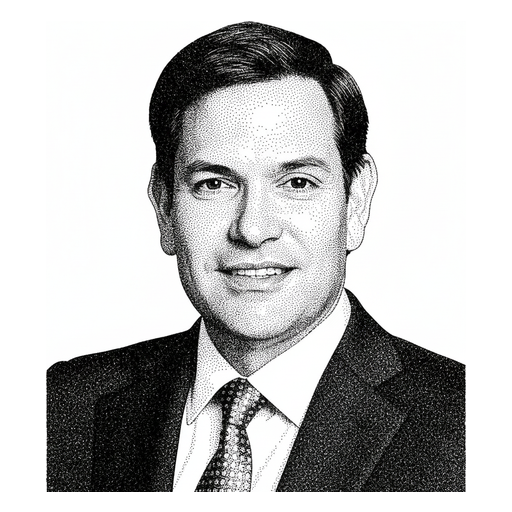
Marco Rubio
US Secretary of StateHe runs US diplomacy. On November 8th he said the talks with Iran were not near a breakthrough.
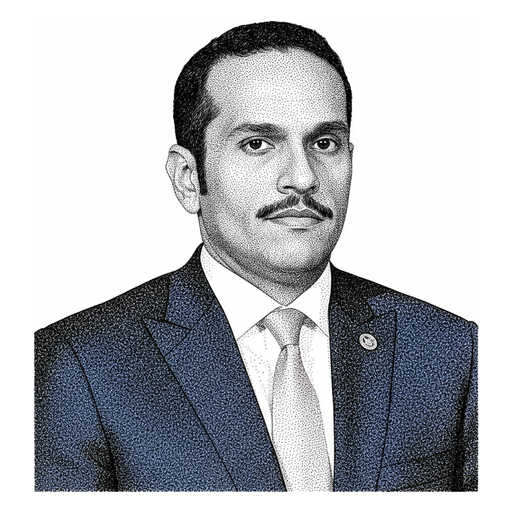
Mohammed bin Abdulrahman Al Thani
Prime Minister and Foreign Minister of QatarQatar's lead go-between. He visited Tehran, then met Trump and Vice President JD Vance at the White House on November 9th.
A decision promised for "soon"
On November 5th Trump met his national security advisers for the first time since the midterm elections. Afterwards he told reporters: "I would rather not destroy the rest of the country if possible, but maybe I will have to. You'll know soon enough."
Axios reported that he was weighing new strikes, more economic pressure on Iran, or a deal with significant concessions to Iran. US Central Command (CENTCOM), which runs US military operations in the Middle East, was preparing to resume major combat but had no new order.
Smaller strikes went on in the meantime. On November 6th Trump confirmed US strikes on Iranian air defenses on Qeshm Island, in the Strait of Hormuz, and called them "minor strikes." Figure 1 sets out the week.
From a promised decision to holding off
- November 5thTrump meets his national security advisers and says "You'll know soon enough."
- November 6thTrump confirms US strikes on Iranian air defenses on Qeshm Island.
- November 8thTrump tells CNN new attacks are "highly unlikely" if talks progress. Rubio says there is no breakthrough.
- November 9thTrump meets Qatar's prime minister and says he will hold off on new strikes for now.
- November 10thRubio tells G7 ministers in Paris there is no need for major combat operations.
Three days later, "highly unlikely"
On November 8th Trump told CNN that it is "highly unlikely" he will need to order the US back to war, as long as talks on the nuclear program and the strait make progress. CNN said he repeated the point five times in a 20-minute phone interview.
"It depends on whether or not they sign a very strong agreement," he said. He also said the US had three aircraft carriers in the region, "fully locked and loaded," and had picked 38 bridges in Iran that it could knock down.
Later that day Rubio spoke to reporters in Florida before he left for Paris. "I wouldn't say we're on the verge of a breakthrough," he said. He called some Iranian demands "outrageous and ridiculous and really not realistic."
Both men spoke days after Trump's Republican Party lost both houses of Congress. Vice President JD Vance said the war was one of the reasons. Trump told CBS's "60 Minutes" that he was "not looking to" escalate the war.
Holding off, but keeping the blockade
On November 9th Trump met Qatar's prime minister. Afterwards he said "it won't be necessary, taking the military action" at this point. He said he was acting "at the behest of countries that are their neighbors." He named Qatar, Saudi Arabia, the United Arab Emirates, Bahrain and Kuwait. He said the US naval blockade would stay for now.
Rubio gave the US reasoning the next day, after meeting foreign ministers from the Group of Seven (G7) forum in Paris. He said "the economic campaign [against Iran] is so devastating that right now there is no need for major combat operations."
Iran's plan, carried by Qatar, runs over two days. On the first, the US would lift its blockade and release some frozen Iranian funds, and Iran would invite inspectors from the International Atomic Energy Agency to bombed nuclear sites. On the second, the strait would reopen and nuclear talks would resume, per Axios.
Iran's security chief, Mohsen Rezaei, said on November 10th that no negotiations were taking place. He also said Iran would not let its enriched nuclear material leave the country, a concession the US has sought.
No date for a decision
Trump has given no date for a decision on a larger operation, and the order would still be his. Al Jazeera reported on November 11th that the talks had been largely stalled for months.
Anwar Gargash, a senior official of the United Arab Emirates, said a settlement between the US and Iran appeared difficult. He said the region should "prepare for a long period of uncertainty."
Energy prices moved lower after the CNN interview. Brent crude, the international oil price benchmark, was down 0.75% at $97.58 a barrel on the morning of November 9th, per CNBC.
Rubio said the US remains "open to diplomacy" but called Iran's current demands "totally unrealistic."