 United States
Trump promised an Iran decision "soon enough." So far the US has carried out only limited strikes and he has announced no choice
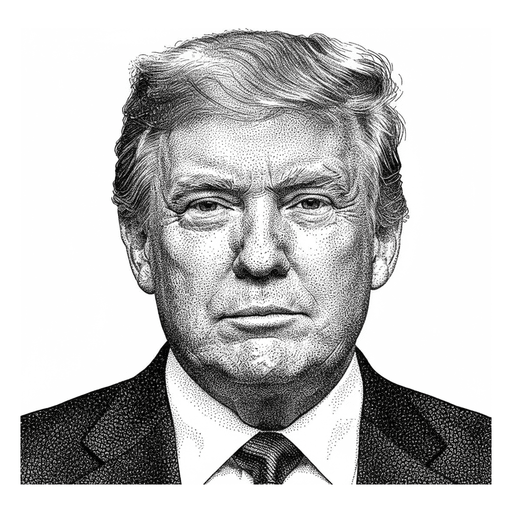
US President Donald Trump said on November 5th that he would soon decide whether to hit Iran harder. After a call with Qatar's emir, he told CNN on November 8th that renewed attacks are "highly unlikely" if talks progress, while his secretary of state sees no breakthrough.
Alert typeStrategic Tension
US decision on IranNone announced
Qatari mediationActive
Sources17 cited
As ofNov 9th, 2026
Executive Summary
US President Donald Trump said on November 5th that he would soon decide whether to hit Iran harder, and as of November 9th he has announced no decision. The United States and Israel began the war on Iran on February 28th, and the two sides have been in a stalemate for months. Qatar, a Gulf state, is a main mediator alongside Pakistan, and it carries proposals between Washington and Tehran.1,2,3
Trump is running a military track and a diplomatic track at once. On November 6th the US military struck an Iranian air defense system on Qeshm Island in the Strait of Hormuz, which Trump called "minor." The same day he called Qatar's emir, Sheikh Tamim bin Hamad Al Thani. Qatar's prime minister and foreign minister, Sheikh Mohammed bin Abdulrahman Al Thani, was due at the White House on November 9th.4,2,1
The two sides remain far apart, and officials in Washington and the Gulf do not expect a quick deal. Secretary of State Marco Rubio called Iran's conditions "outrageous and ridiculous and really not realistic." Anwar Gargash, a diplomatic adviser to the UAE president, said a settlement between the United States and Iran appears difficult. Iran's foreign ministry spokesman, Esmaeil Baghaei, called Tehran's proposal the most reasonable offer on the table.1,5,6
Alert type
Strategic Tension
US decision on Iran
None announced
Latest confirmed US strikes
Qeshm Island, Strait of Hormuz
Iran's proposal
A short sequence of steps
US gasoline average per AAA
$4.03 a gallon
01Risk Matrix
The risks are medium across the board because limited strikes continue while a large operation is being prepared but has not been ordered.
MilitaryMediumLimited strikes continue and a large operation is being prepared but has not been ordered.
US Central Command (CENTCOM), which runs US military operations in the Middle East, is finalizing preparations to resume major combat operations but has not received a new directive, per Axios.7 Reuters reports no sign of a large-scale US operation.8
DiplomaticMediumQatar's channel is active, but the US and Iran disagree on terms.
Qatar's foreign ministry spokesman said claims that talks had failed serve only those who want to prolong the war.4 Rubio said Iran's demands are not realistic.1
EconomicMediumThe US blockade of Iranian ports and attacks on tankers continue.
Attacks on tankers in the Gulf and the Strait of Hormuz are running at the highest rate since the war began, per Reuters, citing maritime agencies.1
ReputationalMediumUS Treasury sanctions are reaching small payment firms.
The US Treasury sanctioned eight money services firms based in Canada over Iran-related transactions, per Al Jazeera.9
InvestmentMediumFuel prices have eased with crude but remain at record highs for November.
AAA, which publishes the US national gasoline average, said prices had fallen for nearly two weeks as crude oil dropped, while staying above any previous November level.10
02Forecast Watch
Every public forecast comes from a named party, and they point in different directions.
Confidence in the mechanism is high, because several outlets document both the limited strikes and the Qatari mediation. Confidence in the horizon is low. Trump has given no date, and neither side has moved on its core demands, per CNN.11 Vektora makes no forecast of its own here. The calls below are the stated expectations of people close to the decision.
- Trump told CNN on November 8th that it is "highly unlikely" he will need to order the US back to war while negotiations progress. He added that it depends on whether Iran signs "a very strong agreement."3
- Rubio said on November 8th that a breakthrough in the talks is not imminent.8
- Gargash said on November 9th that the region should prepare for a long period of uncertainty.5
- Frederick Kempe, president of the Atlantic Council, a US research group, considered a sustained series of US strikes a likely scenario if Iran does not accept a settlement, per Dawn.12
- Danny Citrinowicz, an Iran specialist and former head of a research department in Israel's military intelligence, wrote that Iran is likely to try to widen the war from the start if it is attacked.13
Watch for:
- A White House or Qatari account of the November 9th meeting between Trump and Qatar's prime minister.
- Statements from the Qatari foreign ministry's spokesman, Majed al-Ansari, who posts on X.4
- Statements from CENTCOM on Iran.4
- The arrival of a third US aircraft carrier group, which a US official told Axios would not reach the region before mid-November.7
- The daily AAA national average for gasoline, published on the AAA fuel prices site.
03The Signal
The operational record shows limited strikes and new pressure measures, not a resumed air campaign.
Several things moved on the ground. The US struck an Iranian air defense site on Qeshm Island on November 6th.4 On November 8th Trump posted on Truth Social that Task Force Iron Gate was "in full force and effect." The task force is a US campaign against Iran's movement of advanced weapons over its land borders and through the Caspian Sea.8
CENTCOM is offering a reward of up to $20 million for information on Iran's nuclear program.4 The US military also said it fired on a commercial vessel that was trying to pass its blockade of Iran.8
Trump's statements ran ahead of the operational record. He said the US has identified 38 bridges it could knock down in one hour. He also said Iran has no air defenses left. CNN reported both as his claims and did not verify them.3
Limited strikes were carried out. A major combat operation is being prepared but has not been ordered.7
04What Happened
Trump's promise of a decision on November 5th was followed within days by strikes, a call to Qatar and a softer public line.
November 2nd
Strike.
The US says it struck Qeshm Island in a limited defensive measure after Iranians used surface-to-air missiles against US assets.8
November 5th
Announcement.
After meeting his national security advisers, Trump says he will decide soon and that "You'll know soon enough." Axios reports he is weighing new strikes, continued economic pressure or a deal with significant concessions.7
November 5th
Talks.
Mohsen Rezaei, secretary of Iran's Supreme National Security Council, tells Russian President Vladimir Putin that Iran will not open the Strait of Hormuz or negotiate until the US meets its seven conditions.7
November 6th
Talks.
November 7th
Talks.
Qatar's foreign ministry spokesman says reports of failed US-Iran talks serve only those seeking to prolong the war.4
November 8th
Announcement.
United States Qatar
Tamim bin Hamad Al Thani
Emir of QatarQatar's head of state. His office said he stressed continued dialogue, freedom of navigation and the security of energy supplies on his call with Trump.2
What to watch
- Further statements from the emir's office, the Emiri Diwan2
 Qatar
Mohammed bin Abdulrahman Al Thani
Prime Minister and Foreign Minister of QatarQatar's lead mediator. He visited Tehran in the days before November 9th and was due to meet Trump and Vance that day. He told an Oxford University audience on November 6th that a perfect deal should not stop a good one.1,13
 Iran
Abbas Araghchi
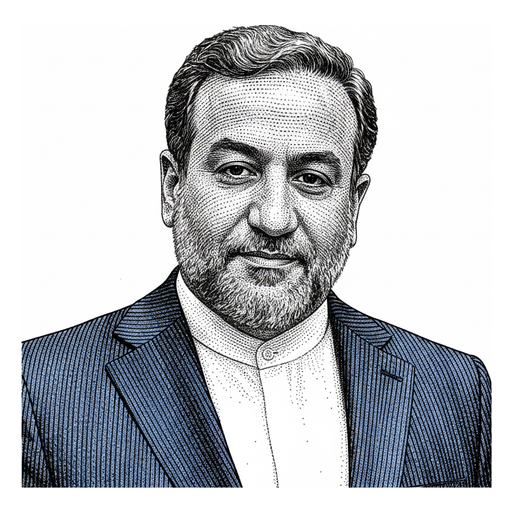
Foreign Minister of IranOn November 5th he held calls with counterparts in Saudi Arabia, Turkey, the UAE, Oman, Egypt and Qatar. On November 8th he said the White House should now make its own choice after the American voters made theirs.7,11
What to watch
- Iran's response to Qatar's proposals14
05What's Being Overstated
A coming full-scale attack, a coming deal and a settled US force posture are each claimed more strongly than the record supports.
- The claim that Trump's "soon enough" means a large attack is near. Reuters reports no sign of a large-scale operation, and Axios reports CENTCOM has received no new directive.8,7
- The claim that talks are close to a deal. Trump said "a lot of progress" had been made without giving details. CNN reports there is no independent confirmation of reports that talks have moved closer.4,11
- The claim that talks have collapsed. Qatar's foreign ministry spokesman rejected it.4
- Trump's statement that three US aircraft carriers are already in the region. A US official told Axios the third will not arrive before mid-November.3,7
- Reports that gasoline is about to fall below $4 a gallon. Dawn cited analysts expecting that, but AAA's national average was still $4.03 on November 7th.12,15
06Why It Matters
The decision lands on a short political calendar and on Gulf states that would absorb Iran's response.
Trump has said the war was part of the reason his party lost the midterm elections, and Vice President JD Vance said so more directly, per Reuters.8 Trump told CBS's "60 Minutes" that he did not disagree with Vance, and that he would still make the same decision to attack.11 A new Congress takes office in January. Until then Trump keeps broad authority over military operations, according to a column in the Mail & Guardian.16
Gulf states carry much of the exposure. Gargash said the UAE opposed the war from the outset.5 The Houthis, an Iran-allied group in Yemen, said they struck an office building of Saudi state oil company Aramco in Riyadh on November 8th.1 Pakistan, which also mediates, is waiting for Washington to settle before launching another initiative, per Dawn.12
US gasoline price, AAA national average
Dollars a gallon, regular, as of November 5th
Source: WRNJ Radio, November 6th, 202610
AAA reported these figures in its weekly report of November 5th, 2026.
07Sector Impact
Tanker operators carry the most direct risk, and fuel buyers gain only if a deal reopens the strait.
NegativeMixedConditional
Tanker shipping
Attacks on tankers are at the highest rate since the war began.1
Negative: Negative while attacks continue
Oil and fuel markets
Under Qatar's draft, as regional sources describe it to Axios, the Strait of Hormuz would reopen on the second day.7
Conditional: Positive only if a deal reopens the strait
Gulf energy producers
Their export routes and facilities remain exposed to Iranian and Houthi attacks.1
Negative: Negative while the strait stays contested
US drivers and fuel retailers
The national average has fallen with crude.10
Mixed: Easing, but still high for November
08Client Implications
Each client type should plan for both a sudden strike and a slow stalemate.
- Private equity and venture capital firms should check which portfolio companies depend on Gulf shipping or Hormuz-linked fuel costs, and which have Iran-linked payment exposure.
- Family offices should review energy and shipping holdings for sensitivity to a sudden strike order and to a deal that reopens the strait.
- Corporates should check supply routes and insurance terms for cargo that passes the Strait of Hormuz or the Gulf of Oman, where the US military said it fired on a vessel trying to pass its blockade.8
- Law firms should screen counterparties against the latest Treasury designations, which now reach small money services firms.9
09Due Diligence Questions
These questions suit any counterparty with Gulf shipping, energy or Iran-linked payment exposure.
- Shipping: Which of your voyages cross the Strait of Hormuz, and what does your insurer say about war-risk cover?
- Sanctions: Have you screened every payment intermediary against the Treasury's most recent Iran-related designations?9
- Supply: Which inputs depend on Gulf energy exports, and how long can you run on stock?
- Contracts: Do your force majeure clauses cover a resumed US air campaign against Iran?
10Vektora Assessment
The record supports a holding pattern, with Trump's words keeping both options open.
Confidence: medium. The finding rests on Reuters, Axios, CNN, Al Jazeera, Euronews and Qatar's own statements, which agree on the sequence of events. They do not agree on what comes next.
The primary assessment is a holding pattern. Limited US strikes continue, Qatar's channel is active, and no order for a large operation has been reported. Trump's own words support both outcomes, so they cannot settle which one comes.
The strongest alternative reading is that the pause is short. Kempe considered sustained US strikes a likely scenario if Iran does not accept a settlement. Citrinowicz wrote that Tehran is preparing for a broader and longer war than Washington may expect.12,13 Axios lists the arrival of a third carrier group as one possible sign that renewed strikes are planned.7
Four developments would end the holding pattern: a new directive to CENTCOM, a public end to the Qatari channel, a strike on Iranian infrastructure such as power plants, or a published agreement on the first-day steps of Qatar's draft.3,7
Alert type is Strategic Tension. One escalation criterion is met and sourced: economic coercion through the US blockade of Iranian ports and Treasury sanctions. Military mobilization beyond routine posture is not confirmed, because preparations are reported without a directive and the third carrier group has not arrived.8,9,7
11Appendix: Deep Background
A June truce between the two sides did not hold, and Qatar's current draft tries to fix its sequencing problem.
Vance led the negotiations for a short-lived truce in June, per Reuters.1 The Mail & Guardian column says the June agreement, brokered by Pakistan and Qatar, unravelled within weeks when both sides renewed attacks. It also says the present disagreement is as much about sequencing as substance.16
Iran lists seven conditions. They include compensation for war damage, release of frozen assets, an end to sanctions and the naval blockade, withdrawal of US troops from the region, a permanent end to the war and a commitment not to threaten Iran again.17
Qatar's draft, as Axios describes it, runs over two days. On the first day the US lifts its naval blockade and releases some frozen funds, and Iran invites International Atomic Energy Agency inspectors to its bombed nuclear sites. On the second day the Strait of Hormuz reopens and nuclear talks resume.7
Qatar's prime minister told an Oxford University audience on November 6th, as Euronews reported:
We will never have a perfect peace deal, but we cannot just wait for this moment of a perfect deal and avoid having a good deal,
12Sources
- Trump to meet Iran war mediator Qatar, no imminent deal seen to end the war. Reuters, November 9th, 2026
- Qatari emir, Trump discuss efforts to ease US-Iran tensions in phone call. Anadolu Agency, November 6th, 2026
- Trump says renewed attacks on Iran highly unlikely if talks show progress. CNN, November 8th, 2026
- Trump confirms new US strikes on Iran's Qeshm island. Al Jazeera, November 7th, 2026
- UAE's Gargash warns of prolonged regional uncertainty, says US-Iran settlement appears difficult. Reuters, November 9th, 2026
- Iran defends two-day proposal for peace talks after US rejects conditions. Reuters, November 9th, 2026
- Trump meets with national security team, says Iran war decision coming "soon". Axios, November 5th, 2026
- Trump says he is highly unlikely to order Iran strikes if talks progress. Reuters, November 8th, 2026
- Iran war updates: Trump says US talking to Tehran's ... Al Jazeera, November 6th, 2026
- National gas prices drop 12 cents in one week but remain at record November highs, AAA says. WRNJ Radio, November 6th, 2026
- US and Iran are quietly negotiating as Middle East remains on edge. Here's what to know. CNN, November 9th, 2026
- Trump weighs Iran's fate after midterm rout. Dawn, November 7th, 2026
- US launches new targeted strikes on Iran as Trump claims progress in talks with Tehran. Euronews, November 7th, 2026
- Trump to meet Qatari PM as Doha pushes for US-Iran deal. The New Arab, November 9th, 2026
- National gas prices drop to $4.03 per gallon for Nov. 7, 2026. al.com, November 7th, 2026
- Resumption of War in Iran after US Mid-Terms. Mail & Guardian, November 8th, 2026
- Trump says he'd 'rather not destroy' Iran but may 'have to': 'You'll know soon enough'. The Times of Israel, November 6th, 2026