Article 82 · US sanctions on Hezbollah's money
US sanctions gold traders in Sidon and Istanbul and a charity the State Department says stores Hezbollah weapons
The US Treasury says two Lebanese brothers moved Iranian money to Hezbollah, the Iran-backed armed group and political party in Lebanon, through gold firms and cash couriers. Its only figure is $2.5 million found on a courier at Beirut airport.
Hezbollah and its money from Iran
Hezbollah is an Iran-backed armed group and political party in Lebanon. The US State Department has listed it as a Foreign Terrorist Organization since October 8th, 1997. Amir Al-Meqdad, a financial expert, told Arab News that Iranian support makes up 62 percent of its budget.
Treasury has listed Hezbollah and Iranian money networks often in 2026. On November 18th, 2026, it sanctioned three Lebanese men and three entities it ties to Hezbollah. The action came from the Office of Foreign Assets Control (OFAC), the Treasury office that runs US sanctions.
Treasury put the listing under Operation Economic Outcast, its campaign against Iran and the groups Iran funds. Treasury Secretary Scott Bessent announced it. He and one of the listed men are pictured below.
The list has two parts. One is a gold and cash network that Treasury says two brothers ran, with gold firms in Sidon, Lebanon, and Istanbul, Türkiye. The other is a relief charity in south Lebanon. Figure 1 shows where OFAC lists each of them.
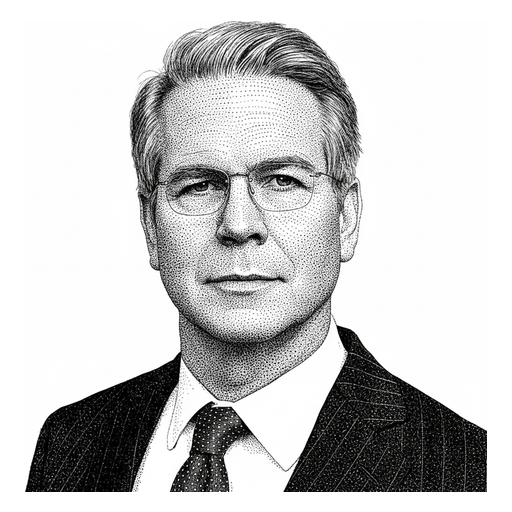
Scott Bessent
US Secretary of the TreasurySaid Iran's attempts to infringe on Lebanon's sovereignty through Hezbollah will not be tolerated.
Hassan Khechen
Money changer, owner of Gold Global CompanyTreasury says he moved money to Lebanon for Hezbollah and also controls Sankari Gold in Istanbul.
How Treasury says the gold network worked
Hassan Khechen is a Lebanese businessman and money changer. Treasury says he and his brother Ibrahim worked with Hezbollah financial officials. It says they moved significant funds to Lebanon for Hezbollah from the Quds Force, a unit of Iran's Islamic Revolutionary Guard Corps.
Hassan owns Gold Global Company in Sidon, which OFAC lists as a wholesaler of metals and metal ores. Treasury says he uses it to move money from several transit countries to Lebanon. He also controls Sankari Gold, a jewelry and precious-metals wholesaler in Istanbul, according to Treasury.
Sankari Gold helps Gold Global move gold bullion and cash from Africa, Treasury says. The network also employs couriers to carry cash across borders. Treasury says Ibrahim has links to a courier arrested at Beirut airport in February 2025 with $2.5 million in his hand luggage.
That is the only figure in Treasury's release. It gives no total for what the brothers moved. Al Jazeera wrote that the brothers reportedly operate both gold firms. Treasury ties both firms to Hassan alone.
A relief charity in the disarmament zones
Wa Ta'awanu Association is a charity registered in Zefta, in the Nabatieh district of south Lebanon, OFAC's entry shows. Treasury says it provides emergency relief in southern Lebanon while it channels outside donor funds toward Hezbollah.
The State Department goes further. It says the charity claims to deliver only emergency relief, while in fact it moves Hezbollah operatives and stores the group's weapons. Treasury says its founder, Afif Abdel Rida Chouman, runs it at Hezbollah's direction. Treasury does not call him a financier.
The charity matters because of a deal to disarm Hezbollah. The United States, Lebanon and Israel signed the Trilateral Framework on June 26th, 2026. It ties Israel's pullback to the disarmament of armed groups, starting in pilot zones, Legis1 reports.
Lebanon's army then moved into areas the Israeli military had held, to clear them of Hezbollah fighters and weapons, Treasury says. It says Wa Ta'awanu gives Hezbollah a pretext for militant activity in those zones. A Congressional Research Service report found the plan had not gone beyond the two initial pilot zones as of October, according to Legis1.
Istanbul in a wider campaign
This listing is one step in a longer campaign, set out in Figure 2. On August 24th, 2026, Treasury made Iran's gold sector open to sanctions under Executive Order 13902. The November 18th action used a different tool, Executive Order 13224, the US counterterrorism order.
In April, Treasury said Iranian oil went to Venezuela in exchange for gold. That gold was sold on Turkey's black market to fund the Quds Force and Hezbollah, Turkish Minute reported.
On September 4th, Treasury sanctioned Golden Global Yatirim Bankasi, a small Istanbul investment bank. Reuters called it the first time a bank in a NATO ally had been hit under the current campaign. The bank rejected Treasury's allegations.
Miad Maleki is a sanctions expert at the Foundation for the Defense of Democracies, a Washington research group. He told Reuters: "as the Gulf gets shut down, Turkey is the obvious place for this money to move next, and Treasury is already there."
US action on Hezbollah and Iranian money
- October 8th, 1997The State Department lists Hezbollah as a Foreign Terrorist Organization.
- February 2025A courier Treasury links to Ibrahim Khechen is arrested at Beirut airport with $2.5 million in his hand luggage.
- February 10th, 2026The US sanctions Hezbollah operatives who use Lebanon's informal financial sector.
- June 26th, 2026The United States, Lebanon and Israel sign the Trilateral Framework.
- August 24th, 2026Treasury opens Iran's gold sector to sanctions.
- September 4th, 2026Treasury sanctions Golden Global Yatirim Bankasi, a small Istanbul investment bank.
- November 18th, 2026OFAC lists the charity, its founder, the Khechen brothers and their two gold firms.
Who carries the risk
US persons may not deal with any of the six, and their property in the United States is blocked. So is any entity that listed persons own 50 percent or more.
Foreign banks face a second risk. A foreign bank that knowingly handles a significant transaction for a listed person can lose its US correspondent account, or keep it only under strict conditions. Every one of the six new entries carries that warning.
These are listings by Treasury under an executive order, not criminal charges. Treasury's release describes conduct and cites no court case. No comment was available from the newly sanctioned people or entities, Reuters reported.
Hezbollah has called earlier US sanctions an "attempt to intimidate the free Lebanese people", Al Jazeera reported. Al-Meqdad told Arab News that US sanctions have likely cut the group's funding, but that its parallel economy and wider system "remain largely operational".