Article 81 · Gaza's reconstruction money and the Board of Peace
Gaza's Board of Peace has deployed $280 million of $17 billion pledged. Its officials say projects wait for troops
The Board of Peace, the Trump-chaired body the UN made responsible for funding Gaza's rebuilding, holds about $17 billion in pledges. Its officials say projects wait until foreign troops or Palestinian police enter Gaza.
What the Board of Peace is
Gaza is a small Palestinian territory on the Mediterranean, between Israel and Egypt. Hamas, the armed group that ran it, led attacks on Israel in October 2023 that killed about 1,200 people. Israel's war in Gaza that followed has killed more than 74,700 Palestinians, The National reports.
A ceasefire between Israel and Hamas took effect on October 10th, 2025. Rebuilding was meant to follow, and the Board of Peace was set up to fund it.
US President Donald Trump proposed the board in September 2025 as part of his 20-point plan for Gaza. On November 17th, 2025, the UN Security Council recognized it in Resolution 2803 as a transitional administration. Its job is to set the framework for Gaza's rebuilding and coordinate the money, Al Jazeera reports. Trump chairs it, and its role in Gaza runs to December 31st, 2027.
On November 17th, 2026, the board sent its second report to the Security Council. It counted about $17 billion in pledges for Gaza's recovery, with $280 million "deployed for the preparation phase," according to The National. The board itself puts the cost of rebuilding at about $71 billion. Its six-month recovery plan needs $2.45 billion (Figure 1).
The cost of rebuilding Gaza against the money pledged
Who pledged the money, and what happened to it
At the board's first meeting in Washington on February 19th, Trump announced about $7 billion in pledges from nine countries. He added a $10 billion US pledge, without saying what it would pay for.
The United Arab Emirates pledged $1.2 billion. Kuwait and Qatar pledged $1 billion each. Saudi Arabia matched them and said it would pay over several years, Al Jazeera reports.
At a briefing in New York on September 23rd, the board said donors had made about $18 billion in early commitments. It had called in $280 million for the first building phase, and most of that money was still unspent.
The same day, the board proposed its six-month recovery plan, with 66 projects. Refugees International, a US humanitarian group, says the board admits this plan will not be feasible under the current conditions. Figure 2 sets out the dates.
From the ceasefire to the board's second report
- October 10th, 2025The ceasefire between Israel and Hamas takes effect.
- November 17th, 2025The UN Security Council adopts Resolution 2803 and recognizes the Board of Peace.
- February 19th, 2026At the board's first meeting, Trump announces about $7 billion from nine countries and $10 billion from the US.
- July 26th, 2026Israel's cabinet approves the entry of up to 200 stabilization troops, subject to ministers' approval.
- September 23rd, 2026The board unveils a $2.45 billion six-month recovery plan.
- November 9th, 2026Israel approves the first 250 foreign troops, the Israeli news site Walla reports.
- November 17th, 2026The board's second report warns that the ceasefire could collapse.
- November 18th, 2026Israel's defense minister says Israeli forces keep their security zones in Gaza.
Why the money waits
Board of Peace officials told the Washington Post that the money cannot go into projects yet, Al Jazeera reports. First, Israel must let international troops or newly trained Palestinian police enter Gaza and start to disarm Hamas.
The troops belong to the International Stabilization Force (ISF), a multinational force under the board. Israel's withdrawal and the start of reconstruction both depend on this force, the Associated Press reports.
On July 26th, Israel's cabinet approved an initial entry of up to 200 ISF troops, FDD's Long War Journal reports. Israel's defense minister is one of the ministers who must approve each entry.
On November 9th, Israel approved the first 250 foreign troops, The Jewish Chronicle reports. The force's commander, US Army Major General Jasper Jeffers, has spoken of up to 20,000 soldiers and 12,000 trained Palestinian police. The board's November report says the force is still not deployed.
Daily government is meant to pass to Palestinian technocrats in the National Committee for the Administration of Gaza (NCAG). Israel has not let the committee enter Gaza, so it works from Cairo.
The board's report blames both sides. It says Israel has not made the decisions needed to train and deploy Palestinian civilian police, and this delayed the ISF. It says Hamas continued armed operations and taxed goods entering Gaza. The main officials in the story are pictured below.
"The distance between what has been agreed and what is happening on the ground nonetheless remains the principal risk to the process," the report says, according to the Associated Press.
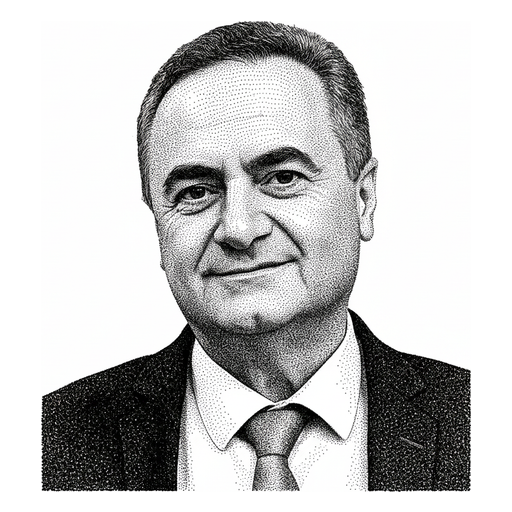
Israel Katz
Israel's defense ministerSaid on November 18th that Israel will not withdraw from its security zones until Hamas is dismantled and Gaza is demilitarized.
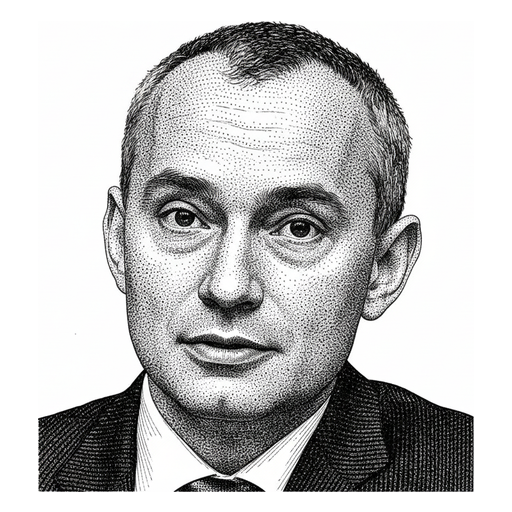
Nickolay Mladenov
Director-general of the Board of Peace, a former UN Middle East envoyDelivered the board's first report in May. He has said progress hinges largely on Hamas disarming, and has pressed Israel to scale back its military operation.
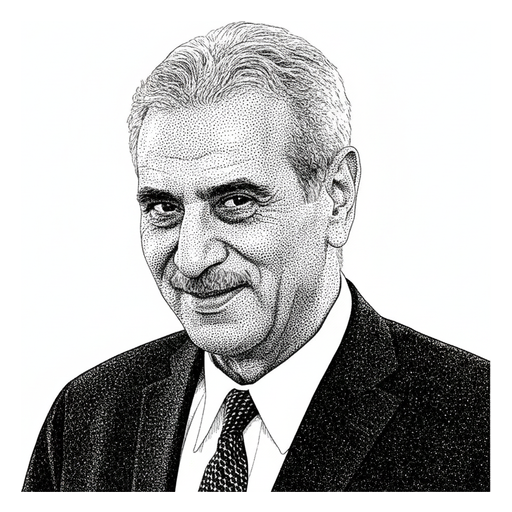
Ali Shaath
Head of the National Committee for the Administration of GazaLeads the Palestinian committee meant to run Gaza day to day. It reports to the board and operates from Cairo.
Israel's defense minister on the security zones
The day after the board's report, Israel's defense minister, Israel Katz, issued a statement on the zones Israel holds in Gaza, Lebanon and Syria. Anadolu Agency, the Turkish state news agency, quoted him:
"As we have made clear: Israel will not withdraw from the current lines of these security zones, nor will it redeploy its forces."
Katz tied any drawdown to Hamas being dismantled and Gaza demilitarized, JNS reports. He also named Hezbollah's disarmament in Lebanon and the end of jihadist threats from Syria. If those fronts escalate, he said, the army is ready to "maneuver and seize additional territory."
Israel.com, an Israeli news site, says Katz framed this as a restatement, and the new element is the threat to take more land. He made a similar statement in April 2025, PBS reports.
The same day, Israel began its first publicly announced ground offensive in Gaza since the ceasefire, The National reports. Its troops moved near the Bureij and Nuseirat refugee camps.
How much of Gaza Israel holds is disputed. JNS puts it at roughly 54%. Al Jazeera says Israel pulled back to about 53% under the ceasefire, and the line now takes in about two-thirds. Refugees International says nearly 70%, up from 58% at the start of the ceasefire.
Aid below the agreed level
Refugees International says an average of 49 UN-coordinated aid trucks entered Gaza each day in September, against an agreed minimum of 600 (Figure 3).
Israel classes most shelter materials as "dual-use," goods with a possible military use. The board's report says floods in November destroyed more than 6,000 family shelters, while more than 150,000 tents waited outside Gaza.
Al Jazeera reports that Israel is also blocking 60,000 mobile homes promised under the ceasefire deal. Gaza's health ministry says Israel has killed at least 1,658 Palestinians since the ceasefire began.
UN-coordinated aid trucks entering Gaza each day
The agreed minimum against the September 2026 average
The case that Hamas is the obstacle
Israeli officials read the delay another way. Under the 20-point plan, reconstruction follows only once progress on Hamas's disarmament is verified, The Jewish Chronicle reports. On that reading, Katz is restating the plan's own order.
Israeli defense officials also worry that the foreign force could grow larger than Israel's own troops in the area, the same paper reports.
The board's report answers part of this. "Neither party may treat the other's delay as license for its own inaction," it says, according to the Associated Press.
What to watch
Israel is forming a new government after its October 27th election. Gadi Eisenkot, who leads the Change Bloc, has been asked to form it, Anadolu reports. Trump has urged Prime Minister Benjamin Netanyahu to speed up the plan whichever government takes office, The Jewish Chronicle reports.
- The Security Council's debate on the board's second report, which The National reported was expected in November.
- The first ISF troops crossing into Gaza, and which countries send them.
- Whether Israel lets the Palestinian committee enter Gaza.
- The board's next figure for money deployed, against the $280 million it reports now.