60%
OFAC lists at least one more gold, jewelry or precious-metals company in Lebanon or Türkiye for links to Hezbollah or the IRGC-QF, on its Recent Actions page.
Hezbollah finance operatives 10 Feb 2026
Sanctions on Hezbollah operatives who use Lebanon's informal financial sector, tied to Al-Qard Al-Hassan, the group's financial institution1.
Iran gold-sector order 24 Aug 2026
Treasury can now sanction any person, anywhere, who operates in Iran's gold sector2.
Golden Global Yatirim Bankasi 4 Sep 2026
An Istanbul investment bank, the first bank in a North Atlantic Treaty Organization ally hit under the campaign, per Reuters3.
On November 18th, the US Treasury listed three Lebanese men and three entities that it ties to Hezbollah, the Iran-backed armed group and political party in Lebanon. The listing came from the Office of Foreign Assets Control (OFAC), the Treasury office that runs US sanctions and keeps the Specially Designated Nationals (SDN) List4,6. The names are Wa Ta’awanu Association, a relief charity in south Lebanon, and its founder Afif Abdel Rida Chouman. They also include Hassan Khechen, a money changer, his brother Ibrahim Khechen, and two gold firms Hassan controls: Gold Global Company in Sidon, Lebanon, and Sankari Gold in Istanbul, Türkiye5. Treasury put the action under Operation Economic Outcast, its campaign against Iran and the groups Iran funds5.
Treasury says the Khechen brothers moved money from Iran's Islamic Revolutionary Guard Corps-Qods Force (IRGC-QF) to Lebanon for Hezbollah, using the gold firms and cash couriers. Sankari Gold, it says, helps move gold bullion and cash from Africa5. The State Department says the charity moves Hezbollah operatives and stores the group's weapons7. Treasury describes Chouman as the man who leads the charity at Hezbollah's direction. Neither Treasury nor OFAC calls him a financier4,5.
For banks and trade desks, the risk is secondary sanctions. A foreign bank that knowingly handles a significant transaction for any of the people or entities listed can lose or face strict conditions on its US correspondent account5. Every one of the new SDN entries carries that warning4. For gold traders there is a second route: since August 24th, Treasury can sanction anyone who operates in Iran's gold sector under a separate order2,8. Gold dealers with counterparties in Sidon or Istanbul carry both risks.
All property and interests in property of the listed persons in the United States or held by US persons are blocked. So is any entity they own 50 percent or more5. This is formal action plus enacted sanctions, two of the escalation criteria.
OFAC can bar or put strict conditions on a US correspondent or payable-through account of a foreign bank that knowingly conducts or helps with a significant transaction for a listed person5. Every new entry carries the secondary sanctions flag under Executive Order 132244. On October 5th, OFAC also warned that foreign banks still dealing with sanctioned Iranian banks could be targeted at any time without notice, per the law firm Bracewell9.
OFAC lists Gold Global Company as a wholesaler of metals and metal ores in Sidon. Sankari Gold is a wholesaler of jewelry and precious metals in Istanbul4. Iran's gold sector has also been open to sanctions since August 24th2.
The State Department says Wa Ta’awanu claims to deliver only emergency relief while it moves Hezbollah operatives and stores weapons7. The charity is registered in Zefta, in the Nabatieh district4.
A Congressional Research Service report found that the framework had not expanded beyond the two initial pilot zones as of October, according to Legis110. Treasury says the charity gives Hezbollah a pretext in those zones5.
Calibration. Confidence in the mechanism is high: Treasury and the State Department describe the same network in separate statements, and the OFAC entries match them4,5,7. Confidence in the horizon is medium: Treasury has listed Hezbollah and Iran money networks often in 2026, but it does not announce dates11.
Analyst assessment. Each call is scored once its date passes.
OFAC lists at least one more gold, jewelry or precious-metals company in Lebanon or Türkiye for links to Hezbollah or the IRGC-QF, on its Recent Actions page.
OFAC uses its Iran gold-sector order (Executive Order 13902) to list a company based in Türkiye, on its Recent Actions page.
Türkiye publishes an asset freeze on Sankari Gold in its Official Gazette.
OFAC removes any of the six November 18th entries from the SDN List.
OFAC added three people and three entities to the SDN List under its counterterrorism program, Specially Designated Global Terrorists (SDGT)4. All six entries carry secondary sanctions risk under section 1(b) of Executive Order 13224, as amended by Executive Order 138864. Chouman, the two Khechen brothers and the charity are also marked as subject to the Hizballah Financial Sanctions Regulations. The two gold firms are not4. That count is ours, from the OFAC entries.
Listed, not charged. These are administrative designations by Treasury under an executive order. The press release describes conduct. It does not cite a court case5.
Gold Global and Sankari Gold are listed for being owned, controlled or directed by Hassan Khechen5. Their OFAC entries name him as the link4. A bank that screens only for the word Hezbollah would miss them.
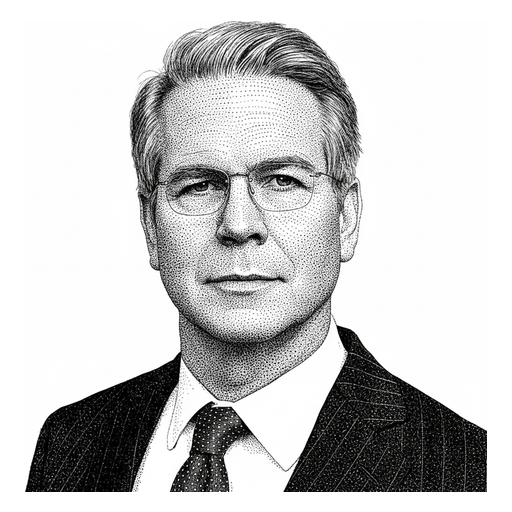 United States
Announced the listing and said Iran's attempts to infringe on Lebanon's sovereignty through Hezbollah will not be tolerated5.
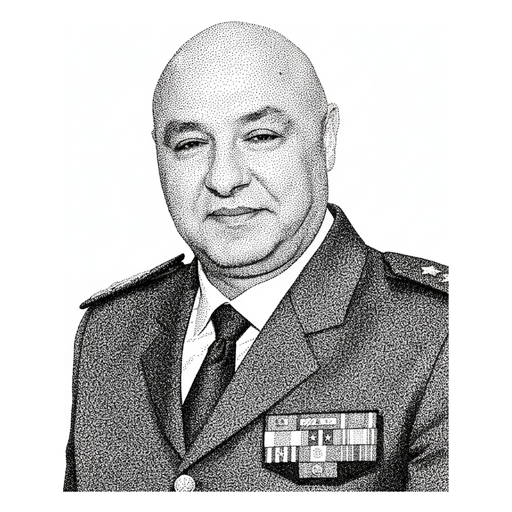 Lebanon
Sources close to Aoun told Lebanese media he seeks to contain Hezbollah's influence rather than disarm it by force, per the Institute for the Study of War12.
 Listed
Treasury says he moved money from several transit countries to Lebanon for Hezbollah and controls Sankari Gold in Istanbul5.
 Listed
Treasury says he leads the charity and coordinates its work at Hezbollah's direction5.
Addresses as listed by OFAC. Treasury says gold and cash also came from Africa, without naming countries. Borders: Natural Earth.
Source: Office of Foreign Assets Control, US Treasury, November 18th, 20264
In September, Treasury sanctioned Golden Global Yatirim Bankasi, an Istanbul investment bank, and Reuters called it the first bank in a North Atlantic Treaty Organization (NATO) ally hit under the current campaign3. Miad Maleki of the Foundation for the Defense of Democracies, a Washington research group, told Reuters that Turkey is the obvious place for Iranian money to move next as the Gulf gets shut down3. In April, Treasury said gold from an Iran oil scheme was sold on Turkey's black market to fund the IRGC-QF and Hezbollah, per Turkish Minute14.
Hezbollah's money has moved out of banks. Lebanon barred banks and brokerages from dealing with Al-Qard Al-Hassan last year, according to Arab News15. Gold can be carried across borders and turned into cash through middlemen, which is harder to trace than a bank transfer15. That puts the screening burden on the gold dealers, refiners and exchange houses that touch the trade.
The charity listing ties sanctions to the disarmament track. Treasury says Wa Ta’awanu gives Hezbollah a pretext in the pilot zones and hinders disarmament5. The Institute for the Study of War, a US research group, says the June 2026 agreement has the United States and Lebanon block funds from reaching Hezbollah, reconstruction aid included12. Aid money for south Lebanon is likely to face closer checks from donors and banks.
Foreign banks that clear dollars for Lebanese or Turkish clients
Traders and refiners dealing with Sidon or Istanbul counterparties
Exchange houses that handle cross-border cash
Donors, aid groups and their banks
Confidence: medium. The facts of the listing are high confidence, from three official sources4,5,7. The effect on Hezbollah's funding is low confidence, because no source puts a figure on what the network moved5.
Primary assessment. The November 18th list is a compliance event for gold and banking in Lebanon and Türkiye. Treasury used name-based counterterrorism listings, so the risk follows the six names and anything they own or control4,5. The gold-sector order of August 24th remains in reserve and could reach traders who are not linked to Hezbollah at all2.
Strongest alternative reading. Hezbollah adapts. Financial expert Amir Al-Meqdad told Arab News that US sanctions have likely reduced the group's funding, but its parallel economy remains largely operational15. On that reading, the listing raises costs for one channel and the money moves to the next.
Where we diverge from consensus. Most coverage led with the charity and Hezbollah's finances16,13,17. We read the action as a warning to the gold and money trade in Türkiye, where Treasury has acted against Iran- or Hezbollah-linked money three times this year14,3,5.
What would make us wrong. No further gold listings in Lebanon or Türkiye by the end of February would suggest this was a one-off. A Turkish asset freeze or a criminal case naming the Khechen network would show a wider push than compliance pressure. Türkiye's government had not commented in the sources we reviewed.
Share of budget, percent, as estimated by Amir Al-Meqdad
Source: Arab News, November 19th, 202615
One analyst's estimate, published by Arab News on November 19th, 2026. He put the total at $1 billion to $1.3 billion a year15.
Hezbollah always has a Plan B. It constantly develops itself so it can get around sanctions.
The Hizballah Financial Sanctions Regulations carry out US laws that let Treasury act against foreign banks dealing with Hezbollah. By our count of the OFAC entries, four of the six new entries are marked as subject to them4. Under Executive Order 13224, Treasury can act against a foreign bank that knowingly handles a significant transaction for a listed person5.
Hezbollah has dismissed earlier rounds. It called previous US sanctions an attempt to intimidate the Lebanese people and said they would have absolutely no practical effect on its strategic choices, per Al Jazeera13. No response from the newly listed people or entities was available to Reuters16.