Article 73 · Russia-Ukraine peace talks
A weeklong truce in Oleshky shows what Ukraine's talks could deliver by year end: local pauses, not a full ceasefire
Russia and Ukraine, at war since Russia's full-scale invasion in 2022, agreed only a prisoner swap in Abu Dhabi. Truces over one place or one kind of target are the deals that have actually happened.
The war, and who is at the table
Russia launched a full-scale invasion of Ukraine in 2022. Its army holds about a fifth of the country. The United States is brokering talks to end the war, and the latest round produced no ceasefire.
Fighting runs along a front line of 1,200 kilometers. The two US envoys are Steve Witkoff, a special envoy of US President Donald Trump, and Jared Kushner, Trump's son-in-law.
Vladimir Medinsky, an aide to Russian President Vladimir Putin, leads Russia's team. Rustem Umerov, head of Ukraine's Foreign Intelligence Service, leads Kyiv's. Volodymyr Zelenskyy is Ukraine's president.
The delegations met in Abu Dhabi, the capital of the United Arab Emirates, on November 10th and 11th. The Associated Press (AP) says it was their first meeting in nine months.
The talks ended with one deal, a large exchange of prisoners of war. Medinsky said it was agreed "in principle." There was no ceasefire.
Bo Petersson, a political science professor at Malmö University, writes that officials from the EU, NATO, France, Germany, Italy and the UK were there. They had no formal voice in the talks.
A full ceasefire stops the fighting everywhere. A partial truce covers one place, or one kind of target such as power plants. For people in Ukraine, the narrow kind can decide whether they have heat and power.
Russia and Ukraine want different first steps
Putin wants a comprehensive peace deal and will not agree to a general halt in fighting, AP reports. He argues a pause would only let Ukrainian troops rest and restock weapons.
Ukraine wants the opposite order. It says an immediate ceasefire is the first step toward a wider settlement.
The terms are far apart too. Putin wants Ukraine to pull its troops out of four regions that Moscow claims to have annexed but never fully captured.
In Abu Dhabi, Ukraine rejected a proposal to give up the whole Donbas region in the east in return for peace, Petersson writes.
William Taylor, a former US ambassador to Ukraine, spoke to the broadcaster Radio Free Europe/Radio Liberty before the talks. "The hard part and the breakthrough would be for Putin to say yes, he's agreed to a cease-fire," he said.
Narrow deals carry their own risk. Matthew Boyse, a Hudson Institute senior fellow and former US State Department official, spoke to the same broadcaster. He said Russia may use the prospect of more local ceasefires to extract major concessions.
Two partial truces this autumn
Oleshky is a Russian-occupied city in Ukraine's southern Kherson region. In October, a local truce there let some residents leave and let humanitarian supplies in, AP reports.
Melania Trump, the US first lady, helped broker it. Moscow and Kyiv both called the weeklong ceasefire a model. The Kremlin suggested it did not mean Russia was ready for a wider truce.
The other kind of partial truce covers one type of target. On October 11th, Trump posted: "Effective immediately, there is an ENERGY CEASEFIRE in the War between Russia and Ukraine." He gave no details.
Zelenskyy said the deal was "news to me" but that Ukraine would accept it if Russia did. The same day, Russia hit thermal power station No 5 in Kharkiv, he said.
Kremlin spokesman Dmitry Peskov would not say whether Russia had agreed. He said only: "Contacts are ongoing."
The Abu Dhabi agenda included a possible energy and maritime ceasefire, the news site Latin Times reported before the talks. None was agreed.
Figure 1 shows the places named in this article. Figure 2 sets out the partial truces tried since March 2025.
Partial truces since March 2025
- March 18th, 2025Russia and Ukraine agree a US-brokered 30-day pause on strikes on energy sites. Both soon accuse the other of breaking it.
- April 2026An Orthodox Easter ceasefire. Each government accuses the other of widespread violations.
- September 22nd, 2026Zelenskyy offers an energy truce. The Kremlin welcomes the idea but wants to add Russian sea exports and sanctions.
- October 11th, 2026Trump announces an energy ceasefire with no details. Russian strikes on Ukrainian energy sites continue.
- October 2026A weeklong local truce in Oleshky lets some residents leave and aid arrive.
- November 10th to 11th, 2026Talks in Abu Dhabi end with a prisoner swap agreed in principle and no ceasefire.
The cost to civilians
Russia strikes Ukraine's energy sites to deny civilians power and running water, AP reports. Ukrainian officials call this "weaponizing winter."
The Center for Strategic and International Studies (CSIS), a Washington research group, tracks the strikes. It found Russia sends 24 percent more Shahed-type attack drones and 14 percent more cruise missiles in winter than in the rest of the year.
The strikes went on during the talks. Six major electricity substations in central Ukraine were reportedly struck on the night between the two days in Abu Dhabi, Petersson writes.
People die in these attacks. On November 2nd, a Russian strike on a school where aid was handed out in the Zaporizhzhia region killed at least 31 people, Ukraine said.
As the talks closed, three people died in a daytime attack on a market in the Odesa region, local officials said.
An energy truce would not stop strikes on markets or schools. Kaja Kallas, the EU's foreign policy chief, pointed to that gap in October. "Personally, I would also welcome that the ceasefire would include people not being killed, not only energy," she said.
Ukraine would give something up too. Its drones have hit Russian refineries hard, and CSIS says Russian refinery output fell to 3.8 million barrels per day in June 2026. A truce would give those refineries time to recover.
Zelenskyy has said Kyiv will stop striking refineries if Moscow stops hitting Ukraine's energy system. He and the two officials quoted above are pictured below.
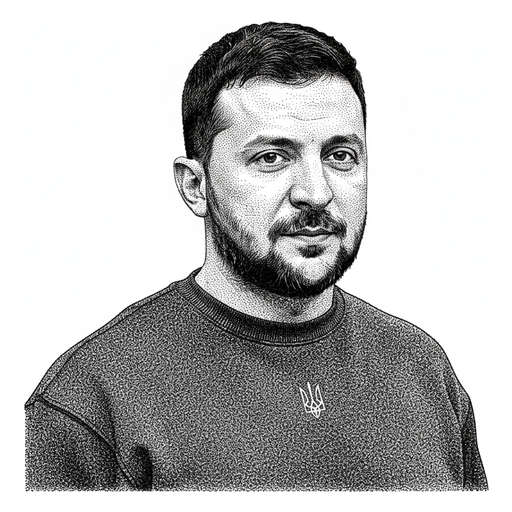
Volodymyr Zelenskyy
President of UkraineSays Ukraine is ready to stop striking Russian refineries if Moscow halts its attacks on Ukraine's energy system.
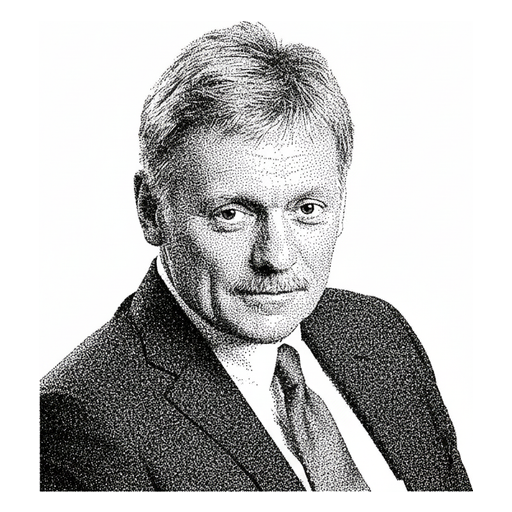
Dmitry Peskov
Spokesman, the KremlinSaid in October that Putin and other officials "have repeatedly stated we do not want a ceasefire."

Kaja Kallas
Foreign policy chief, European UnionWelcomed a pause in energy strikes but said she saw no sign yet that Russia would stick to it.
Rules that could make a truce last
The March 2025 pause had no international monitoring. That is the finding of Yasin Bozkus, a doctoral researcher at American University, and Yasir Atalan, a data fellow at CSIS.
It had no satellite watch, no real-time information sharing, no one to investigate violations and no penalty set in advance. Both sides soon traded accusations.
The two researchers say a new energy truce needs precise rules and independent checks. It also needs a way to stop one disputed strike from ending the whole deal.
They suggest an agreed list of protected sites and a neutral monitor that investigates claimed violations. Satellites that detect fires and outages could supply the evidence.
Their model is the Black Sea Grain Initiative. It let more than 32 million metric tons of grain and food be exported. A center in Istanbul ran it, with Ukraine, Russia, Turkey and the United Nations.
The deal later collapsed when Moscow tied it to complaints about limits on Russia's own farm exports.
In talks in January and February, negotiators made progress on how a ceasefire could be monitored, Taylor said.
The possible outcomes, and what to watch by when
Our brief on these talks, updated on November 15th, sets out the possible outcomes to the end of the year. It does not pick one.
If nothing unusual happens, the talks deliver narrow deals: an extension of an energy truce and a prisoner exchange. Strikes go on outside the protected sites.
In that case, land and security guarantees stay untouched. No binding ceasefire framework exists by the end of the year.
A smooth outcome is a full package. It would pair neutrality for Ukraine and a path to the EU with partial withdrawal and phased sanctions relief. Even that deal stays fragile.
A rough outcome is a breakdown. A Russian battlefield gain could harden Moscow's demands. A strike before a summit could collide with US pressure on Kyiv and end the process.
What to watch, and by when:
- The prisoner swap. Alexander Zorin is a deputy chief in the Russian General Staff's information department. On November 11th, he said it could happen in two or three weeks.
- Russian strikes on Ukraine's power grid through December. If they go on, any energy truce exists only on paper.
- Black Sea shipping. Watch whether the corridor reopens for regular cargo beyond a narrow pilot.
- Reconstruction money. Watch whether funds announced at summits actually move.
- Europe's seat. Kushner said Europe must be at the table in future rounds, and that he would raise it with Putin.