25%
The Kremlin, through its presidential press service or spokesman Dmitry Peskov, states on the record that Russia has agreed to halt strikes on Ukrainian energy infrastructure.
Confirmed force movement beyond routine posture
Russian strikes on energy sites continued1, but no source reports force movement beyond routine posture.
Legal change, executive order or regulatory action
The US agreed to lift sanctions on Russian diesel2.
A defence pact invoked, or an alliance rupture mechanism used
No source reports a defence pact invoked or an alliance mechanism used.
Sanctions enacted, blockades, asset freezes (not threatened)
The EU adopted almost 1,600 new sanctions listings on 12 October3.
The escalation test from the Vektora alert method, applied to the sources cited under each criterion.
President Donald Trump has declared an energy ceasefire between Russia and Ukraine that only Ukraine has publicly accepted. On 11 October he posted that the halt was “effective immediately” and that “both parties have agreed”4. The White House gave no terms and referred questions back to the post4. Kyiv said it would observe a truce if Moscow did5; the Kremlin said only that contacts were continuing6.
Russian strikes on Ukrainian energy sites continued through the announcement. Later that day Ukraine reported a hit on Kharkiv’s thermal power station No 57, and President Volodymyr Zelensky said six energy facilities were struck the next day, injuring 33 people1. The grid operator Ukrenergo reported new power cuts in three regions and introduced rationing1. Kremlin spokesman Dmitry Peskov restated that Moscow does not want a ceasefire, and offered only to pause strikes on a Ukrainian election day3,8.
The announcement sits inside a wider United States (US) policy shift that Europe is declining to follow. Two days earlier Washington agreed to lift sanctions on Russian diesel2, while the European Union (EU) adopted almost 1,600 new sanctions listings on 12 October3. The March 2025 moratorium, agreed by telephone and never monitored, broke down in mutual accusations within days9,10,11. Without a written list of protected sites and a third party to rule on violations, this truce is likely to fail the same way. The first costs fall on Ukraine’s grid going into winter and on firms that handle Russian refined products.
Russia struck six Ukrainian energy facilities the day after the announcement1, following its heaviest combined attack on energy sites in months on 30 September12. Ukraine’s strikes on Russian oil and gas sites this year are more than double the same period of 20251.
Moscow has neither confirmed nor rejected the truce6 and says it wants a long-term settlement rather than a ceasefire3. Washington has eased sanctions on Russian diesel2 while Germany says Europe is keeping its sanctions in place13.
Brent crude futures rose to $107 on 12 October, against around $70 before the Iran war began9. Analysts quoted by the BBC doubt Russia can deliver large diesel volumes from damaged refineries, so the deal’s price effect is likely small9.
A bipartisan group of senators says the diesel deal runs counter to a US law banning Russian energy imports5. German Chancellor Friedrich Merz says such a decision is out of the question for Germany and for Europe13.
Exposure is concentrated in Ukrainian power and gas assets, Black Sea shipping and refined-product trading. A truce that held would give Russian refineries time to recover10.
Confidence on mechanism: high. The failure mode of an unmonitored energy truce is documented from the March 2025 moratorium, when each side accused the other within days and no body existed to decide who was right10,11. Confidence on horizon: medium. Moscow’s position could change at short notice if Washington offers more. The New York Times has reported US offers of economic incentives, including release of frozen Russian assets7.
Analyst assessment. Each call is scored once its date passes.
The Kremlin, through its presidential press service or spokesman Dmitry Peskov, states on the record that Russia has agreed to halt strikes on Ukrainian energy infrastructure.
The US, Russian or Ukrainian government publishes energy truce terms that name the protected facility types and a monitor or dispute procedure.
Ukrenergo announces emergency power cuts in the city of Kyiv caused by Russian strikes on at least one day in November 2026.
The three calls are separate events and do not sum to one. A Kremlin statement of agreement without published terms would repeat the March 2025 pattern.
Mr Trump’s post on 11 October gave no details beyond the claim that both sides had agreed4. Mr Zelensky told the Warsaw Security Forum the next day that Ukraine had learned of the deal from the media and had not heard Russian approval2. Asked about it on 12 October, Mr Trump said the parties had agreed because he had told them to1.
Announced in Washington, unconfirmed in Moscow. No Russian official has said Russia agreed. Peskov’s words on 12 October were that contacts were continuing and Moscow would say more when it had something to say6.
On the ground, Russia kept hitting energy targets. Ukraine reported strikes on gas stations, energy infrastructure and other facilities overnight into 12 October, and blackouts in Izyum after a strike destroyed power grids1. Naftogaz, the state gas company, said an overnight attack damaged critical equipment at gas production facilities in the Kharkiv region3. Ukrenergo reported new power cuts in Kharkiv, Donetsk and Zaporizhzhia1.
Ukraine says it held fire for one night. Mr Zelensky said Ukraine did not attack Russian energy facilities that night “because President Trump said that there would be an energy ceasefire”9. That claim has not been independently confirmed. Russia’s defence ministry said it intercepted 151 Ukrainian drones over Russian regions overnight into 12 October8; the reports gathered for this alert do not say what those drones targeted.
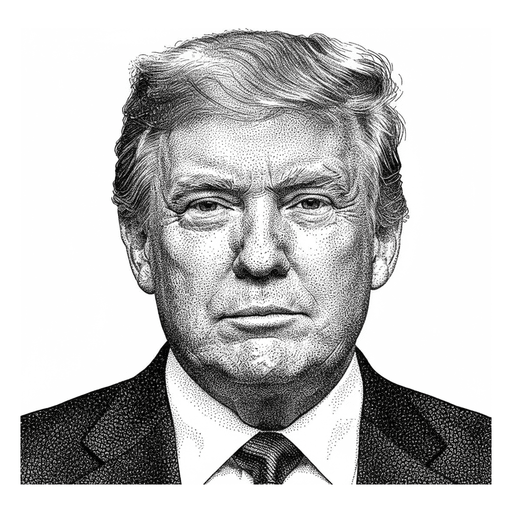 United States
Announced the truce and the diesel deal4,2. He controls the sanctions easing. The Financial Times, as cited by the Guardian, reported that his administration is threatening to stop the system through which Ukraine buys US weapons7.
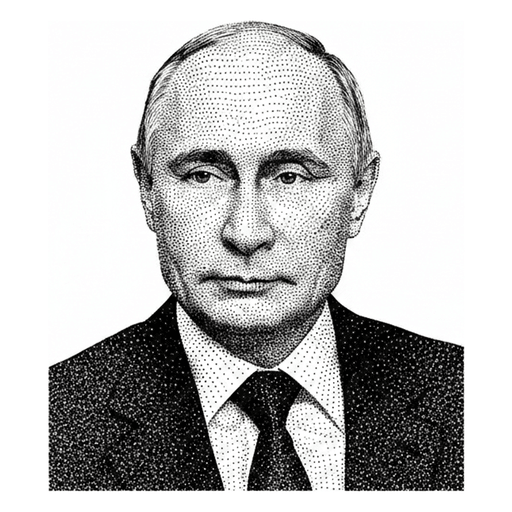 Russia
Decides whether Russia’s strike campaign pauses. According to the Kremlin, he ordered a halt to energy strikes in March 202515; his spokesman now says Moscow wants a long-term peace deal3.
 Ukraine
Says Ukraine will stop striking Russian refineries if Russia stops hitting Ukraine’s grid4. Ukrainian officials call the refinery strikes Kyiv’s most effective weapon7.
The Kremlin’s public voice on the truce. In March 2025 he said Russia reserved the right to resume energy strikes over alleged Ukrainian breaches11.
Says the EU will welcome a truce when it holds, and that pressure on Moscow rather than concessions will end the war1,13.
Were meeting Ukrainian negotiators in Florida when the diesel deal was announced7. The New York Times reported that US officials offered the Kremlin economic incentives, including release of frozen assets, for a ceasefire7.
Markers sit on the places the cited reports name. Region markers mark the region, not a specific site. Borders: Natural Earth. Crimea is shown as Ukrainian territory under Russian occupation. Other occupied areas are not drawn.
Sources: The Guardian, October 11, 20267; Al Jazeera, October 12, 20263; BBC News, October 12, 20261; Reuters, via The Detroit News, September 30, 202612; The Guardian, October 12, 202613
The energy war now runs in both directions. According to the Center for Strategic and International Studies (CSIS), Ukraine’s strikes cut Russian refinery throughput to 3.8 million barrels per day in June 2026, roughly 30 percent below the previous year10. Diesel output fell by nearly 30 percent10. Russia banned fuel exports in July after a series of refinery attacks9. Ukrainian officials say Washington is asking Kyiv to give up its most effective weapon without a matching demand on Russia7.
Russia’s campaign against Ukraine’s grid is larger and seasonal. CSIS counts about 55,000 Shahed-type drones launched in 2025, a fivefold increase on the year before10. Russia sends 24 percent more Shaheds and 14 percent more cruise missiles in winter than in the rest of the year10. The Ukrainian Review, a Kyiv outlet, puts available generating capacity at around 11.5 GW in February 2026, against about 55 GW before 202218.
Oblast-level damage events by year.
Source: Center for Strategic and International Studies, September 29, 202610
The timing favours Moscow. Mr Zelensky told the United Nations General Assembly on 23 September that if Russia made the winter harsh for Ukraine, Ukraine would make it painful for Russia too16. A truce observed only by Ukraine would remove that threat while Russia’s winter campaign continued. The pro-Kremlin press has read the announcement exactly this way, arguing that it ties Kyiv’s hands while Russia loses little6.
The truce also tests US pressure on Kyiv. Mr Trump has called for a new Ukrainian leader2, and US officials have reportedly threatened Ukraine’s weapons procurement channel and intelligence sharing to stop the refinery strikes7. If Ukraine resumes those strikes while Russia keeps hitting the grid, expect Moscow to present Kyiv as the party breaking a US-backed truce6.
Russia returns to previously damaged substations, which can slow repairs10. Tech Times reports that Russia has targeted DTEK’s power stations more than 230 times since February 202219.
Naftogaz reported damage to gas production facilities in Kharkiv on 12 October3.
Throughput at a two-decade low in June 202610. A truce that held would allow repairs first10.
US easing on Russian diesel against continued EU sanctions2,13. Volumes are small against the market, per analysts9.
Russia’s defence ministry said it struck three cargo vessels bound for Odesa and Mykolaiv on 12 October13.
Mr Zelensky said in August that Ukraine had about one-third of the Patriot interceptors it held at the start of 202619.
| Reader | What to do now |
|---|---|
| Private equity (PE) and venture capital (VC) firms | Assume outages and rationing in eastern Ukraine through winter for any Ukrainian portfolio company1. Stress-test backup power and repair budgets. Underwrite on the basis that the announced truce may not hold. |
| Family offices | Keep Ukrainian and Black Sea exposure sized for continued strikes. Revisit allocation on a confirmed two-way truce with published terms; the 11 October post does not meet that bar4. |
| Corporates | Any purchase of Russian diesel needs legal review in both the US and the EU. US senators of both parties say the deal conflicts with a US import ban5, and Germany rules out a similar step13. |
| Law firms | Advise on the gap between the US easing and EU listings, which grew by almost 1,600 on 12 October3. Watch for challenges in Congress and for changes in the terms of the US easing. |
Confidence: high that no truce is in force, medium on what follows. The record is consistent across the US, British, Ukrainian, Russian and Qatari outlets cited here. The reports gathered for this alert agree that the Kremlin has confirmed nothing and that Russian strikes on Ukrainian energy sites continued after the announcement2,1,3,8. The weakest link is the count of sites hit, which comes from Ukrainian officials and has not been independently verified.
Primary assessment. The 11 October announcement is a US political statement that has not yet become an agreement. Russia gains from leaving it unconfirmed: it keeps its winter strike option, while any Ukrainian refinery strike can be presented to Washington as a breach6. Ukraine gains from accepting it conditionally, because that puts the burden of refusal on Moscow5.
Strongest alternative reading. In September the Kremlin welcomed the idea of an energy truce while asking to extend it to its seaborne exports and to sanctions10. Washington has since eased sanctions on Russian diesel2, so Moscow has received part of what it asked for. Peskov’s line that contacts are continuing may mean real talks6. CSIS also argues that a truce before winter offers incentives to all sides, with Brent above $100 a barrel in September10. On this reading, a formal truce covering tankers as well as power plants could follow within weeks. We give this real weight; it is reflected in the first Forecast Watch call.
Where we diverge from consensus. European leaders frame the problem as Russian unwillingness9. That is part of it. The design problem binds even a willing Kremlin. In 2025 the Kremlin stated that one violation released the other side from the deal15. No one was appointed to decide what counted as a violation10. A truce with the same gaps would collapse at the first disputed strike.
The March 2025 moratorium covered oil refineries, pipelines, fuel storage, electricity generation and transmission, nuclear facilities and hydroelectric dams10. It was agreed in a Putin-Trump telephone call and accepted by Ukraine afterwards17. The Kremlin set the term at 30 days from 18 March and stated:
If one of the parties violates the ban, the other has the right to consider itself free from the obligation to comply with the agreement
TASS (Russian state news agency)15
By 29 March Peskov was saying that “It would be illogical for us to comply while facing nightly attempts to strike our energy facilities”11. Ukraine’s General Staff denied the specific Russian claims, and a Zelensky adviser counted at least eight Russian strikes on Ukrainian energy sites since 18 March11. By April Russia’s foreign ministry said Ukraine was striking Russian energy installations daily while Russia “strictly adheres” to the ban14. Neither side’s count was ever tested by a third party10. The same pattern recurred in the Orthodox Easter ceasefire of April 2026, when both governments reported large numbers of violations by the other10.
| Feature | March 2025 moratorium | October 2026 announcement |
|---|---|---|
| How agreed | Putin-Trump call, then Ukrainian acceptance17 | US social media post; no Russian confirmation4,6 |
| Scope | Listed facility types10 | None published4 |
| Duration | 30 days from 18 March15 | “Effective immediately”, no end date4 |
| Monitoring | None10 | None announced4 |
| Violation rule | One breach frees the other side, per the Kremlin15 | None published |
| Outcome so far | Mutual accusations within days11 | Russian strikes reported the same evening7 |
The Black Sea Grain Initiative is the closest working model. A Joint Coordination Centre in Istanbul brought Ukraine, Russia, Turkey and the United Nations together, and the scheme moved more than 32 million metric tons of grain and food10. It collapsed when Moscow tied its participation to complaints about its own agricultural exports10. CSIS argues that an energy truce needs the same separation from wider disputes, a registry of protected sites and third-party verification:
A new energy truce is only possible if the parties can establish precise rules, independent verification, and procedures that prevent one disputed strike from destroying the entire arrangement.
Center for Strategic and International Studies10
The tools for monitoring exist. Satellite fire detection, such as NASA’s FIRMS system, records abnormal heat at industrial sites, and night-light imagery can show large outages10. What has been missing is a body both sides accept to read that evidence.