Article 62 · European security and Ukraine
Britain and France are drilling 2,800 troops in Poland for a Ukraine mission that needs a ceasefire Russia rejects
The Multinational Force Ukraine, a European force meant to help Kyiv after the war, began its first exercise in Poland on November 9th. US-mediated talks opened in Abu Dhabi the next day.
What the force is
The Multinational Force Ukraine (MNF-U) is a European military force built to help Ukraine once Russia's war there ends. It is the military arm of the Coalition of the Willing, a group of 37 nations that back Kyiv. Britain and France lead it. Its commander is Lieutenant General Tom Bateman, a British officer, and its headquarters is moving from Paris to London.
The force has one hard condition. The UK Ministry of Defence says it would move into Ukraine only once fighting has ceased and at the request of Ukraine's government. It would not carry out peacekeeping or ceasefire-monitoring duties. Its job would be to help rebuild Ukraine's armed forces and make Ukrainian skies and seas safer.
No such ceasefire exists, so the force is still rehearsing. Pictured below are two of its leaders and the Russian official who answered the drill.
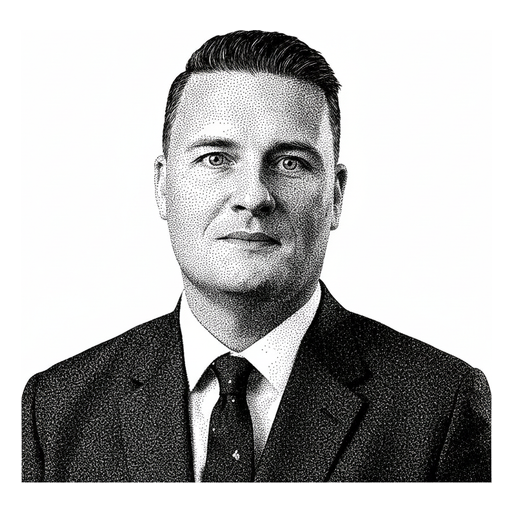
Wes Streeting
Defence Secretary, United KingdomSays the exercise shows "a real force, ready to help Ukraine once the fighting stops."
Tom Bateman
Lieutenant General, commander of the Multinational Force UkraineA British officer who co-leads the exercise. Says the force is not designed for offensive operations.
Maria Zakharova
Spokeswoman, Russian Foreign MinistryCondemned the exercise and said any military units in Ukraine would be treated as legitimate targets.
The exercise has started
Exercise Koalicja, Polish for "coalition", began on November 9th near Nowa Dęba in southeastern Poland. The town is about 100 kilometers from the Ukrainian border. The exercise runs until November 22nd. Figure 1 shows where it takes place.
About 2,800 troops from 11 nations take part. France sends the largest group, 1,100 troops, and Britain sends 300, with RAF Typhoon jets and a Voyager refuelling aircraft. Polska Zbrojna, a publication linked to Poland's defence ministry, reports that just under 2,000 Polish troops also join.
Soldiers practise moving troops and supplies, and running one command across many armies. The jets simulate how they would reassure commercial flights once Ukraine's skies reopen. Turkey runs the sea part from Istanbul. It tests how to clear mines so that merchant ships can return to Ukraine's ports.
France 24 reports that only light equipment, such as drones for anti-drone and self-defence drills, will be used, with no heavy weapons and no tanks. French General Armel Dirou, who co-leads the exercise with Bateman, said: "This is not a show of force. We are not going to flex our muscles."
Why rehearse before any deal
A joint statement from the French defence ministry says the exercise tests how fast several nations can deploy forces to support Ukraine once hostilities have finished. Dirou said the aim is to solve logistical and cultural problems between the armies in advance.
AP reports a second purpose. The exercise sends a message to Russia and to the Trump administration that European countries are stepping up militarily. The US has joined the discussions but is not contributing to the mission, the BBC reports.
Leaders signed a declaration on deploying troops after a ceasefire in Paris in January. Polish Prime Minister Donald Tusk said in July that Poland would host the exercises. In October, The Defense Post reported that at least 1,500 troops would join Polish forces. Figure 2 sets out the dates.
From a declaration to a drill
- January 6th, 2026Leaders of 35 countries meet in Paris. French President Emmanuel Macron and British Prime Minister Keir Starmer sign a declaration of intent with Ukraine on troops after a ceasefire.
- July 14th, 2026Polish Prime Minister Donald Tusk says Poland will host exercises with France and the UK.
- October 20th, 2026The Defense Post reports that at least 1,500 troops will join Polish forces for exercises in Poland.
- November 3rd, 2026Britain and France announce Exercise Koalicja with 2,800 troops.
- November 7th, 2026Russian Foreign Ministry spokeswoman Maria Zakharova condemns the exercise.
- November 9th, 2026The exercise begins near Nowa Dęba.
- November 10th, 2026US-mediated talks between Ukraine and Russia open in Abu Dhabi.
- November 22nd, 2026The exercise is scheduled to end.
Moscow's answer
Russia opposes any foreign troops in Ukraine and has said so for a year. In December 2025, Kremlin spokesman Dmitry Peskov said Russia's position on foreign military contingents in Ukraine was "well known" and "absolutely consistent". He added that the subject could be discussed. Russian President Vladimir Putin said last year that such troops would be legitimate targets.
The exercise drew a direct answer two days before it began. On November 7th, Zakharova said it showed the West "continues to fuel the spiral of escalation". She called any foreign force in Ukraine "absolutely unacceptable". She warned that the Russian armed forces would treat any military units there as legitimate targets.
Western officials have declined to say what rules of engagement the force would follow if attacked, the BBC reports. They say it would be able to defend itself.
The talks in Abu Dhabi
On November 10th, the day after the exercise began, Ukrainian and Russian delegations met in Abu Dhabi, the capital of the United Arab Emirates. AP calls it their first US-mediated meeting in nine months. US envoy Steve Witkoff and Jared Kushner, President Donald Trump's son-in-law, represented Washington.
The first session lasted four hours. Ukrainian President Volodymyr Zelenskyy called it "constructive and quite substantive". He said it dealt mostly with humanitarian issues, such as prisoner exchanges, and that security guarantees for Ukraine were also discussed. A second day was set for November 11th.
Ukraine wants an immediate ceasefire as the first step toward a wider settlement, CBS News reports. Russian Foreign Minister Sergey Lavrov said Moscow rejected European demands for one. "We will not agree to this," he said. US Secretary of State Marco Rubio called the talks "very productive" but urged patience.
Kushner suggested that a future agreement would include a security arrangement involving European countries and Russia. Before the main meeting, the Ukrainian delegation met separately with European, NATO and EU officials, Al Jazeera reports. Reports on the first day do not mention the exercise in Poland.
Why the force may never move
Ed Arnold, a senior associate fellow at RUSI, a military think tank in London, doubts the force will ever reach Ukraine. He told AP it is "a military operation in search of a mission", and suggested that a lasting ceasefire could be a long way off.
France holds a presidential election next year, and President Macron cannot run again. Marine Le Pen, the far-right leader seen as the favorite, has opposed sending troops to Ukraine. Poland hosts the exercise but says it would not send its own soldiers into Ukraine.
Officials could not describe the final shape of the force, the BBC reports. They say each country's contribution will depend on how the fighting ends and on its own political decisions. They also say the force would not operate under NATO command or on the front line.