Article 33 · Israel
Who will form Israel's next government after a deadlocked election
Neither Prime Minister Benjamin Netanyahu's bloc nor the opposition led by former army chief Gadi Eisenkot won a majority in Israel's parliament. The talks that follow could run for weeks or end in another election.
What happened
Israel elected a new parliament, the Knesset, on October 27th. The Knesset has 120 seats, and a government needs the backing of at least 61 of them to take office. No camp reached that number.
With most votes counted, Prime Minister Benjamin Netanyahu's bloc of right-wing and ultra-Orthodox parties had 53 seats. The opposition bloc led by Gadi Eisenkot had 48. Arab parties had 19, their highest ever; the previous record was 15, in 2020, the Times of Israel reports. Figure 1 shows the split.
Until a new government wins a confidence vote in the Knesset, Netanyahu's outgoing government stays in office as a caretaker. Under Israeli law it keeps its full powers, including over war and diplomacy, though court rulings ask it to act with restraint, according to Guy Lurie of the Israel Democracy Institute.
Knesset seats by camp, with most votes counted
A government needs 61 of 120 seats. Double-envelope ballots were still being counted.
The main players
Three leaders shape the talks, pictured below. Two others can tip them: Avigdor Liberman, who leads the Yisrael Beytenu party, and Naftali Bennett, a former prime minister whose government in 2021 and 2022 included an Arab party in its coalition. President Isaac Herzog chooses which leader gets the first chance to form a government.
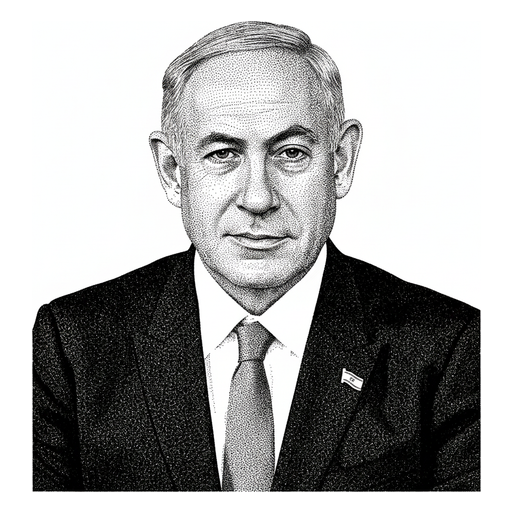
Benjamin Netanyahu
Prime Minister, leader of LikudLeads the largest party. He has called on what he calls the "Zionist majority" to unite. He stays in office as caretaker while talks go on.
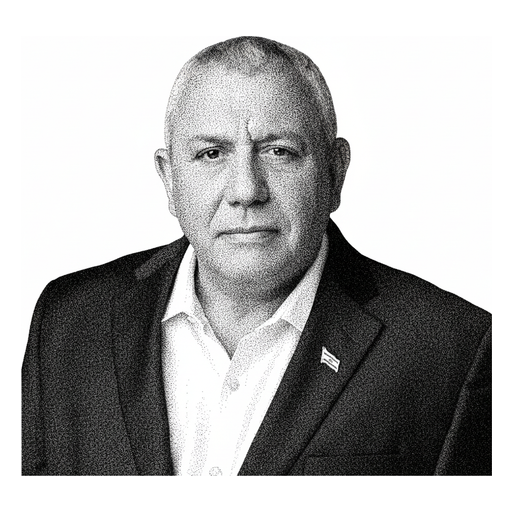
Gadi Eisenkot
Leader of Yashar!, former army chief of staffLeads the opposition bloc, which ranges from right to left. He has promised more diplomacy and less extremism.

Mansour Abbas
Leader of Ra'am, an Arab partyHas said he would not join a government led by Netanyahu. His seats could help the opposition reach a majority.
Why the count is not over
The last ballots to be counted are the double envelopes, cast by soldiers, diplomats and others who vote away from home. The Central Elections Committee estimated between 430,000 and 480,000 of them, which could still change the final seat count.
The count is also contested. Netanyahu's Likud party has alleged fraud by Arab parties and asked for an investigation. The committee says it is reviewing every complaint it receives, from all parties.
Each side reads the numbers its own way. Yair Golan, who leads the center-left Democrats, wrote that he knows how to count to 120 and that Netanyahu lost. He wants a government backed by the Arab parties. All but one of the Jewish parties pledged during the campaign not to work with them, the BBC reports.
How a government gets formed
The law sets the steps in Figure 2. The first leader chosen by the president gets 28 days, and can ask for 14 more. If that fails, a second leader gets 28 days with no extension. A majority of the Knesset can then name a third candidate, who gets 14 days. If all of that fails, Israel holds a new election. The Times of Israel puts the longest path at about 12 weeks.
Herzog has asked party leaders to keep an open mind. "We must do everything, certainly after yesterday, to avoid another round of elections," he said.
The steps to a new government
- First mandateThe leader the president chooses has 28 days, plus up to 14 more on request.
- Second mandateIf that fails, another leader gets 28 days, with no extension.
- Last chanceA majority of 61 members can name one more candidate, who gets 14 days.
- OtherwiseA new election is called. The caretaker government stays until then.
What our scenario brief found
Vektora's scenario brief asks whether a new government wins a confidence vote by January 15th, 2027, and who leads it. We ran a set of simulated worlds, each built around a different shock or choice. No outcome holds a majority of them. Stalemate, with Netanyahu staying on as caretaker, is the largest group. An opposition government and a Netanyahu-led government come next, tied.
Two things move the most worlds. One is the final count of Arab party seats after the fraud review: a lower count closes the opposition's clearest route to 61. The other is Liberman, whose seats can complete either side's majority.
In the worlds with no outside shock, a government does form before the deadline. They disagree on who leads it.
What to watch
First, the final certified seat count, after the double envelopes and the fraud review. Second, which leader Herzog names to form a government. Third, whether Liberman commits to one side. A security shock involving Iran or the West Bank during the talks could change the picture in either direction.