A year into Gaza's ceasefire, the Board of Peace reports $280m deployed of about $17bn pledged
Board officials say the money waits on foreign troops or Palestinian police entering Gaza. On November 18th Israel's defense minister said Israeli forces will not leave their security zones until Hamas is dismantled.
Analysis November 20th, 2026 Vektora
Stabilization forceApproved, not deployed
Palestinian administration (NCAG)Outside Gaza
Sources14 cited
As ofNov 20th, 2026
70% of Gaza under Israeli control
+12 points since October 2025Refugees International says Israel's line of control has moved west all year1.
Sources: Refugees International, November 19th, 20261; JNS, November 18th, 20262
Executive Summary
A year into Gaza's ceasefire, the money for rebuilding is pledged but almost none of it is moving. The Board of Peace is the US-chaired body that the UN Security Council made Gaza's transitional authority. On November 17th it told the Council that it holds about $17bn in pledges and has deployed $280m for a preparation phase3,4. Board officials told the Washington Post that the money cannot go into projects until foreign troops or newly trained Palestinian police enter Gaza, Al Jazeera reports5. Neither has entered. The board blames missing Israeli decisions in part4.
The day after the report, Israel's defense minister said Israeli forces will not leave their security zones in Gaza, Lebanon and Syria until Hamas is dismantled and Hezbollah disarmed. Israel Katz added that the army is ready to take more ground if fighting escalates2,6. Israel the same day began its first publicly announced ground operation in Gaza since the truce7. Refugees International, a US humanitarian group, says Israeli control has grown from 58% of Gaza at the start of the ceasefire to nearly 70%1.
For donors, contractors and lenders, the order of events now matters more than the size of the pledges. Under the plan, rebuilding follows disarmament, and disarmament follows the arrival of a stabilization force8,4. That force has Israeli approval for 250 troops and has not deployed8,3. Until it does, Vektora expects the gap between pledged and spent money to stay wide.
Pledged through the Board of Peace
$17bn
Deployed for the preparation phase
$280m
Aid trucks a day in September (agreed minimum 600)
49
Share of Gaza under Israeli control, per Refugees International
70%
01Pledged, not spent
Gaza's reconstruction is priced at about $71bn, about $17bn to $18bn is pledged, and $280m has moved.
The Board of Peace was proposed by President Donald Trump in September 2025 as part of his 20-point plan for Gaza. The UN Security Council endorsed it in Resolution 2803 on November 17th, 2025, as a transitional administration that sets the framework and coordinates funding for Gaza's rebuilding5. Trump chairs it. Its mandate in Gaza runs to the end of 2027 unless the Council decides otherwise5.
At its first meeting on February 19th, Trump announced about $7bn in pledges from nine countries plus a $10bn US pledge. The UAE pledged $1.2bn, and Kuwait, Qatar and Saudi Arabia $1bn each5. By the board's September 23rd briefing, donors had made about $18bn in early commitments. The board had called in $280m for the first building phase, and most of it was unspent5. The November report puts pledges at about $17bn, with $280m deployed for the preparation phase3.
Fig. 1
Gaza reconstruction: the bill, the pledges and the first-phase plan
Board of Peace figures as of its September 23rd, 2026 briefing, per Al Jazeera.
The UN and the European Union put Gaza's needs at $71.4bn over the next decade in their damage assessment of April 20269. In September the board proposed a six-month, $2.45bn recovery plan with 66 projects, 24 of them in infrastructure10,5. Refugees International says the board itself accepts the plan is not feasible under current conditions1.
The Carnegie Endowment, a Washington research group, warned in March that Gulf donors have not said whether their pledges buy board membership or fund rebuilding11. It added that Saudi Arabia and Kuwait will pay over several years11.
02Why the money waits
Spending is tied to a stabilization force and a Palestinian police force, and Israel's approvals for both are still partial.
The plan runs in a chain. An International Stabilization Force (ISF) enters Gaza, Hamas disarms, Israeli troops withdraw, and reconstruction starts4. A technocratic Palestinian body, the National Committee for the Administration of Gaza (NCAG), is meant to run daily affairs. It is led by Ali Shaath and works from Cairo because Israel has not let it enter Gaza5.
The distance between what has been agreed and what is happening on the ground nonetheless remains the principal risk to the process
The line above is from the board's November 17th report. The report blames both sides. It says Israel has not taken the decisions needed to train and deploy Palestinian civilian police, and that this delayed the stabilization force4. It says Hamas continued armed operations and taxed goods entering Gaza3. Hamas and other factions accepted a 15-point road map in July to give up their weapons and hand over civilian and security authority3. Israel rejected it7.
Israel's cabinet first approved an ISF entry of up to 200 troops on July 26th, subject to sign-off by the prime minister, the defense minister and the foreign minister12. On November 9th Israel approved the first 250 foreign troops, according to the Israeli news site Walla, as reported by The Jewish Chronicle8. The force's commander, US Army Major General Jasper Jeffers, has spoken of up to 20,000 soldiers and 12,000 trained Palestinian police8. The board's November report says the force remains undeployed3.
October 10th, 2025
Talks.
The ceasefire between Israel and Hamas takes effect7.
November 17th, 2025
Announcement.
The UN Security Council adopts Resolution 2803 and endorses the Board of Peace5.
February 19th, 2026
Announcement.
First board meeting in Washington: about $7bn pledged by nine countries plus $10bn from the US5.
July 26th, 2026
Announcement.
Israel's cabinet approves the entry of up to 200 stabilization troops, subject to ministers' sign-off12.
September 23rd, 2026
Announcement.
The board unveils a $2.45bn six-month recovery plan10.
November 9th, 2026
Announcement.
Israel approves the first 250 foreign troops, per Walla8.
November 17th, 2026
Talks.
The board warns the Security Council the ceasefire could collapse4.
November 18th, 2026
Strike.
Latest. Katz says Israel keeps its security zones. Israel starts a ground operation in central Gaza2,7.
Israel
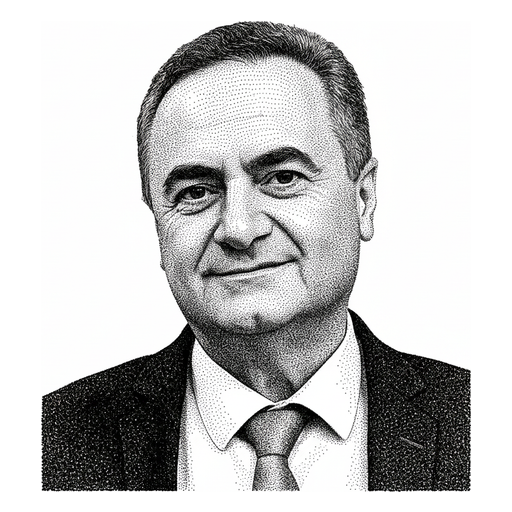
Israel Katz
Israel's minister of defense
Said on November 18th that Israel will not withdraw from its security zones until Hamas is dismantled and Gaza demilitarized2. He is one of three ministers who must sign off on each ISF entry12.
What to watch
Any change to the zones after a new Israeli government forms
Ministerial sign-off on the first ISF contingent
Board of Peace
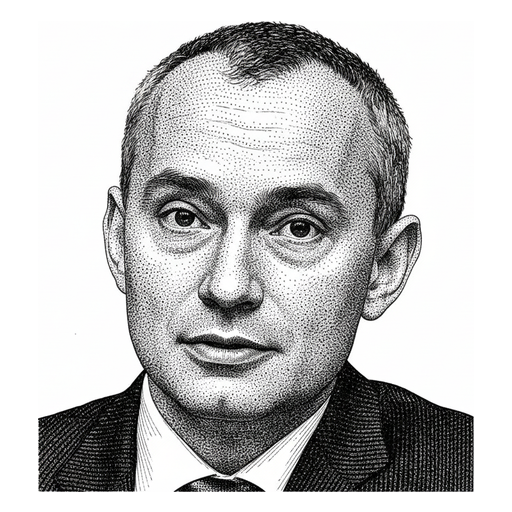
Nickolay Mladenov
High representative for Gaza, Board of Peace
A former UN Middle East envoy who delivered the board's first report in May4. He has said progress depends largely on Hamas disarming, and has pressed Israel to scale back its operations10.
What to watch
The Security Council debate on the board's report
United States
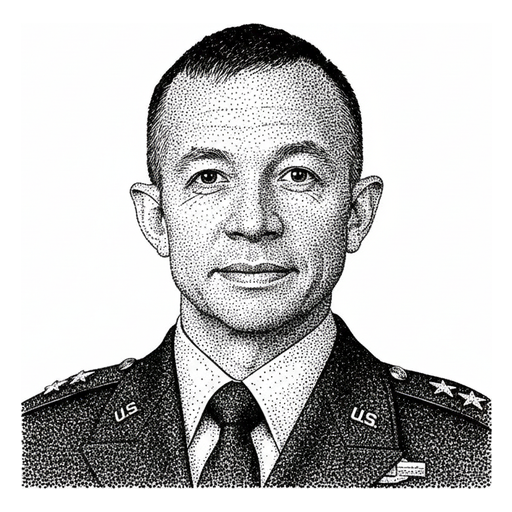
Jasper Jeffers
US Army major general, ISF commander
Commands the stabilization force. He has outlined a force of up to 20,000 soldiers8.
What to watch
The first troops crossing into Gaza
Which countries send them
Palestinian technocrats
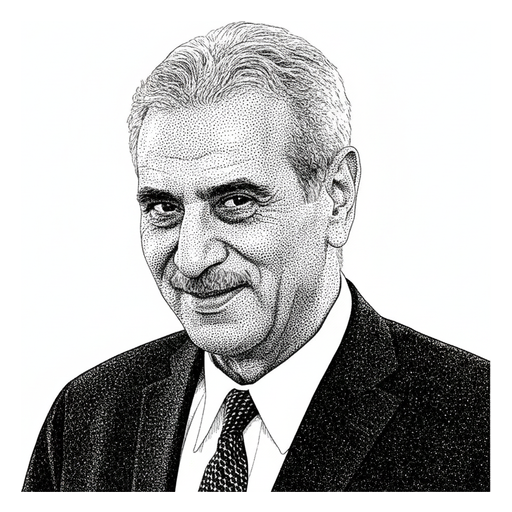
Ali Shaath
Head of the National Committee for the Administration of Gaza
Leads the committee meant to run Gaza day to day. It reports to the board and operates from Cairo5.
What to watch
Israeli permission for the committee to enter Gaza
Portraits after photographs. Israel Katz: U.S. Embassy Jerusalem, via Wikimedia Commons, CC BY 2.0; Nickolay Mladenov: European People's Party, via Wikimedia Commons, CC BY 2.0; Ali Shaath: Foreign, Commonwealth & Development Office, via Wikimedia Commons, CC BY 4.0.
03The zones Israel says it will keep
Katz restated an old condition on November 18th, and added a threat to take more ground.
Katz, Israel's defense minister, put it this way in a statement on November 18th, as carried by Anadolu Agency, the Turkish state news agency6:
As we have made clear: Israel will not withdraw from the current lines of these security zones, nor will it redeploy its forces
Katz tied any withdrawal to Hamas being dismantled, Gaza demilitarized, Hezbollah disarmed across Lebanon and jihadist threats in Syria removed2. He said that if the fronts escalate, the army is ready to "maneuver and seize additional territory"2. Israel.com, an Israeli news site, notes that Katz framed the stance as a restatement and that the new element is the threat to take more land13. He made a similar statement in April 2025, saying troops would stay in the zones in "any temporary or permanent situation"14.
The share of Gaza that Israel holds is disputed. JNS, an Israeli outlet, puts it at roughly 54%2. Al Jazeera says the line Israel withdrew to under the truce left it in about 53% and now covers about two-thirds7. Refugees International says nearly 70%, up from 58% at the start, with a barrier more than 23 kilometers long built inside Gaza1. Every estimate places more than half of Gaza under Israeli control.
Fig. 2
Ground operation
Israeli-held zones and crossings
PalestineJordanIsraelSyriaLebanonEgypt
100 km
Positions are approximate. Zone limits are not drawn. Borders: Natural Earth.
Sources: Al Jazeera, November 18th, 20267; Refugees International, November 19th, 20261; JNS, November 18th, 20262
04Aid below the floor the plan set
Aid deliveries run far below the agreed minimum, which matters to donors because rebuilding cannot start where shelter has not arrived.
Refugees International's scorecard, endorsed by groups including Oxfam and Save the Children, rates the ceasefire on the plan's own benchmarks. It gave the truce 5 of 26 points at six months and 4 of 26 at one year1.
Fig. 3
UN-coordinated aid trucks entering Gaza per day
Trucks a day
Source: Refugees International, November 19th, 20261
Refugees International, from UN data.
Only 2% of those trucks carried medical supplies1. Israel classes most shelter materials as dual-use, meaning goods with possible military use1. When the first winter storm flooded around 70,000 tents in early November, more than 150,000 tents sat outside Gaza waiting to enter1. The board reports that flooding destroyed more than 6,000 family shelters3. Israel is also blocking 60,000 mobile homes promised under the deal, according to Al Jazeera5.
1.8m
people in displacement sites
1,658
Palestinians killed since the truce, per Gaza's health ministry
150,000
tents waiting outside Gaza
05The other reading
Israel and Washington say Hamas, not Israel, is the obstacle, and the plan's own order supports part of that view.
The strongest objection to this analysis is that Katz's conditions are the plan's conditions. The plan has reconstruction follow only once disarmament progress is verified8. At the Security Council in April, the US representative said Hamas was the one obstruction to the plan9. Norway's foreign minister, Espen Barth Eide, speaking for the main donor group on April 28th, said9:
I call on Hamas to decommission its weapons without delay
Israeli security officials also fear that a multinational force could grow larger than Israel's own Gaza Division, and that Hamas could use images of suffering to win reconstruction before it disarms8. On that reading, Israel's caution protects the plan.
The board's own report does not fully support that reading. It says each side's delay cannot excuse the other's, and it names Israeli decisions on police, the NCAG and the ISF as missing4,3. It also says continued Israeli strikes delay any test of Hamas's acceptance of the road map, as quoted by The National3:
Every day that Israel continues strikes against Hamas targets, it delays putting Hamas’s agreement to the road map to the test
Both readings leave the same practical result for a funder. Nothing in either predicts spending at scale before a force is on the ground.
06Vektora Assessment
Medium-high confidence that reconstruction money stays mostly unspent through June 2027, because the gate is troops, and the troops depend on Israeli approvals.
Position. The binding limit is the order of the plan. Money waits for a force, the force waits for Israeli ministerial approvals and contributor countries, and Israel says its lines hold until Hamas disarms5,12,2. Katz's November 18th statement did not create this order. It confirmed that Israel's lines will move only for disarmament, not for aid or rebuilding2.
Confidence. Medium-high. The board's report as reported by AP and The National, Israeli outlets such as JNS and The Jewish Chronicle, and Anadolu and Al Jazeera agree on the main facts. Katz's statement is carried by Israeli, Turkish and Gulf outlets alike2,6,3. The sources disagree on how much of Gaza Israel holds. The claim that money waits on troops comes from board officials quoted secondhand, which is the weakest link5.
Where we differ from the coverage. Most reports treat the board's warning as a humanitarian story. For reconstruction finance, the more useful fact is that board officials tie spending to the entry of the ISF or police, which makes the first ISF crossing the first real test for funders5.
What would change the call: ISF troops operating inside Gaza, the NCAG entering Gaza, or the board reporting spending well above $280m.
What would make it worse: a wider Israeli ground operation, or a renewed war with Iran that Katz says could lead Israel to take more territory6.
07Client Implications
Treat Gaza reconstruction exposure as option value tied to the ISF, not as a near-term pipeline.
Reader
What to do
Private equity and venture capital (PE and VC) firms
Base Gaza contract timing on the date the ISF enters and on Board of Peace disbursement reports, rather than on pledge totals.
Family offices
Gulf-linked construction and logistics plays depend on Israeli approvals, not Gulf money. Size them as long-dated options.
Corporates
Suppliers of shelter, water and power equipment face dual-use screening at Kerem Shalom1. Build approval time into delivery terms.
Law firms
Board of Peace funds pass through a World Bank fund where the bank is a limited trustee with no responsibility for use after transfer, per Carnegie11. Diligence the counterparty, not the trustee.
08Forecast Watch
The first ISF troops inside Gaza is the event that would move every other call.
Calibration. Confidence on the mechanism is high: the board and its officials state that money waits on troops or police5. Confidence on the horizon is medium: Israel is forming a new government after its October 27th election. Gadi Eisenkot, who heads the Change Bloc, has been tasked with forming it6. Trump has urged Prime Minister Benjamin Netanyahu to move faster on the plan whichever government takes office8.
Analyst assessment. Each call is scored once its date passes.
80%
The UN Security Council holds a meeting on the Board of Peace's second report, per the UN meetings record
Settles Dec 31st, 202641 days left
35%
Troops of the International Stabilization Force are deployed inside Gaza, per the Board of Peace or US Central Command
Settles Feb 28th, 2027100 days left
20%
The National Committee for the Administration of Gaza begins operating inside Gaza, per a Board of Peace statement
Settles Mar 31st, 2027131 days left
15%
The Board of Peace reports more than $1bn deployed or spent on Gaza recovery
Settles Jun 30th, 2027222 days left
Board of Peace statements on X and its reports to the Security Council, each quarter.
UN meetings coverage of Security Council debates on the Palestinian question, at each session.
Israeli cabinet decisions on ISF entry, reported by Israeli media, as they happen.
Refugees International and UN aid truck counts, monthly.
 Israel