Eisenkot now courts the ultra-Orthodox parties. In our tests his quiet path needs their draft deal and Arab abstention together
Netanyahu's bloc won 53 seats and Eisenkot's won 48, so neither has a majority. Eisenkot has until December 6th to form a government, plus up to 14 more days.
- If nothing changes
- Eisenkot's bloc wins its vote before January 15th. It rests on a draft deal with an ultra-Orthodox party and on Arab parties abstaining.
- What it depends on
- Whether United Torah Judaism signs a draft deal with Eisenkot, and whether Lieberman accepts a government that passes because Arab parties abstain.
The Knesset votes on a new speaker. Eisenkot's bloc backs Matan Kahana, a lawmaker from his party.
The last day to appeal the election results, by the account of Likud's lawyer. The appeal would go to the Jerusalem District Court.
Has the Knesset elected a new Speaker from Eisenkot's bloc?
Does a public prediction market's contract on Eisenkot as prime minister trade above the run's threshold?
Eisenkot's first 28 days end. Herzog can give him up to 14 more.
Has the Israel Democracy Institute's poll put Eisenkot well ahead of Netanyahu?
The last day of Eisenkot's time if Herzog extends it. After that, the task can pass to another lawmaker.
Has United Torah Judaism signed a draft deal to join Eisenkot?
Has a court dismissed the election fraud appeal?
- Herzog gives Eisenkot the taskNovember 8th, 2026
- The Knesset votes on a new speakerNovember 17th, 2026
- Eisenkot's first 28 days endDecember 6th, 2026
- His time ends if Herzog extends itDecember 20th, 2026
- The deadline in our questionJanuary 15th, 2027
The Knesset is Israel's parliament. A new government takes office only when the Knesset votes that it has confidence in it.10
Israel voted on October 27th. Benjamin Netanyahu's Likud won 27 of the 120 seats, the most of any party. His wider bloc won only 53, short of the 61 a majority needs. Gadi Eisenkot's bloc won 48. Two Arab parties won 19, more than ever before.2
President Isaac Herzog then met every party. 67 lawmakers backed Eisenkot to try first, and 46 backed Netanyahu. United Torah Judaism, an ultra-Orthodox party, backed no one. On November 8th, Herzog gave Eisenkot the task.4
The rule is in a law called Basic Law: The Government. The lawmaker with the task has 28 days, so Eisenkot has until December 6th. Herzog can add up to 14 days, to December 20th.5
If Eisenkot fails, Herzog has three days to name another lawmaker or pass the choice to the Knesset. A second nominee gets 28 days with no extension. After that, 61 lawmakers have 21 days to name a candidate, who gets 14 days. If that fails, the Knesset is dissolved and an election follows within 90 days.17
A government does not need 61 votes to win confidence. More lawmakers must vote for it than against it, so parties that stay outside or abstain can let it pass.17
Eisenkot has decided to put talks with the ultra-Orthodox parties first, Israel's Channel 12 reported on November 13th. United Torah Judaism is debating whether to join him. Shas, the other ultra-Orthodox party, says it backs Netanyahu and is not negotiating with a rival bloc.12
On November 14th, Netanyahu again called for a unity government and asked Eisenkot to meet without preconditions. Eisenkot answered that talks were already under way. "These tricks don't work on me," he said.13
Teams from Likud and from Eisenkot's party, Yashar, were due to meet on November 15th. The Jerusalem Post reported that morning that Eisenkot's informal talks with United Torah Judaism remained far from an agreement.22
Netanyahu has accused Arab parties of electoral fraud. Israel's electoral authorities have rejected the claims as not backed by evidence, the Guardian reports. Eisenkot called the campaign against Arab citizens racist.21
Likud is preparing to appeal the election results, its lawyer, Ilan Bombach, told the Times of Israel. He said the appeal would go to the Jerusalem District Court, and that November 17th is the last day to file.18
Until a new government is sworn in, Netanyahu stays on as caretaker prime minister. He is on trial for bribery, fraud and breach of trust. No page we gathered says how the trial bears on his position in the talks.17
Brookings, a research group in Washington, wrote that failed talks would leave Israel without a stable government while a renewed war with Iran is possible.20
A government in time
- Eisenkot's bloc reaches a majority on schedule
- Fraud claims clear and a push for unity settles the talks
- A unity bid fails and Arab parties bridge the gap
- The order of events locks in Eisenkot's coalition
A government late or only barely
- A fight over fraud claims and the draft, Eisenkot barely through
- Leaks and rival stories tighten the deadline
- A security and market shock, a shaky government at the last moment
- Splits in both blocs, a narrow Eisenkot win
- A secret channel collapses, abstention carries Eisenkot
No government by January 15th
- Lieberman's veto and lost Arab seats block Eisenkot
- A fraud ruling and a war freeze the talks
- Delays and a crisis use up the time
- October 27thIsrael votes. Neither main bloc wins a majority.2
- November 8thPresident Isaac Herzog gives Eisenkot the task of forming a government.1
- November 10thThe new Knesset is sworn in.5
- November 11thEisenkot's side wins its first Knesset vote and sets up the Knesset Arrangements Committee.7
- November 14thNetanyahu calls again for a unity government. Eisenkot says talks are already under way.13
- November 17thThe Knesset votes on a new speaker. Eisenkot's side backs Matan Kahana of his party.8
- December 6thEisenkot's 28 days end.5
- December 20thThe latest end of Eisenkot's time, if Herzog adds 14 days.5
- Places in the coalition talks
Bnei Brak lies just east of Tel Aviv. The markers are set slightly apart so both can be read. Borders: Natural Earth.
Herzog gave Eisenkot the task at the President's Residence in Jerusalem. The Knesset, which must vote confidence in any new government, also sits in Jerusalem.1
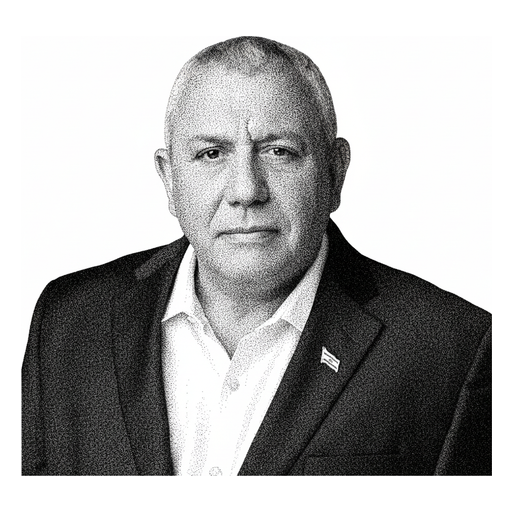
Has held the task of forming a government since November 8th. He has vowed not to serve under or with Netanyahu. Channel 12 reports he now puts a coalition with the ultra-Orthodox parties first.12
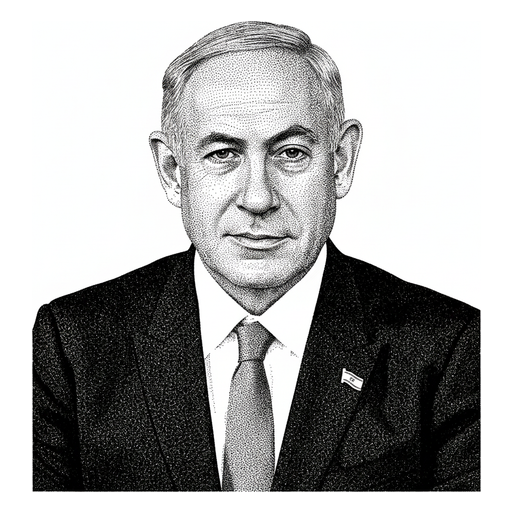
Likud won the most seats of any party. On November 14th he called again for a unity government of parties that see Israel as a state for the Jewish people. He called Eisenkot's plan a "weak and dangerous government".13
Chose Eisenkot to try first, and can add up to 14 days to his time. If Eisenkot fails, the President has three days to name another lawmaker or pass the choice to the Knesset.17

Ra'am says it is willing to join a coalition again. In 2021 it became the first Arab party to join an Israeli coalition.4
Lieberman rejects any reliance on Arab parties and opposes a minority government. He wants a majority built with the ultra-Orthodox parties, an alliance he rejected for years.12
Is debating whether to join an Eisenkot government without a guaranteed army exemption for religious students, Channel 13 reports. Its representatives seek a one-year halt to their enlistment.12
We add each shock to the quiet path twice and see where the answer ends each time. When both tries agree, the result is firm. When they differ, it is uncertain. The quiet path is the one with no new shock.
- changes it both times
- Both tries ended on a different level from the quiet path.
- changes it one time in two
- One try changed the answer and the other did not. Treat this shock as uncertain.
- no change either time
- Both tries ended where the quiet path ends.
Both quiet paths end with an Eisenkot government that wins its vote before January 15th. With no new shock it rests on a draft deal with an ultra-Orthodox party and on Arab parties abstaining.11
- The Times of Israel
- Reports that Lieberman rejects any reliance on Arab parties and opposes a minority government. It reports that Eisenkot now puts the ultra-Orthodox parties first.12
- Reuters
- Reported on November 7th that analysts doubt Eisenkot's three paths to power will take shape. The paths are a minority government with Arab votes, a deal with ultra-Orthodox parties, or unity with Netanyahu.2
- Uriel Zehavi, a columnist for The Algemeiner
- Wrote on November 12th that events point, for now, to Netanyahu staying in office and an early new election. Ultra-Orthodox parties want a draft law first, and only a government can bring one.9
- Ynet, an Israeli news site
- Reported on November 14th that the talks with the ultra-Orthodox parties had produced no breakthrough. It said neither Netanyahu nor Eisenkot would give up the post of prime minister.14
- This report
- The quiet paths now assume a draft deal with an ultra-Orthodox party. The Jerusalem Post reports that Eisenkot's talks with United Torah Judaism are far from an agreement, and Shas says it is not negotiating. The quiet paths also still need Arab parties to abstain, and Lieberman rejects relying on them. Watch whether United Torah Judaism signs.
Overstated
Haaretz's headline says Eisenkot controls the Knesset, and adds that Netanyahu is still prime minister. The control is real for votes like the 63 to 50 committee vote. It rests on Arab lawmakers, and Lieberman refuses a government that leans on them.
Understated
Anadolu notes that a confidence vote needs more votes for than against. Parties that abstain or stay outside can let a smaller coalition take office. That is how both of our quiet paths end.
If Eisenkot uses his full time to December 20th, a second nominee would then get 28 days. By our count those 28 days end after January 15th. A second try would have to finish early to meet our deadline.
- Yes
- Eisenkot's bloc reaches a majority on schedule, or fraud claims clear and a push for unity settles the talks.
- No
- Lieberman's veto and lost Arab seats block Eisenkot, or a fraud ruling and a war freeze the talks.
- Yes
- Any outcome where Eisenkot forms a government, on schedule or after a fight or a split.
- No
- Lieberman's veto and lost Arab seats block Eisenkot, or a fraud ruling and a war freeze the talks.
- Yes
- Eisenkot's bloc reaches a majority on schedule, or fraud claims clear and a push for unity settles the talks.
- No
- Leaks and rival stories tighten the deadline, or Lieberman's veto and lost Arab seats block Eisenkot.
- Yes
- Eisenkot's bloc reaches a majority on schedule, or fraud claims clear and a push for unity settles the talks.
- No
- Leaks and rival stories tighten the deadline, or delays and a crisis use up the time.
- Yes
- Eisenkot's bloc reaches a majority on schedule, a push for unity settles the talks, or the order of events locks in his coalition.
- No
- Lieberman's veto and lost Arab seats block Eisenkot, or a fraud ruling and a war freeze the talks.
This page cites 22 sources. Every number on it is traced to one of them or to the run.
- Outcomes
- Each outcome assumes one shock, such as a veto or a crisis abroad. A count of outcomes is not a chance.
- Levels
- Each outcome sits on one of three levels, by whether a government wins its vote and how close to the deadline.
- The run
- Brief 68, run again on November 15th, 2026, after Eisenkot turned to the ultra-Orthodox parties. We tried each shock twice.
- How firm this is
- We have run this question four times, on October 28th and on November 10th, 14th and 15th. Each time the path with no new shock ended with a government in time, and a veto ended with none. On November 14th the quiet path leaned on Arab backing alone. Now it leans on an ultra-Orthodox draft deal as well. In this run every shock that moved the result did so both times we tried it. A unity bid moved it in one try only, and the order of events in neither.
- Past cases
- The run found past cases too few to compare by rate. In 1993 Yitzhak Rabin's government lost its majority and carried on with support from Arab lawmakers, Anadolu reports. In 2019 two attempts failed and the last round ended in a new election. In 2020 that round produced a power-sharing deal. In 2021 Ra'am became the first Arab party to join a coalition, DW reports. No stored page covers the 2009 case the run lists.
- Deadline
- Our question ends on January 15th, 2027, a date the question sets. The law's own dates are in the timeline.
- The sources
- For the rules: the Knesset, the President's office and the text of Basic Law: The Government. For the news: Reuters, Le Monde, the Guardian, the Times of Israel, Haaretz, the BBC, DW, Fox News, Anadolu, Ynet and the Jerusalem Post. For views: Jewish Insider, Brookings and The Algemeiner.
- What we left out
- Whether Likud filed its appeal, and any appeal before the Supreme Court: no stored page shows either. The result of the November 15th meeting between Likud and Yashar. What Shas would ask for. Any prediction market price: one question reads a market, and we print none. Any public statement by President Trump on the talks since late October.
- Score
- The five questions and the main question are scored on the public scorecard.
- A real result can be one we did not test.
- Office of the President of Israel, "President Herzog Tasks Gadi Eisenkot with Forming a Government", November 8th, 2026.
- Reuters, "Israeli president picks Gadi Eisenkot, Netanyahu rival, to try to form government", November 7th, 2026.
- Reuters, "Netanyahu rival Eisenkot seeks 'wide' government but path to power uncertain", November 8th, 2026.
- DW, "Israel: Eisenkot officially tasked with forming a government", November 8th, 2026.
- Fox News, "Israel's new Knesset sworn in as Eisenkot faces coalition challenge", November 11th, 2026.
- BBC News, "Israel's new parliament sworn in as leaders compete to form government".
- Haaretz, "Eisenkot Controls the Knesset, Netanyahu Is Still Prime Minister: What Each Bloc Is Planning to Do", November 12th, 2026.
- Le Monde, "Eisenkot pledges swift legislative reforms before government formation in Israel", November 11th, 2026.
- Uriel Zehavi, The Algemeiner, "Israeli Coalition Talks: The Draft Law Has to Come First, and It Can't", November 12th, 2026.
- The Knesset, lexicon entry "Government".
- Vektora, brief 68, "Netanyahu or Eisenkot: who wins Israel's confidence vote?"
- The Times of Israel, "Eisenkot said prioritizing efforts to form coalition with ultra-Orthodox", November 14th, 2026.
- Le Monde, "In Israel, Gadi Eisenkot dismisses 'tricks' of Netanyahu, who calls for Israeli unity government", November 14th, 2026.
- Ynet, "Netanyahu-Eisenkot unity talks set, but neither will give up premiership", November 14th, 2026.
- The Knesset, lexicon entry "Forming a Government".
- Basic Law: The Government (2001), English text held by the International Labour Organization's NATLEX database.
- Anadolu, "Israel's coalition deadlock: Up to three chances to form government before triggering new elections", November 9th, 2026.
- The Times of Israel, "Likud to appeal election results over alleged illegal voter tracking by Arab parties", November 7th, 2026.
- Jewish Insider, "Eisenkot warns Netanyahu against launching war during coalition talks", November 12th, 2026.
- Brookings, "Israel's deadlocked election could force a new vote in 2027", October 30th, 2026.
- The Guardian, "Eisenkot condemns Netanyahu's 'racist' campaign against Israel's Arab citizens", November 13th, 2026.
- The Jerusalem Post, "Israel Election 2026 Live Updates", November 15th, 2026.
Built on brief 68: Netanyahu or Eisenkot: who wins Israel's confidence vote?