55%
The Israeli military announces at least one more ground operation west of the yellow line, as reported by Reuters or the Israeli military.
Confirmed force movement beyond routine posture
Israeli tanks crossed the yellow line into central Gaza on November 18th, the first announced raid of its kind since the October 2025 truce1.
Legal change, executive order or regulatory action
No new law or order this week. Netanyahu's directive to hold 70% of Gaza predates the raid2.
A defence pact invoked, or an alliance rupture mechanism used
No party has left the truce. The Board of Peace asked both sides to keep their commitments3.
Sanctions enacted, blockades, asset freezes
Israeli limits on supplies continue, per the Board of Peace, but no new measure was imposed this week4.
Sustained coalition formation or diplomatic realignment
The mediators and the Board of Peace are unchanged. Hamas blames the Board for failing to stop the strikes5.
The escalation test from the Vektora alert method, applied to the sources cited under each criterion.
Israel has moved past Gaza's ceasefire line on the ground and killed three senior Hamas officials since November 24th. The yellow line is the boundary Israel's army pulled back to under the October 2025 truce2. On November 18th Israeli tanks crossed it near Nuseirat camp in central Gaza, the first ground operation beyond it since the truce, according to the Israeli military6. Airstrikes then killed two Hamas security chiefs and Khaled Abu Nada, a Hamas-appointed deputy education minister5.
Israel and Hamas each say the other is breaking the truce, and its overseer has warned it could collapse. Benjamin Netanyahu, Israel's caretaker prime minister, says the killings are targeted strikes on Hamas5,7. Hamas, the armed movement that runs the coastal strip of Gaza that Israel does not hold, calls them a violation of the truce5. The Board of Peace, the US-led body set up to oversee the truce, warned the United Nations (UN) Security Council on November 17th that the deal could collapse3.
The weak point is the line itself. Reports of how much of Gaza Israel holds run from roughly 60% to 70%6,8. As of August, the mediators had not said in public which version of the line Israel must respect9. The verification committee meant to check each side's steps had not been set up as of August10. Until someone publishes the line and a way to police it, each raid will be judged by whoever carries it out.
The Nuseirat raid lasted about 24 hours and the army said it was completed7. Netanyahu said Israel has killed about 80 Hamas militants in the past month5.
The Board's report says the gap between what was agreed and what happens on the ground is the main risk to the process3. Hamas holds the Board responsible for failing to stop the attacks5.
The Board says that if the truce collapses there would be no administration to deploy and no conditions to rebuild4. Our November analysis found that little of the pledged money has been spent.
The strike on Mohammad Abuelouf also killed his wife and two children11. Five aid groups gave the peace plan 4 out of 26 on their own scorecard8.
Only an average of 49 UN-coordinated aid trucks entered Gaza each day in September, against an agreed minimum of 6008.
Mechanism: high confidence. The sources agree on how this works: Israel conditions withdrawal on Hamas disarming, Hamas will not disarm before Israel withdraws, and nobody has published the line in between12,10. Horizon: medium confidence. The Board of Peace is due to present its report to the Security Council at the end of November, and that meeting could change the pace12.
Analyst assessment. Each call is scored once its date passes.
The Israeli military announces at least one more ground operation west of the yellow line, as reported by Reuters or the Israeli military.
The Board of Peace or the US government publishes a map or coordinates of the yellow line that Israel and Hamas both accept.
Israel or Hamas formally declares the October 2025 ceasefire over, in an official government or Hamas statement.
The UN Security Council adopts a new resolution that sets up monitoring or enforcement of the Gaza ceasefire.
On November 18th COGAT, the Israeli defence ministry body that handles civilian affairs in the Palestinian territories, told residents of parts of Bureij and Nuseirat to leave2. It named blocks 660, 661 and 6662. Blocks 661 and 666 sit wholly on the Hamas side of the yellow line2. The army said it was destroying a tunnel west of the line that posed a threat to its troops1. The Hamas-run government media office said about 6,000 people left the area1.
Contained. The army said the raid had ended on November 19th and reopened the Salahudeen road, Gaza's main north-south route1. The raid lasted about 24 hours7.
The strikes that followed hit people who run Hamas's administration. Naeem Abu Nahel, director-general of Gaza's Internal Security Service, was killed in Gaza City on November 24th13. Mohammad Abuelouf, who headed internal security in northern Gaza, was killed on November 25th11. Khaled Abu Nada was killed with his wife in Deir al-Balah overnight into November 26th5. The Israeli military says Abu Nada managed Hamas's banking and investment network5. Hamas confirmed he sat on its political office5. Netanyahu called the strike one of a series of targeted killings and said this on November 26th14:
No terrorist is immune, and no one in the Hamas leadership will manage to evade us
NBC News (Reuters)14
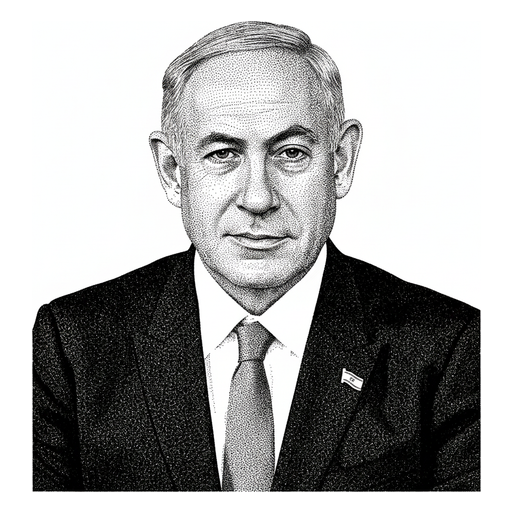 Israel
Calls the killings part of a series of targeted strikes on Hamas members and leaders5. He directed the army to hold 70% of Gaza as disarmament talks stalled2.
 Israel
With Netanyahu, said the strike in Deir al-Balah killed a Hamas figure responsible for the group's economy and education portfolios16.
 Board of Peace
The Board's top Gaza envoy. He has said Israel is at the yellow line and asked that troops not move further from it, while leaving open which version of the line applies9.
 Hamas
Dismissed the Board of Peace report as disinformation and accused the Board of giving Israel cover12.
Marker positions are approximate. The line's exact course is not published by the mediators. Borders: Natural Earth.
Sources: The Guardian, November 19th, 20267; Reuters, November 26th, 20265; Reuters, November 25th, 202611; France 24, November 24th, 202613
The October 2025 deal told Israel to pull back to the yellow line, leaving it with 53 percent of Gaza2. Since then the line has moved west in steps, and estimates of Israel's share now reach 70%15,8. The Times of Israel reported in August that the Board of Peace had not said whether the original or the newer line applies9. An Israeli official told the paper the army would keep its positions past the original line until Hamas begins to disarm9.
The roadmap that Mladenov announced on July 30th, 2026 was meant to fix this. It ties each Israeli withdrawal to a step in Hamas's disarmament, checked by an International Verification Committee10. That committee, and the International Stabilization Force meant to sit between the two sides, did not yet exist in August10. The Board's November report says the stabilisation force is still delayed3. The committee was to include the Board and the four mediating countries, Egypt, Qatar, Turkey and the United States10.
Israel cannot simply invoke security concerns whenever it wants to cross a boundary it agreed to respect
Andreas Krieg, a senior lecturer at the School of Security Studies at King's College London, said this to NBC News on November 19th6. He added that Israel could be seeking a standing right of hot pursuit beyond the line6.
One crossing is open and aid trucks run far below the agreed level8.
The Board says there is no administration in place to rebuild if the truce fails4.
The stabilisation force is delayed, and so are the contracts around it3.
Goods reach Gaza through tightly controlled crossings, and staple prices spiked when one closed17.
Confidence: medium. The facts of this week come from Reuters, the Israeli military and the Gaza authorities, and they agree on the events5,1,13. What is thin is the status of the line: the best account of the mediators' position is from August9,10.
Primary assessment. The truce survives in name while Israel uses the space past the line as it judges fit. Without a published line and a working verification body, Hamas and Israel will each call the other's moves violations, and the Board of Peace has no tool to settle the dispute10,3.
Strongest alternative reading. Israel says Hamas has been regrouping and rearming, and the Board of Peace itself says Hamas militant activity continues1,12. On that reading, the raid and the strikes are enforcement, and the problem is Hamas's refusal to disarm. Rob Geist Pinfold of King's College London told NBC News that Israel has violated the truce periodically since it began, so the change is in scale6.
Where we diverge from consensus. Aid workers describe a ceasefire in name only17,8. The more useful test for readers is narrower: whether the Board or the US mediators publish the line and set up the verification committee. Casualty counts will not show that.
What would make this wrong: a jointly agreed map, a working verification committee, or the stabilisation force arriving in Gaza. Each would give a third party a way to judge a crossing.
Percent of the Gaza Strip
Source: ReliefWeb (Danish Refugee Council, Norwegian Refugee Council, Oxfam, Refugees International, Save the Children), November 19th, 20268
Sources: The Times of Israel2, NBC News6 and the aid groups' scorecard8.
The Times of Israel put Israel's share at the start of the truce at 53 percent2. Five aid groups put it at 58% at the start and up to 70% now8. NBC News described the line as marking roughly 60% of Gaza6. In May, Netanyahu said the army held 60% and planned to reach 70%15.
Many of Israel's commitments under the truce sit in a humanitarian annex that has never been published in full and has only partly leaked9. The roadmap gives the parties 14 days after approval to agree a timetable, and as of August the Board had not announced that the clock had started9. The Board's November report to the Security Council put the risk this way12:
a ceasefire that delivers nothing visible cannot be sustained indefinitely
NBC News and Reuters12