Article 43 · Poland's Constitutional Tribunal
Two camps now claim to run Poland's Constitutional Tribunal, and riot police guard the building
The Constitutional Tribunal, the Polish court that reviews laws, has rival leaderships after a one-month suspension of its president. Riot police stand outside, and the president and the prime minister are on opposite sides.
What the Constitutional Tribunal is
Poland's Constitutional Tribunal is the court with the power to decide whether laws are legal, as the BBC describes it. Whoever controls it decides which laws survive a legal challenge.
Since October 30th, 2026, two camps say they run it. Riot police stand outside the building in Warsaw, and the court's own account calls the move against its leadership a coup d'etat.
The court's president is Bogdan Święczkowski, who took the job when the Law and Justice party (PiS) governed Poland. PiS is the national-conservative party that led the country from 2015 to 2023. Prime Minister Donald Tusk's pro-European government took office in 2023. It says Święczkowski blocks judges that parliament elected from taking their seats.
What happened on October 30th
Poland's Justice Minister and Prosecutor General, Waldemar Żurek, filed five requests to lift judicial immunity. Four concern Święczkowski. One concerns his deputy, Bartłomiej Sochański. Żurek says both should face criminal charges for not letting the new judges rule.
At about 6 p.m. local time, the Tribunal's website announced that both men were suspended for one month. The order came from Anna Korwin-Piotrowska, the longest-serving judge, according to RBC-Ukraine. She is one of the judges that parliament elected and the president refused to swear in. The BBC reports that she is now in temporary charge of the court.
The website then went down. The Tribunal's account said the site had been taken over and that Święczkowski and Sochański remain in office. The Associated Press could not independently verify the reasons given for the suspension.
Police said they came because of information about a possible threat to the court's judges and employees. They said they did not remove its security staff.
Who is on each side
The standoff pits the prime minister against a president from the opposing camp. The main players are pictured below.
Karol Nawrocki, a president backed by PiS, has refused to swear in judges that parliament elected. Donald Tusk leads the government that wants them seated. Święczkowski is the court president whom the government wants to prosecute.
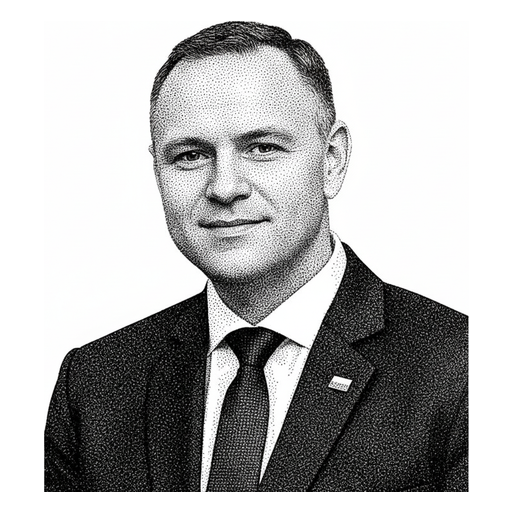
Karol Nawrocki
President of Poland, backed by PiSCut short a flight to Senegal on October 30th and returned to Warsaw. He wrote that the president must be in Poland.
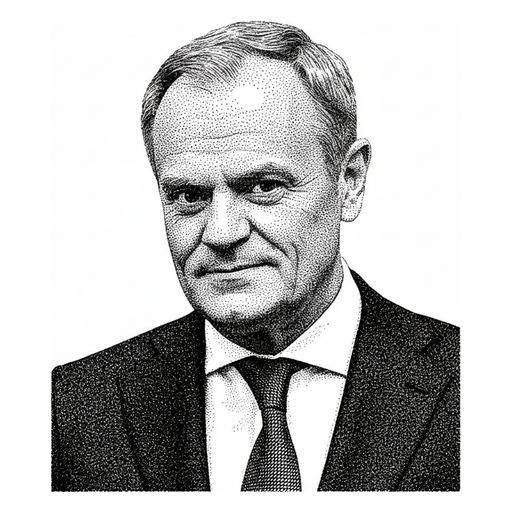
Donald Tusk
Prime Minister of PolandWrote that restoring the rule of law is a difficult, sometimes painful process that needs decisive action.
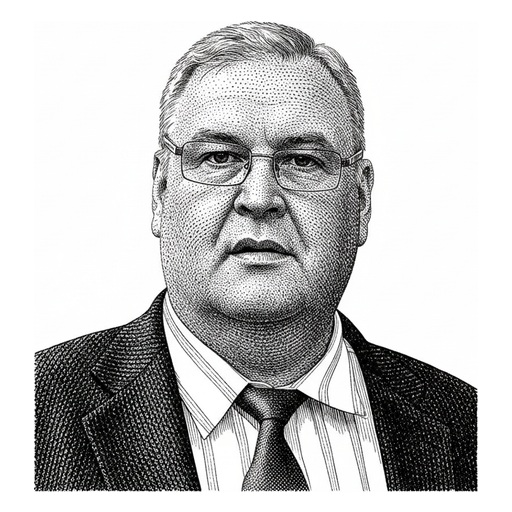
Bogdan Święczkowski
President of the Constitutional Tribunal, suspended and disputedTook the job under PiS. The court's account says he remains in office.
Why the fight started
PiS moved quickly after taking office in 2015 to appoint judges and win a majority on the court. The European Court of Human Rights and the Court of Justice of the European Union later ruled that the court was no longer an independent and impartial tribunal. They found that three of its judges had been elected improperly, the BBC reports.
Tusk's government has used those rulings to stop publishing the Tribunal's decisions. It has not managed to undo the PiS-era changes, partly because Nawrocki and his predecessor Andrzej Duda used presidential vetoes.
Polish law says a new Tribunal judge swears an oath before the president. Nawrocki has not invited the judges that parliament elected since March. He says one of them, Maciej Berek, has not shown that he practiced as a legal counsel for ten years. Berek says he has.
On October 13th, 2026, the Venice Commission, an advisory body of the Council of Europe, said the president should swear in such judges without delay. Nawrocki's spokesman replied that its opinions are advisory and not legally binding. Berek took his oath in parliament the next day. He was the fifth judge to do so without the president.
The street and the next steps
Dozens of protesters gathered outside the court on October 30th. Police detained three people after some protesters breached the fence and others threw objects at officers, the Associated Press reports. About a hundred people protested there on October 15th, DW reports.
Zbigniew Ziobro, a former PiS justice minister, called the suspension a blatant, criminal attack on the constitutional order. The government says it is restoring the rule of law.
Two things are on the record as next steps. Nawrocki was due to meet Zbigniew Kapiński, the first president of Poland's Supreme Court, right after landing. And the five immunity requests now sit with the Tribunal.