Article 42 · Technology policy
Pennsylvania will make some advertisers say when AI made the ad
A new Pennsylvania law requires a label on ads that use AI-made content to give buyers a false picture. It starts December 21st, 2026, with no warning period before fines.
What the law is
Pennsylvania has a new law about advertising and artificial intelligence. It is the Artificial Intelligence Deceptive Advertising Act. Governor Josh Shapiro signed it on October 22nd, 2026, and it is now Act 99 of 2026.
The law asks advertisers to put a clear label on an ad when AI-made or AI-changed content gives buyers a false picture of what is sold. Without that trigger, no label is needed. The label must say the ad contains content modified or generated using AI.
Who is involved
The bill began as Senate Bill 806. State Senator Nick Pisciottano, a Democrat from Allegheny County, wrote it. He calls it a commonsense transparency standard.
Only the state attorney general and local district attorneys can enforce the law. Private citizens cannot sue under it. Both parties' senators co-sponsored the bill, and it became law within one session. The two men most tied to it are pictured below.
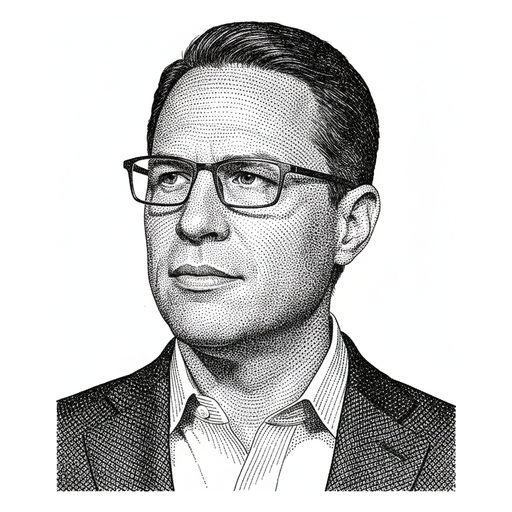
Josh Shapiro
Governor of PennsylvaniaSigned the Act on October 22nd, 2026, along with other bills.

Nick Pisciottano
Pennsylvania state senator, Democrat from Allegheny CountyPrime sponsor of Senate Bill 806.
What it requires and when
The law takes effect on December 21st, 2026, which is 60 days after signing. It imposes no duty on anyone until then.
The label applies to synthetic content, meaning an image, video, audio clip or text significantly modified or generated by AI. Text-only ads are exempt. So are parody and content that is evidently fictional.
A court may award a civil fine of up to $3,000, plus attorney fees and court costs. A cure period is a window to fix a violation before any penalty. This law has none.
What is still open
Holland & Knight, a law firm, says the Act does not define what makes a consumer perception false. It also does not say what counts as significant modification. Kelley Drye, another firm, says it is unclear how regulators will enforce the law.
The $3,000 cap is also open. Holland & Knight notes the Act does not say whether it applies per ad, per airing or per day.
Three law firms, Holland & Knight, Loeb and Kelley Drye, say the wording about intent was removed from the bill. The bill text on the legislature's site still reads "knowingly, recklessly or willfully". Readers should check the signed text before relying on any summary.
What the law does not do
Some summaries say every AI ad needs a label. The text requires a disclosure only when synthetic content creates a false consumer perception about the goods or services. Loeb, another law firm, says the sponsor appears to read the law more broadly than the text does.
Fines also do not start at signing. The Act is not in force until December 21st, 2026.
What to watch
Vektora's forecast tracks three tests, each due by January 31st, 2027. One is whether the attorney general or a district attorney files a court action under the Act. Another is whether the attorney general publishes written guidance. The third is whether a bill to amend or repeal Act 99 is introduced in the General Assembly.