The China car ban becomes law only if the Senate clears it fast. A floor jam or a veto threat ends it this year
Rand Paul has blocked the Senate's fast route since September over Mercedes-Benz, whose Chinese shareholders own roughly 20%. The House China committee opened a Mercedes inquiry on November 17th.
- If nothing changes
- If nothing new happens, the base path ends with the bill signed. The quiet spell ends one step short, with the bill stalled.
- What it depends on
- Whether Rand Paul drops his objection so the Senate can pass the bill by unanimous consent, and whether the House then finds floor time before the year ends.
Mercedes-Benz's answers to the House China committee are due.
Does Rand Paul say he will not block the bill?
Does the Senate pass the bill?
Funding for federal agencies runs out, which competes for floor time.
Does the House pass its companion bill?
The question settles: is the bill law?
- Senate Commerce Committee approves the billJuly 22nd, 2026
- Senate vote, the run's first checkpointDecember 10th, 2026
- House vote on the companion billDecember 17th, 2026
- Signed into law, the run's last checkpointDecember 22nd, 2026
- This Congress endsJanuary 3rd, 2027
The Connected Vehicle Security Act would write into law a ban on connected cars made or designed in China, Russia, Iran or North Korea. It would also bar any carmaker in which those countries, or people tied to them, own or control more than 15%. A Commerce Department rule from January 2025 already does much of this.2
Senators Bernie Moreno, an Ohio Republican, and Elissa Slotkin, a Michigan Democrat, wrote the bill. They aimed to pass it by unanimous consent, the fast route. Rand Paul, a Kentucky Republican, said he opposes it. "I oppose targeting Mercedes-Benz," he told Bloomberg Government in September.3
Mercedes-Benz is a German carmaker. Chinese state-owned BAIC Group owns nearly 10% of it, as does Geely chair Li Shufu. On November 17th, the House Select Committee on China sent Mercedes two dozen questions, with answers due by December 1st. Mercedes said it will cooperate and that its shareholders have no management authority.1
Moreno says the final bill will make sure Mercedes is not banned. He told Reuters on November 17th that he hoped lawmakers would act that week. President Trump told Fox News in September that he would accept Chinese car companies building cars in the US.1
Both chambers must pass the same text before this Congress ends at noon on January 3rd, 2027. A bill not passed by then dies, and the sponsors would start again in a Congress with Democratic majorities. A failed bill leaves the Commerce Department rule in place.2
Signed into law by December 31st
- The bill passes on its current path
- A Mercedes deal unlocks the Senate vote
- Passage, then calls for wider bans
Stalls after one chamber or a deal
- A quiet spell that ends one step short
- The lame-duck calendar runs out
- Competing claims muddle the vote count
- Senate floor time runs out
Never reaches Trump's desk
- China's tariff threats and lobbying sink it
- A Trump veto threat kills it
- The Senate passes it, the House and Trump stall
- The coalition behind the ban splits
- Quiet lobbying stalls the bill
- July 22ndThe Senate Commerce Committee approves the bill.2
- September 24thThe sponsors delay a fast-track vote to negotiate with Paul.2
- September 30thPaul tells Bloomberg Government he opposes targeting Mercedes-Benz.3
- November 9thThe Senate returns after the midterms.2
- November 17thThe House China committee asks Mercedes about its Chinese shareholders.4
- December 11thFunding for federal agencies runs out.2
- January 3rd, 2027This Congress ends, and bills not passed by both chambers die.2
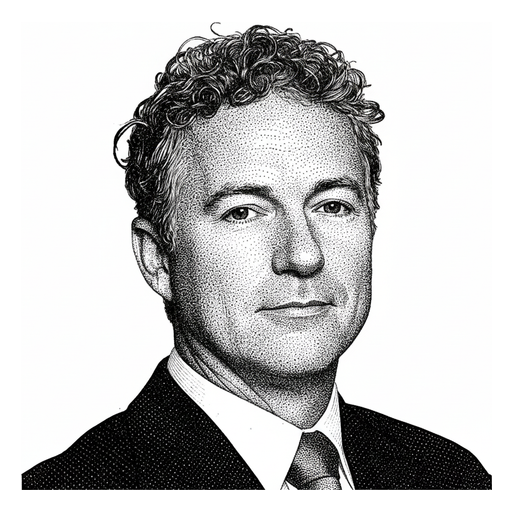
Objected to the fast route in September. He says the bill targets Mercedes-Benz and Ford, which makes batteries in Kentucky. His office did not answer the Daily Caller's questions in November.2

Says the final bill will make sure Mercedes is not banned. He says talks also cover Volvo Cars, which Geely majority owns.1

Said in September that all Democrats support moving ahead with the bill.5

Opened a bipartisan inquiry into Mercedes-Benz's Chinese ties on November 17th, with answers due by December 1st.4

Signed the letter saying the roughly 20% Chinese stake in Mercedes presents significant risks.1
Agency funding runs out on December 11th and the defense bill still needs work, so floor time is short.2
We add each shock to the quiet path twice and see where the answer ends each time. When both tries agree, the result is firm. When they differ, it is uncertain. The quiet path is the one with no new shock.
- changes it both times
- Both tries ended on a different level from the quiet path.
- no change either time
- Both tries ended where the quiet path ends.
With no new shock, the base path ends with the bill signed. The quiet spell ends with the bill stalled after one chamber or a deal, and pushed to the next Congress.2
- Reuters
- A Biden-era rule from early 2025 already effectively bans Chinese carmakers from selling or building passenger cars in the US. Washington also keeps tariffs of more than 100% on Chinese electric cars.1
- Will Chou, Hudson Institute
- The senior fellow at the Washington think tank called the existing Commerce rule robust. He also said a future administration may enforce it its own way.2
- He Weiwen, Center for China and Globalization
- Told China's state-run Global Times that the push is economic protectionism, not a national security concern.2
- This report
- We agree the rule already keeps Chinese carmakers out. What the bill adds is permanence and the ownership cap, which a later administration could not rewrite alone.
Each row is one shock, added to the base path. The track shows which level the bill ends on.
Overstated
Quartz calls Paul the lone holdout. His objection blocks the fast route, but in our run the bill also fails with Paul on board, when floor time runs out or the coalition splits.
An opinion piece in the Courier Journal puts Senate cosponsors above 60. Our earlier count, from the Daily Caller, was lower. Either way, cosponsors do not move a bill that one objection can hold.
Understated
The House companion bill has 146 cosponsors but has not left committee. The run's tests need a House vote by December 17th, a week after the Senate test.
Agency funding runs out on December 11th and the defense bill still needs work. In the run, a calendar squeeze or a floor jam leaves the bill stalled.
- Yes
- The current path or a Mercedes deal. Also the quiet spell.
- No
- China's pressure or a veto threat. Also quiet lobbying.
- Yes
- The current path or a Mercedes deal. Also the quiet spell.
- No
- The calendar or floor time running out. Also a split coalition.
- Yes
- China's pressure, or competing claims.
- No
- The current path, or a Mercedes deal.
- Yes
- The current path or a Mercedes deal. Also passage with calls for wider bans.
- No
- The calendar running out, or Senate floor time running out.
- Yes
- The current path or a Mercedes deal. Also passage with calls for wider bans.
- No
- Any outcome where the bill stalls before signature.
This page cites 7 sources. Every number on it is traced to one of them or to the run.
- The run
- The brief's run, made on November 6th, 2026. Each shock was added to the base path twice.
- How firm this is
- Each shock that moved the bill moved it the same way both times. The Mercedes deal and wider bans left the result where the base path put it, both times.
- Since the run
- The House China committee opened its Mercedes inquiry on November 17th, after the run. The premise still holds: the Senate has not voted.
- What we left out
- No stored page gives a Senate floor date, a vote count or Rand Paul's position since September. We found no reply from Paul to the latest reports.
- A real result can be one we did not test.
- US lawmakers want Mercedes-Benz to disclose details of Chinese ties
- Rand Paul is holding up a permanent US ban on Chinese cars over Mercedes, whose two Chinese shareholders hold 19.67%
- Chinese Auto Ban Stalls Before Senate Vote With Paul Opposed
- Bipartisan Investigation Goes Under the Hood on Mercedes-Benz's Ties to CCP-Linked Entities
- Senators will try to win approval of permanent Chinese car ban in November
- Senate delays bipartisan Chinese vehicle ban past midterms
- Chinese cars could put KY military, US security at risk