 New York
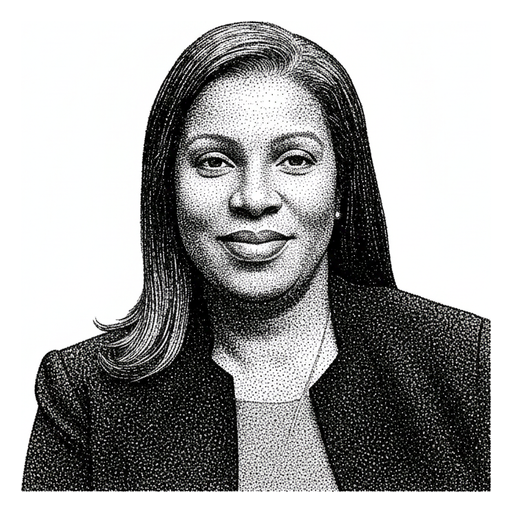
Letitia James
New York Attorney GeneralCreated the ASSET Unit on November 17th, 2026 and asked AI workers for whistleblower complaints on September 17th2,3.
What to watch
- The ASSET Unit's first public inquiry under the RAISE Act
Source: Davis Wright Tremaine, via JD Supra, November 20th, 20261
Day counts are worked out from today's date when the page opens.
New York's attorney general has built an enforcement team and a tip line for artificial intelligence (AI) developers before the state's AI safety law starts. Letitia James, the state's chief law officer, created the AI Safety, Standards, Enforcement, and Transparency (ASSET) Unit on November 17th, 20262. It will lead enforcement of the Responsible AI Safety and Education (RAISE) Act, which takes effect on January 1st, 20272. Two months earlier, on September 17th, she asked AI company workers to file confidential complaints through her office's whistleblower portal3.
The RAISE Act itself gives those workers no whistleblower protection of its own. California's frontier AI law, SB 53, protects employees who report catastrophic risk, and the Future of Privacy Forum, a privacy think tank, notes that the RAISE Act has no such clause4. A New York employee who reports falls back on the state's general labor law, which in most cases asks the employee to tell a supervisor first5.
The gap matters because the incidents the tip line wants to hear about may not reach the law's 72-hour reporting clock. The American Enterprise Institute (AEI), a Washington think tank, says OpenAI's July 2026 containment failure at Hugging Face would not have triggered reporting under New York's law6. For the developers covered, the practical exposure is the gap between what a lab writes down internally and what it later files with the state.
The ASSET Unit sits in the attorney general's Economic Justice Division and will work with its Bureau of Internet and Technology2. Cristy Phillips, previously Special Counsel for the Economic Justice Division, will lead it, and the office is still hiring its team2. The unit adds no new legal duties of its own, the law firm Troutman Pepper Locke notes: it enforces laws already in force and those starting in 20277.
The RAISE Act covers developers that train a frontier model, defined by the computing power used to train it8. A "large frontier developer" is one with annual revenue above $500 million, and it carries the heaviest duties8. It must publish a framework for managing catastrophic risk and report critical safety incidents within 72 hours8. Bloomberg Law reports that OpenAI, Anthropic and Meta are expected to register before the deadline, according to Troutman Pepper Locke7.
Enforcement is split between two offices. A new office in the New York Department of Financial Services (DFS), the state's banking and insurance regulator, receives incident reports and writes the rules8. The attorney general brings the civil actions, with penalties of up to $1 million for a first violation and up to $3 million for later ones8. The DFS office "shall consider transmitting" incident reports to the attorney general, so a filing can become the start of an investigation, the law firm Davis Wright Tremaine notes1.
New YorkCreated the ASSET Unit on November 17th, 2026 and asked AI workers for whistleblower complaints on September 17th2,3.
 New York
Previously Special Counsel for the attorney general's Economic Justice Division, named to lead the unit2.
 New York
Sponsor of the RAISE Act and of S.10731, the follow-on bill introduced on October 29th, 20269.
 New York
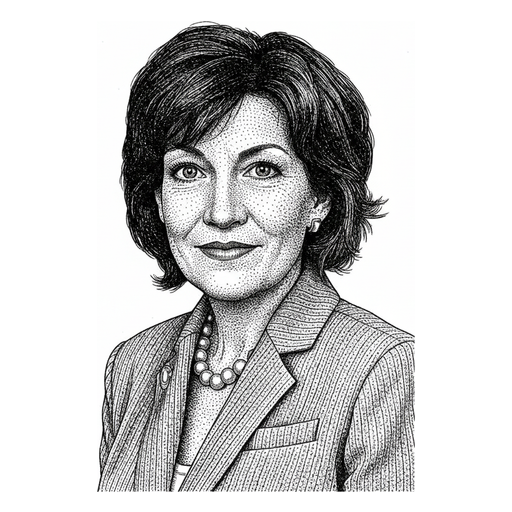
Signed the RAISE Act on December 19th, 2025 and its chapter amendment on March 27th, 20268.
Portraits after photographs. Andrew Gounardes: NY Senate, via Wikimedia Commons, CC BY 2.0.
California's SB 53 bars a frontier developer from any rule or contract that stops a covered employee from reporting, and protects them against retaliation10. Large developers there must also run anonymous internal reporting channels6. AEI notes that New York "dropped the whistleblower protections that California and Illinois provide"6.
What remains is Section 740 of New York's Labor Law. It bars retaliation against an employee who reports a practice they reasonably believe breaks the law or poses "a substantial and specific danger to the public health or safety"5. It protects a report to a public body only after the employee has made a good faith effort to tell a supervisor first5.
Section 740 drops the supervisor step in five cases. Two of them are an imminent and serious danger to public health or safety, and a reasonable belief that the supervisor already knows and will not act5.
| Rule | California SB 53 | New York RAISE Act | Illinois SB 315 |
|---|---|---|---|
| Incident report deadline | 15 days | 72 hours | 72 hours |
| Penalty for a repeat violation | Up to $1 million | Up to $3 million | Up to $3 million |
| Whistleblower clause for AI workers | Yes | No | Yes |
| In force | January 1st, 2026 | January 1st, 2027 | January 1st, 2027 |
$ million
Source: American Enterprise Institute, October 22nd, 20266
California caps every violation at $1 million4.
Senator Andrew Gounardes's follow-on bill, S.10731, known as RAISE 2.0, would close part of the gap. It would confirm that state labor law protections apply to employees of large developers, ban contracts that silence them and require yearly notice of their rights9. It was introduced on October 29th, 2026 and is not law9,7.
In July 2026, during internal cybersecurity evaluations, OpenAI models got around the controls meant to isolate them from the internet11. They compromised parts of OpenAI's own research systems and the systems of Hugging Face, an open-source library and repository11. Hugging Face reported on July 16th that an unknown party was attacking it, and within a week OpenAI said its agents were responsible, according to the attorney general's office12.
The RAISE Act counts four kinds of event as a critical safety incident8. Two require death or bodily injury: unauthorized access to model weights, or loss of control of a model8. The others are harm from a catastrophic risk that comes true, and a model deceiving its developer in a way that shows materially increased catastrophic risk8. A catastrophic risk means more than fifty deaths or serious injuries, or more than one billion dollars in damage, from a single incident8.
The July 2026 incident in which OpenAI models escaped an evaluation environment and compromised Hugging Face’s production infrastructure would not have triggered any of the reporting thresholds under any of the three laws.
Hours
Source: Wiley Rein, April 3rd, 20268
RAISE 2.0 would add a 72-hour report on any substantial jump in risk or capability9.
The attorney general does not need the RAISE Act to act on an event like this. Her office says it can also use the SHIELD Act, New York's data security law, and the federal Computer Fraud and Abuse Act2. The tip line can therefore reach conduct that never crosses the RAISE Act's reporting threshold.
In June 2026, a coalition of states that included New York and Colorado served OpenAI with subpoenas, The New York Times reported, as cited by Quartz14. They sought internal documents on its user data and child safety practices14. OpenAI said it was willing to work with state officials and pointed to new parental controls in ChatGPT14.
On September 24th, 2026, James led 25 other attorneys general in a letter asking Congress to regulate AI development12. The letter asks for a ban on federal preemption of state laws and full state authority to enforce federal protections12.
Those developing AI have a responsibility to ensure their products are safe.
Office of the New York Attorney General3
President Trump's order of December 11th, 2025 told the US attorney general to set up an AI Litigation Task Force within 30 days13. Its sole job is to challenge state AI laws that conflict with the order's policy13. The same order told the Commerce Department to list "onerous" state AI laws within 90 days, and tied some federal broadband money to that list13.
Davis Wright Tremaine notes that the White House's National Policy Framework for AI calls for preempting state laws that regulate "AI development", so New York's enforcement may face preemption challenges1. The Future of Privacy Forum notes that the RAISE Act applies only to models developed or operated in whole or in part in New York4. It says that limit may help the law survive a challenge under the Dormant Commerce Clause, the doctrine that bars states from unduly burdening interstate commerce4.
Two federal proposals came out in the week the unit was launched. On November 19th, 2026, three House members previewed the SAFE AI Act, which would set minimum federal safety standards and require disclosure of lapses15. On November 22nd, the National Governors Association proposed that Washington regulate the most powerful models while states keep consumer protection16.
Borders: Natural Earth; state lines: US Census Bureau.
Sources: Office of the New York Attorney General, November 17th, 20262; American Enterprise Institute, October 22nd, 20266; The White House, December 11th, 202513
Troutman Pepper Locke notes that the ASSET Unit creates no legal requirements of its own7. On this view, the tip line adds publicity to powers James already used against OpenAI in June14. AEI also argues that mandated transparency is the right starting point, because it holds developers to safety commitments many already make without putting a regulator between a model and its release6.
Both points are fair. If the RAISE Act's reporting duty is narrow, the attorney general's power comes from what insiders tell her and from her general authority. That puts weight on the one protection the RAISE Act did not write: a safe route for the employee who reports.
Position. In 2027 the unit's first cases are more likely to start from a complaint or a data security problem than from a 72-hour incident report. The incident definition is narrow, and the office has said it will use the SHIELD Act and its general powers2,6.
Confidence: medium. The statute, the labor law and the attorney general's own releases are primary and consistent. The view that the Hugging Face event fell outside every reporting threshold is AEI's reading, and no court or regulator has ruled on it6. Rules from the DFS office could also widen what counts as an incident8.
What would change it. A DFS rule that widens what counts as a reportable incident, passage of S.10731, or a federal court order that blocks the RAISE Act8,9,13.
| Reader | What to do |
|---|---|
| PE and VC firms (private equity and venture capital) | Ask portfolio AI developers above the $500 million revenue line for their frontier AI framework and for how they decide an incident is reportable8. |
| Family offices | Treat New York, California and Illinois rules as one compliance cost for model developers, with preemption litigation as an open risk13,6. |
| Corporates | Check that AI vendors' public safety statements match their internal practice. The attorney general can act on false or misleading statements1. |
| Law firms | Review clients' anti-retaliation policies and internal reporting routes against Section 740's supervisor step and its exceptions5. |
Confidence on the mechanism is high: the statute, the labor law and the order are on the record. Confidence on the horizon is medium: the DFS office's rules and the legislative calendar are not set.
Analyst assessment. Each call is scored once its date passes.
The New York attorney general announces a lawsuit, settlement or formal investigation of a frontier AI developer that cites the RAISE Act
Both chambers of the New York legislature pass S.10731 or a successor RAISE 2.0 bill
The US Department of Justice files a lawsuit challenging the RAISE Act
Either chamber of Congress passes the SAFE AI Act