Todd Blanche's new DOJ task force keeps fighting state AI laws and adds an undefined duty to promote US dominance
An October 13th memo folds the Justice Department's state-law litigation unit into a Super Intelligence Task Force. Its second job, taking affirmative measures for US dominance, has no definition and could reach companies directly.
Analysis November 12th, 2026 Vektora
Affirmative measuresNot defined
Colorado challengeStayed
Old mandateState laws only
Sources24 cited
As ofNov 12th, 2026
Next decision
16days, to Super Intelligence definition due on 28 November
As of 12 Nov 2026
28 Nov · 16 daysSuper Intelligence definition due
2 Dec · 20 daysEU deepfake bans apply
1 Jan · 50 daysColorado AI law applies
3 Jan · 52 daysNew Congress sworn in
2 Dec · 385 daysEU high-risk rules apply
Day counts are worked out from today's date when the page opens.
Executive Summary
The US Justice Department has merged its state-law litigation unit into a wider body with a second, undefined duty. Attorney General Todd Blanche created the Super Intelligence Task Force in an October 13th, 2026 memo1. The department announced it on November 5th2. Super Intelligence is the executive branch's term for AI under Executive Order 144343.
The old unit had one job, the new one has two. The AI Litigation Task Force was set up as a unit "whose sole responsibility shall be to challenge State AI laws"4. Its work now sits inside the new task force5. The memo adds a duty to take affirmative measures to "promote American SI dominance"6. Neither the memo nor the announcement says what those measures are2,6.
The court fight it inherits is narrow and slow, while the open mandate could reach companies sooner. The only state case we found on the public record, a challenge to Colorado's AI law, has been on hold since April 27th, 20267. Meanwhile the task force gains seats for the Antitrust Division, the Criminal Division, the FBI and the National Security Division8. States keep passing AI laws, and attorneys general such as California's Rob Bonta defend their power to do so9,10.
State AI laws enacted by July 1st, 2026
109
Same count by July 1st, 2025
121
Attorneys general on the September 24th letter
25
Colorado enforcement
Stayed
01What the October 13th memo says
The memo keeps the state-law work inside a body built for enforcement and adds a duty to promote US dominance that it does not define.
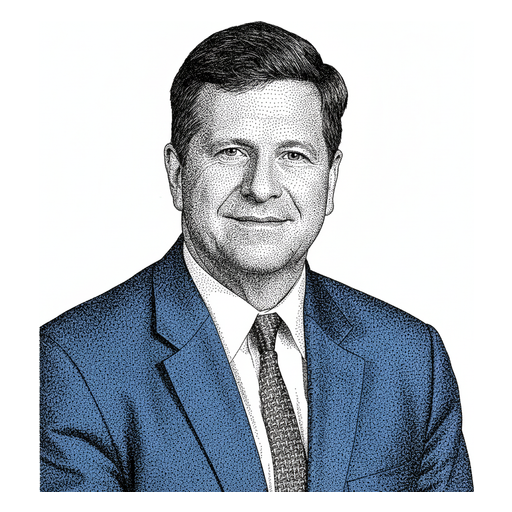
Attorney General Todd Blanche, who heads the Justice Department, signed the memo on October 13th, 20261. The department published it with a press release on November 5th2. It creates the Department of Justice Super Intelligence Task Force2.
The task force has a two-part mission, according to a November 9th note by Hogan Lovells Cadwalader, an international law firm6. The first part is to stop misuse of AI by foreign actors and by people or companies engaged in fraud6. The second is to take affirmative measures to "promote American SI dominance"6.
Bracewell, a US law firm, summarizes the working functions the memo lists5. They include coordinating the department's affirmative civil litigation on AI5. They also include advice on proposals that promote AI innovation "without burdensome regulation"5.
At the task force's request, US Attorneys' Offices and other units may have to notify it before they open an AI investigation6. The same applies before they bring charges or settle a case6. The memo asks for a notice process that does not delay enforcement1.
The task force is also the department's main contact with the White House's Super Intelligence Force11. Jay Clayton, the Director of National Intelligence, chairs that body11,12.
Stephen Weiss, the Associate Deputy Attorney General, set out the department's approach to companies in the announcement2.
The Department also has a responsibility to utilize law enforcement tools at our disposal to deter improper use of SI, harden regular reporting on SI risk and response, and ensure companies exercise vigorous internal controls so that SI technology behaves as intended.
Signed the October 13th memo that created the task force1. Said AI development "will continue to be powered by American innovators"2.
What to watch
Any guidance that names an affirmative measure
New suits or interventions against state AI laws
US Justice Department
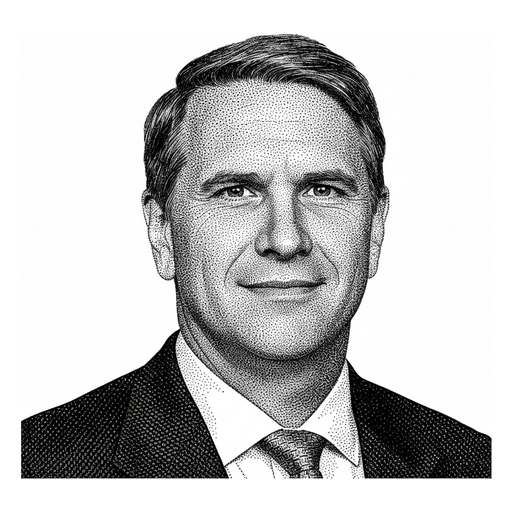
Stanley Woodward
Associate Attorney General, task force co-chair
Co-chairs the task force with Stephen Weiss2. Said the effort "will promote innovation and prevent the misuse of Super Intelligence"2.
What to watch
Enforcement priorities the task force recommends
US Justice Department
Stephen Weiss
Associate Deputy Attorney General, task force co-chair
Tied the task force to company internal controls and regular reporting on AI risk2.
What to watch
Compliance guidance on AI controls
White House
Jay Clayton
Director of National Intelligence, chair of the Super Intelligence Force
Chairs the White House's Super Intelligence Force, the task force's main outside contact11,12.
What to watch
Any White House list of national AI priorities
02From one job to two
The old unit had a single target, state laws, while the new task force has members and a mandate that can point at companies.
Then-Attorney General Pam Bondi set up the AI Litigation Task Force on January 9th, 20268. Her memo set it up as a unit "whose sole responsibility shall be to challenge State AI laws" that conflict with federal policy4.
Its members came from the offices of the deputy and associate attorneys general, the Solicitor General and the Civil Division4. The new task force adds the Antitrust Division, the Criminal Division, the FBI, the National Fraud Enforcement Division and the National Security Division8.
Neither the memo nor the announcement defines affirmative measures6,2. The memo says the task force will take them as appropriate13. The press release does not mention them2.
Hogan Lovells Cadwalader reads the memo as treating enforcement "as a tool of national economic strategy as much as a means of punishing wrongdoing"6. The memo's own functions suggest where such measures could land. The department has announced none of these possibilities:
Suits or interventions against state AI laws, as in Colorado14.
Affirmative civil cases, meaning suits the department brings itself, which the memo assigns to the task force5.
Antitrust or fraud cases against companies whose conduct the department links to US competitiveness6,8.
Compliance guidance that sets which internal controls prosecutors credit5.
03One state case, on hold since April
The only state-law challenge we found on the public record is paused until Colorado finishes rules for a law that replaced the one under attack.
Background
2025-12-11
Announcement.
Executive Order 14365 orders an AI Litigation Task Force to challenge state AI laws15.
2026-01-09
Announcement.
Then-Attorney General Pam Bondi sets up the task force4,8.
2026-04-09
Other.
xAI sues Colorado's attorney general over SB 24-20516.
2026-04-24
Other.
The Justice Department intervenes on xAI's side14.
2026-04-27
Other.
A magistrate judge stays enforcement of the Colorado law7.
Executive Order 14434 tells agencies to say Super Intelligence instead of AI3.
2026-10-13
Announcement.
Todd Blanche signs the memo creating the new task force1.
2026-11-05
Announcement.
Latest. The Justice Department announces the Super Intelligence Task Force2.
xAI, the company that makes the Grok AI model, sued Colorado Attorney General Philip Weiser on April 9th, 202616. It challenged SB 24-205, a state law on "algorithmic discrimination" by AI systems16,14.
The Justice Department intervened on April 24th14. It argued the law breaks the Equal Protection Clause of the Fourteenth Amendment14. Its press release did not mention the task force, the law firm Jenner & Block noted18.
On April 27th, a magistrate judge barred Colorado from enforcing the law until shortly after a ruling on xAI's planned injunction request7. The order gives that window as 14 days7. xAI must file within 28 days after Colorado adopts final rules7.
Colorado then repealed and replaced the law. SB 26-189 was signed in May 2026 and applies from January 1st, 202719. The state's rulemaking hearing took place on October 26th, 202619.
Executive Order 14365 also told the Commerce Department to list onerous state AI laws for referral to the task force15. Jenner & Block wrote on April 29th that no list had been published18.
States have kept legislating. They enacted 109 AI laws by July 1st, 2026, against 121 by the same date in 20259. The count is kept by New York University's Center on Technology Policy9.
The number of states acting fell faster, from 39 to 299. Scott Babwah Brennen, writing in Tech Policy Press, says federal pressure may have limited how many states act9. He sees less effect on the total of laws9.
State attorneys general and the European Union are keeping AI rules in force, so companies cannot plan on federal suits to clear them.
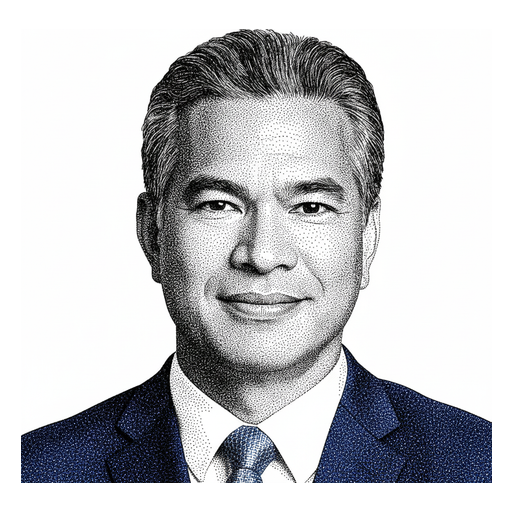
On September 24th, 2026, California Attorney General Rob Bonta joined a bipartisan coalition of 25 attorneys general urging Congress to regulate large AI models10. Their letter asks for "preservation of state authority to enact and enforce more protective state laws applicable to AI"10.
Colorado was among the signers10. Best Law Firms, a legal publisher, reports that Jena Griswold won this month's Colorado election on a pledge of stronger AI safeguards20. She will enforce the state's revised law20.
Colorado
Philip Weiser
Attorney General of Colorado
Defendant in xAI's suit16. His office is writing the rules for SB 26-18919.
What to watch
Final adoption of the SB 26-189 rules
California
Rob Bonta
Attorney General of California
Joined 25 attorneys general asking Congress to keep state power over AI10. Enforces SB 53, California's law for large AI developers10.
What to watch
Any federal challenge to SB 53
Congress has not passed a law that overrides state AI rules. In 2025 the Senate voted 99-1 to drop a proposed 10-year moratorium on state AI rules from a budget bill20. A new Congress is sworn in on January 3rd, 202720.
The European Union has delayed parts of its AI Act through amendments called the Digital Omnibus, but kept them21. Rules for high-risk AI systems listed in the act's Annex III apply from December 2nd, 202721.
Bans on AI systems that make non-consensual sexual deepfakes apply from December 2nd, 202621. A US company selling in Europe still meets those dates. A federal suit against a US state does not touch them.
05Enforcement already reaches AI claims
Federal agencies already punish false claims about AI, and the task force brings the department's fraud, criminal and antitrust units into one body.
The Federal Trade Commission, the US consumer protection agency, finalized orders on August 27th, 2026 against Cox Media Group and two smaller marketing firms22. Together they pay $930,000 over claims about an AI-powered marketing service called Active Listening22.
On November 5th, the day of the announcement, federal prosecutors in Manhattan unsealed an indictment alleging generative AI was used in a large-scale fraud5. Bracewell pointed to the case in its note on the task force5.
Hogan Lovells Cadwalader names false statements about AI capabilities, including statements to investors, as a potential priority6. It also flags False Claims Act risk for government contractors and recipients of federal funds6.
McGuireWoods, another US law firm, says the focus on internal controls makes the task force relevant to companies that deploy AI in ordinary operations1.
06The other reading
The strongest objection is that the memo is internal housekeeping with no new legal power, and on the law that objection holds.
Digital Watch, a digital policy observatory, writes that the memo "does not, in itself, create new criminal offences"11. It adds that the memo sets up no full regulatory framework for AI11.
The Cloud Security Alliance, an industry security group, calls Executive Order 14434 mostly a rebrand23. The group writes that the order "contains no security, safety, or compliance requirements for the private sector"23.
A plain reading ties the phrase to the memo's own list of functions5. That list includes affirmative civil litigation and advice on legislation5. On that reading, the duty is narrower than its wording.
Bracewell notes that the notice rule does not appear to create a separate approval step5. The memo also states that it creates no rights anyone can enforce in court13.
On the state-law side, courts set the pace. Baker Botts, a law firm, wrote in January that each challenge needs a lawsuit and then a court injunction24. That process can take considerable time, the firm said24.
The objection holds on the law. In practice, the department can still choose its targets and write the guidance prosecutors use14,5. An undefined promotional duty gives those choices a reason the January memo did not4,6.
07Vektora Assessment
Companies should track the undefined duty more closely than the new name, and we hold that view with medium confidence.
Position. The change matters more for its new members and its open mandate than for its name. The state-law campaign continues, but its only public case is stayed7. The wider exposure could fall on companies that use AI and on deals the department links to US competitiveness.
Confidence: medium. The memo's structure is documented by several firms that read it6,5,1. Nothing yet shows how the department will use the new duty. One stayed case is a thin record.
Where we diverge. The law-firm notes we read center on fraud enforcement and compliance controls5,1. Of those, only Hogan Lovells Cadwalader dwells on the promotional duty6. We think that duty is the larger open question for companies outside fraud cases.
What would change this view. Guidance that limits affirmative measures to advice and suits against states would shrink the exposure for companies. A first civil or antitrust case framed around US AI dominance would widen it.
08Client Implications
Readers with AI in their products or portfolios should map where the new task force could touch them before guidance arrives.
Reader
What changes
What to do now
Private equity and venture capital firms
Portfolio companies that market AI features face scrutiny of their claims6.
False Claims Act exposure for AI statements to the government6.
Review AI representations in bids and reports.
AI developers
Federal suits may side with them against state laws, as in Colorado14.
Plan for Colorado's January 1st, 2027 date anyway19.
Law firms
AI matters may route through a central notice process6.
Expect a second point of contact beyond the local US Attorney5.
09Forecast Watch
The first tests come within weeks, through Colorado's rules and a White House definition of Super Intelligence.
Mechanism confidence: medium. The memo's text is documented6,5. How the department will use it is not. Horizon confidence: low. The department has set no date for its guidance.
Analyst assessment. Each call is scored once its date passes.
60%
Colorado's Department of Law adopts final rules under SB 26-189, posted on coag.gov
Settles Dec 31st, 202649 days left
35%
The White House publishes the proposed legal definition of Super Intelligence that Executive Order 14434 requires
Settles Jan 31st, 202780 days left
50%
xAI files its motion for a preliminary injunction in xAI v. Weiser in federal court in Colorado
Settles Feb 28th, 2027108 days left
30%
The Justice Department names a specific action as an affirmative measure of the Super Intelligence Task Force in a release, filing or guidance
Settles Mar 31st, 2027139 days left
35%
The United States sues or intervenes against a state AI law other than Colorado's, announced on justice.gov
Settles Jun 30th, 2027230 days left
Justice Department press releases at justice.gov, updated daily.
The xAI v. Weiser docket on CourtListener, updated as filings arrive.
The Colorado Department of Law rulemaking page at coag.gov, updated at each rulemaking step.
The Federal Register, for any executive action defining Super Intelligence, published each business day.
Any Commerce Department list of state AI laws referred for challenge.
 US Justice Department