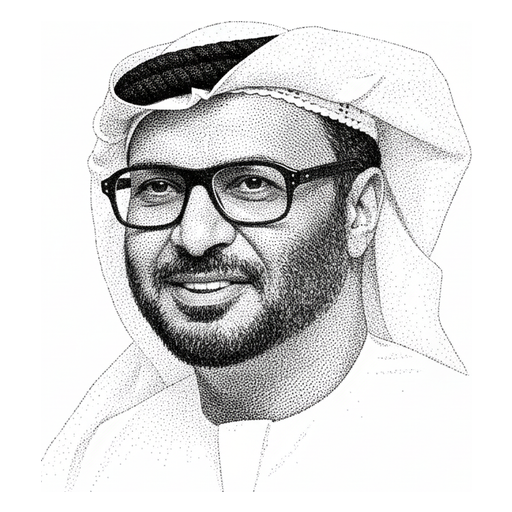
 UAE
Anwar Gargash
Diplomatic adviser to the UAE presidentTold the Manama Dialogue that military solutions "will not actually bring any quick off-ramps" and that the Gulf states have not acted together2.
Source: Defense Security Monitor, April 23rd, 20261
The UAE has about $8.5 billion of new US arms waiting for contracts, and the packages tie its air defense to US radar and US export approval. The UAE is a Gulf federation that hosts US and French forces at Al Dhafra Air Base. It absorbed more than 3,000 Iranian drone and ballistic missile attacks before the April ceasefire, according to the International Institute for Strategic Studies (IISS), a London security research body2. On March 19th, 2026 the US State Department notified Congress of four possible sales to the UAE, worth $8.5 billion together1.
These are approvals to negotiate, not contracts. The Defense Security Monitor, a publication of Forecast International, says approvals of this kind do not show signed contracts or solid revenue1. The State Department used an emergency exception to skip the usual congressional review, which normally takes roughly 30 to 40 days1. Lockheed Martin and RTX, two US defense companies, are the firms best placed to gain from the wider run of Gulf sales, the same publication says1.
The war has also pushed the UAE toward cheap, locally made defenses, and US firms are part of that supply chain too. Anwar Gargash, the UAE president's diplomatic adviser, told the Manama Dialogue security forum in Bahrain that the war made the US-UAE relationship "even more important" to the UAE's ability to defend itself2. Whether that dependence deepens or fades depends on contracts that have not been signed.
The US State Department notified Congress on March 19th, 2026 of more than $16.5 billion in possible air defense sales across the Middle East, Defense News reported3. The UAE's share is a $4.5 billion long-range radar built to work with its THAAD system, the Terminal High Altitude Area Defense, a US missile defense system. It also includes a $2.1 billion fixed-site counter-drone system, $1.22 billion of air-to-air missiles and a $644 million package of F-16 munitions and upgrades3.
Billion dollars
Source: Defense News, March 19th, 20263
The National, a UAE newspaper, reported that the THAAD radar can detect missiles at a range of more than 1,000 kilometers and links the UAE's defenses together4.
Forecast International's Defense Security Monitor counts the sales to Saudi Arabia, Kuwait and the UAE at more than $21 billion and names Lockheed Martin and RTX as best placed to gain1. It also notes that Lockheed Martin received a $4.76 billion award in early April, supported by US Army and foreign sales funds, for PAC-3 missiles1. The White House's executive order of February 6th, 2026, called "America First Arms Transfer Strategy", sets the policy. The Defense Security Monitor quotes it:
will ensure that future arms sales prioritize American interests by using foreign purchases and capital to build American production and capacity.
Defense Security Monitor1
The Defense Security Monitor reads the order as a shift from foreign policy goals toward the US defense industry1.
The Stimson Center says Emirati air defenses first relied on interceptors costing millions of dollars each to destroy drones worth about $80,000 each, an exchange described as unsustainable5. Bruegel, a Brussels economics research group, makes the same point about Patriot interceptors6.
US dollars
Source: Stimson Center, October 2nd, 20265
Since July, a plant in the UAE has made around 30 Guardian interceptors a day for Powerus, a Florida start-up, at roughly $5,000 each, Stimson reports. Raytheon is building its Coyote interceptors in the UAE5.
UAETold the Manama Dialogue that military solutions "will not actually bring any quick off-ramps" and that the Gulf states have not acted together2.
Portraits after photographs. Anwar Gargash: Foreign, Commonwealth & Development Office, via Wikimedia Commons, CC BY 4.0.
The Congressional Research Service reports that EDGE, the UAE's main defense group, is partnering with South Korea's Hanwha on an integrated air defense system. It also reports a military-technical cooperation agreement with Ukraine, signed in March 2026, and an Israeli military presence on UAE soil to operate Iron Dome batteries7.
Gargash admitted the Gulf states fell short as a group. "In one of our most critical crises, we collectively have not risen to the challenge."2
Middle East Eye reported that the US was "stonewalling" requests from some Gulf states to replenish interceptors, citing one western official and one former US official8.
Stimson's reply is that diversification coexists with US influence: production and sourcing multiply, while the most consequential design, software and export authorization stay concentrated in US hands5.
Confidence is medium. The approval figures come from State Department notices reported by three outlets3,4,1. The claim that US influence persists rests mainly on one Stimson analysis5. The strongest alternative reading is that the UAE is widening its suppliers, as the Congressional Research Service describes, and that the US share will fall as those options mature7.