OFAC now refuses Iran license requests by default, so wind-downs run on short general licenses
Since September 10th, the US sanctions office presumes denial on Iran specific-license requests. Companies caught by new designations now get relief only from general licenses with fixed end dates.
Analysis October 26th, 2026 Vektora
Policy in force sinceSeptember 10th
Treasury's end conditionIran changes its behavior
Sources16 cited
As ofOct 26th, 2026
9Iran authorizations suspended
Iran-related general licenses and licensing policies OFAC suspended in two weeks, counted from August 24th to September 8th.
Source: Global Trade & Sanctions Law, September 10th, 20261
Executive Summary
OFAC has made denial the default for Iran license requests. On September 10th, the Office of Foreign Assets Control (OFAC) began to consider Iran-related specific-license applications with a presumption of denial. The exceptions are licenses required by law and cases such as risk to life, limb or environmental safety2. Treasury said OFAC's Licensing Division immediately began denying the vast majority of outstanding requests3.
Relief now comes from general licenses, and they are short. With the application route closed, a company caught by a new designation depends on a general license that OFAC publishes on the day of the action. On October 21st, OFAC issued two such wind-down licenses, one for a Panama law firm it designated and one for vessels and persons blocked that day4. After the July revocation of General License X, the wind-down lasted ten days5.
Treasury ties the policy to Iran's conduct and gives no end date. OFAC says it will keep the policy until Iran changes its behavior3. On October 5th it warned foreign banks they could be sanctioned at any time without advance notification6. The policy can also reverse: OFAC granted broad Iranian oil authorization in June and revoked it on July 7th7.
Authorizations suspended, August 24th to September 8th
Nine
Exceptions to the presumption of denial
Two
Wind-down window after General License X ended
Ten days
Banque Misr UAE flows cited by FinCEN
$1.8 billion
01What the policy changes
Denial is the starting point for every Iran specific-license request, and only two exceptions remain.
A specific license is a written permission for one named party to do something the sanctions rules otherwise bar. A general license covers a class of activity for anyone, with no application8. Before September 10th, businesses and banks used specific licenses for payments and wind-downs. OFAC now treats each request as a denial unless it meets one of two exceptions9.
The first exception covers licenses required by law. Squire Patton Boggs gives an example: Section 906 of the Trade Sanctions Reform and Export Enhancement Act of 2000 requires certain exports of agricultural commodities, medicine and medical devices to proceed under one-year specific licenses9. The second covers exceptional and urgent cases, such as risk to life, limb or environmental safety. Applicants must attest in writing that they qualify8.
The same firm expects the emergency exception to be read narrowly. It says applicants should not expect OFAC to treat commercial disruption or financial loss as an emergency9. It lists what OFAC is now refusing. Requests to receive payments owed under contracts with blocked non-Iranian persons are refused, and so are requests to collect judgments and settlements, to enforce arbitration awards, to wind down beyond a general license, and to renew or amend existing licenses9.
OFAC will maintain this licensing policy until Iran changes its behavior, including obstructing the Strait of Hormuz, attacking U.S. personnel and partners in the Gulf, and pursuing nuclear and conventional weapons.
Existing licenses are not revoked automatically, according to Seiden Law. Holders still face heightened exposure and should review each license before relying on it8.
02How the pipeline closed
Between July and October, OFAC removed Iran authorizations one by one, then closed the application route.
July 7th
Sanctions.
OFAC revokes General License X, which had broadly authorized Iranian crude oil, petroleum and petrochemical transactions, and replaces it with a wind-down license through July 17th5.
August 24th
Announcement.
Treasury launches Operation Economic Outcast, suspends five general authorizations and issues General License BB for wind-down through September 8th10,11.
August 28th
Sanctions.
The Financial Crimes Enforcement Network (FinCEN) proposes cutting Banque Misr UAE off from US correspondent accounts11.
September 4th
Sanctions.
OFAC blocks Golden Global Bank in Türkiye and two subsidiaries11.
September 8th
Sanctions.
OFAC suspends four aviation-related authorizations and issues General License DD for wind-down through September 23rd12,11.
September 10th
Announcement.
OFAC adopts the presumption of denial and begins denying outstanding requests2,3.
October 5th
Talks.
OFAC warns foreign financial institutions that dealings with sanctioned Iranian banks could lead to sanctions without advance notification6.
October 21st
Sanctions.
Latest. OFAC designates a Panama law firm, shipping companies and vessels, and issues General Licenses GG and HH for wind-down4.
03Why wind-downs now run on general licenses
OFAC writes relief into general licenses on the day of each action, and the windows are short.
General License X shows the pattern. Bracewell describes it as a broad authorization for Iranian crude oil, petroleum products and petrochemicals. OFAC revoked it on July 7th and issued General License X1, which allowed only wind-down activity and, in its words, "does not authorize any new transactions"5. Payments owed to blocked persons had to go into blocked interest-bearing accounts in the United States5.
Fig. 1
Iran-related authorizations OFAC had suspended, running total
General licenses and licensing policies, after each round
Source: Global Trade & Sanctions Law, September 10th, 20261
Nine in total, per the Global Trade and Sanctions Law review1.
On August 24th, OFAC suspended five general authorizations covering education, remittances, conferences, sports and academic exchanges. General License BB wound them down through September 8th11. On September 8th it suspended four aviation-related authorizations and issued General License DD through September 23rd12,11. That made nine suspensions in two weeks1.
October follows the same form. On October 15th, OFAC issued a general license for the wind-down of transactions involving the International Development Bank for Investment and Finance13. On October 21st it issued two more. General License GG covers wind-down of dealings with Karnakis and Karnakis, a legal firm in Panama designated that day. General License HH covers wind-down, limited safety and environmental transactions and the offloading of cargo involving persons and vessels blocked that day4.
For a company with a blocked counterparty, the end date in the general license is now the whole allowance. Squire Patton Boggs says OFAC denies wind-down requests that run past the terms of a general license. It says the policy hits hardest on requests OFAC routinely approved in the past9.
04How the pressure reaches third-country banks
Treasury applies the same logic to foreign banks, which gives the policy reach beyond Iran's borders.
On August 28th, FinCEN proposed barring US banks from correspondent accounts for Banque Misr UAE, the five Emirati branches of an Egyptian bank. FinCEN said those branches processed about $1.8 billion between January 2024 and June 2026 for 103 companies potentially linked to Iranian shadow-banking networks11.
On September 4th, OFAC blocked Golden Global Bank in Türkiye and two subsidiaries. Treasury said the bank had been established to let Iran move oil revenue from China to Türkiye for conversion to cash and gold11.
On October 5th, OFAC told foreign banks that any still transacting with sanctioned Iranian financial institutions could be targeted at any time and should end those relationships6. Skadden notes a gap: "OFAC has not yet provided guidance on the definition or scope of these sectors" covered by the August 24th determination11.
United States
Scott Bessent
US Secretary of the Treasury
Bessent launched Operation Economic Outcast on August 24th. He said the aim is to "sever every economic lifeline that sustains this tyrannical regime until Tehran stands alone"10.
What to watch
Whether Treasury names another foreign bank after its October 5th alert6.
Iran
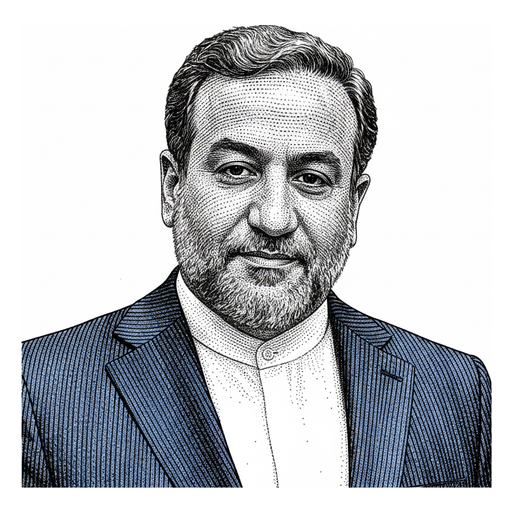
Abbas Araghchi
Foreign Minister of Iran
Araghchi told US television that Iran is prepared for war to resume, while saying "we stand ready for diplomacy"14.
What to watch
Whether further US-Iran talks, which officials said would come in the following weeks, take place14.
United States
Office of Foreign Assets Control
US Treasury sanctions office
OFAC writes the licensing policy and publishes the general licenses. Its Licensing Division began denying the vast majority of outstanding Iran-related requests on September 10th3.
What to watch
The general license issued with each new designation round, as on October 21st4.
05The regional picture
The UK, the United Arab Emirates and Europe are moving the same way with their own tools.
The UK's Iran (Sanctions) (Amendment) Regulations 2026 entered into force on September 29th. They add limits on investment, correspondent banking, insurance and reinsurance, and Iranian bonds15. On September 23rd the UK announced a presumption of denial for license applications from designated Iranian banks, naming Bank Sepah, Melli Bank plc, Bank Saderat, Persia International Bank and Bank Tejarat15,12. The UK also issued a general trade license so the Shah Deniz gas project in Azerbaijan can continue15. Carve-outs there are written as general licenses too.
On August 19th, the United Arab Emirates (UAE) announced it would suspend all trade and commercial exchange with Iran, and financial transactions involving Iranian entities, until further notice15. In Washington, Congress added a law of its own: the Lindsey O. Graham Sanctioning Russia and Iran Act of 2026 became law on September 18th15.
France, Germany and the UK triggered the snapback mechanism of the Joint Comprehensive Plan of Action, the nuclear deal, in August 2025, and UN sanctions came back in September 2025. The EU reintroduced its own measures15. The UK minister for the Middle East, Stephen Doughty, described the new UK rules as broadly those lifted under that deal16.
06The other reading
The policy is a bargaining position that has reversed before, so it may not harden into a lasting regime.
The policy is less final than it looks. Seiden Law notes that it does not make an Iran license legally impossible to obtain8. Squire Patton Boggs lists statutory licenses that survive9. General License X shows how quickly direction can change. It was issued in June and revoked on July 7th after Islamic Revolutionary Guard Corps attacks on commercial tankers in the Strait of Hormuz and US retaliatory strikes5,7.
The Soufan Center wrote on October 1st that US and Iranian leaders each believe they have enough strength to reach maximum goals. It said a week of diplomacy at the UN General Assembly did not advance a settlement14. If talks do produce a deal, OFAC can publish general licenses again, as it did with General License X.
A deal is possible, but the policy covers companies now. OFAC has been denying requests since September 10th, and wind-down windows are fixed in each general license3,9. A company cannot plan around a reversal that no public source dates.
07Vektora Assessment
For most companies, relief now comes from a published general license, not from an application.
Confidence is high on the mechanism. The policy statement, Treasury's own release and the wind-down licenses are published2,3,4. Confidence is medium on the horizon. The end condition depends on talks that had not produced a settlement by October 1st14.
Our position: relief from Iran exposure now depends on the end date in a published general license, not on a regulator's answer to an application. The strongest alternative reading is that this is a temporary lever that OFAC will trade away in a deal. It sits in the section above and we cannot rule it out. Two things would change our view: a general license restored for a suspended authorization, or a report that OFAC granted specific licenses outside the two exceptions.
08Client implications
Each reader group should check which general license covers its position and when it ends.
Private equity and venture capital firms. Check portfolio companies for contracts that assume an Iran license can be obtained. Squire Patton Boggs says conditions precedent and settlement terms drafted on that assumption need review9.
Family offices. Check holdings in banks with correspondent ties to Iran-linked networks. OFAC says foreign banks can be targeted without advance notification6.
Corporates. Map each blocked counterparty to the general license that covers it and its end date. A missed date has no application route behind it9.
Law firms. Seiden Law advises counsel to move beyond engaging with OFAC and consider a general compliance audit for affected clients8.
09Forecast Watch
Two dated calls follow from the policy: more bank designations, and a low chance of a policy reversal.
Confidence on the mechanism is high, because the actions are published. Confidence on the horizon is medium for the first call and low for the second, because both depend on a diplomatic track that moves without notice.
Analyst assessment. Each call is scored once its date passes.
60%
OFAC or the State Department designates at least one more bank located outside Iran for dealing with Iranian banks, as shown on OFAC's Recent Actions page.
Settles Dec 31st, 202666 days left
10%
OFAC withdraws or replaces the September 10th Statement of Licensing Policy, as shown on OFAC's Recent Actions page.
Settles Mar 31st, 2027156 days left
OFAC Recent Actions page, updated several times a week: new general licenses and their end dates.
OFAC Iran sanctions page: any change to the Statement of Licensing Policy.
Treasury and State Department statements after any US-Iran talks.
 United States