20%
France Assureurs publishes a first estimate of insured losses from the 17 and 18 October 2026 riots, on franceassureurs.fr, and it exceeds 1.2 billion euros.
Source: Morningstar DBRS, October 20, 20261
Economic losses are likely to exceed insured losses by several multiples, because business interruption is optional and needs insured physical damage to trigger1.
The 17 October riots are likely to be France's most expensive riot for insurers, and the second civil-unrest loss near a billion euros in the French market in thirty months. Morningstar DBRS expects insured losses to stay below 1.2 billion euros, assuming no further widespread riots1. The 2023 riots were finally counted at 793 million euros across 16,400 claims3, and the May 2024 unrest in New Caledonia generated about 1 billion euros1. The government's count of damaged shops passed 3,000 on 20 October, twice the figure of the day before4, against around 2,500 businesses vandalised in 20234.
The loss falls on the old system, and the old system is a patchwork. Riot damage is excluded by default under article L.121-8 of the insurance code and covered only by extension5, although France Assureurs says most shop and building policies include it4. Since the yellow vests some insurers have excluded strikes, riots and civil commotion (SRCC) or capped it with sublimits6. The state's liability under article L.211-10 of the internal security code pays for damage by a spontaneous crowd, not by an organised group, a line the Conseil d'État drew in October 20225. The mandatory scheme in the 2026 budget law runs through a fund managed by the Caisse Centrale de Réassurance (CCR), France's public reinsurer, with a state guarantee of up to 4 billion euros a year7. It takes effect only by decree, within twelve months of a European Commission state-aid decision that has not come7,8.
What matters now is the January 2027 treaty round. Property catastrophe rates fell 14.7% on a risk-adjusted basis at 1 January 2026, the sharpest drop since 2014, with French programmes down 15% to 20%9. Aon reported that insurers used that market to restore cover lost in the hard market, namely around terrorism, riots and cyber10. Reinsurance News reports that SRCC remains a pressure point in renewal talks, with cedants seeking broader cover on better terms11. Our reading is that this event will not reprice SRCC as a standalone peril by January. It will put explicit SRCC event definitions and sublimits back into European property treaties, and the ceding companies that cannot show an aggregation view of unrest will be the ones that pay for it.
On 19 October Morningstar DBRS said insured losses from the riots of 17 and 18 October should remain below 1 to 1.2 billion euros, assuming no further violence11. It called the event a manageable earnings event rather than a capital event for France's major insurers, after reinsurance recoveries and potential claims against the state11. Its full commentary on 20 October kept the ceiling at 1.2 billion euros and set the benchmark beside it1. France Assureurs ultimately estimated the June 2023 riots at 730 million euros from about 15,600 claims, with commercial property around 65% of the insured cost and municipal property another 27%1. The Senate inquiry later recorded the final 2023 count at 793 million euros across 16,400 claims, as of France Assureurs' estimate of 27 March 20243. It put total property damage at around 1 billion euros, because some losses were never declared and others were only partly covered3.
The physical count already exceeds 2023. The government's tally of shops damaged or looted reached at least 3,000 on 20 October, twice the figure reported a day earlier, against around 2,500 businesses CCI France counted in 20234. Authorities reported almost 2,400 arrests over the weekend12. Alexandre Bompard, president of the Retail and Trade Federation, said the cost to the establishments will run to several hundreds of millions of euros11. Marcos Alvarez of Morningstar told the Financial Times that losses outstripped 2023's because the violence was very intense and widespread, and because inflation had driven up the cost of damage6. Brokers told the paper losses could breach 1 billion euros6.
The insured figure will be smaller than the economic one. Morningstar notes that third-party-only motor policies pay nothing for the insured vehicle, looting and theft may be excluded or sublimited, and glass often carries separate deductibles1. Business interruption is generally optional and needs insured physical damage to trigger, so economic losses are likely to exceed insured losses by several multiples1. The 2023 precedent says the industry count moves up for months: 11,300 claims and 650 million euros ten days in14, 15,600 claims and 730 million euros two months in15, 16,400 claims and 793 million euros by the following March3.
Morningstar's argument, first made in July 2023 and repeated this week, is that riots and civil commotion increasingly exhibit the characteristics of catastrophe risk1. The concern is the aggregation of thousands of correlated claims across commercial property, motor, government property and business interruption portfolios when unrest spreads across several cities at once1. It points to the United States, Chile and South Africa, where single episodes generated insured losses exceeding 2 billion dollars, and concludes that civil commotion can no longer be treated as an incidental property peril, particularly in France1.
Riots are increasingly behaving like natural catastrophes from an insurance perspective. The key risk is having correlated claims across multiple cities at the same time.
Reinsurance News11
The 2023 count shows where the money lands. Two months after the riots, France Assureurs recorded 15,600 claims15. Business property was 41% of claims but 65% of the cost, and local authorities 4% of claims but 27% of the cost15. Vehicles were 46% of claims but 6% of the cost, and other private property 9% of claims and 2% of the cost15. The loss is concentrated in a few thousand commercial and municipal buildings, which is the profile of a storm, not of a burglary wave. The Senate inquiry counted 672 communes in 95 departments, 2,508 buildings burned or damaged, and 12,031 vehicles torched3.
Share of the 730 million euro cost counted two months after the June 2023 riots, by type of insured, per France Assureurs
Source: France Assureurs, September 6, 202315
Vehicles were 46% of the 15,600 claims by number and 6% of the cost; business property 41% of claims and 65% of the cost15.
The global record has moved the same way. Swiss Re has reported a 3000% increase in SRCC claims worldwide from 2000 to 2020, and says it has gone from a couple of dozen SRCC claims a year in the early 2000s to a couple of hundred16,17. Howden Re, cited by Bloomberg, estimates that insured SRCC losses rose from negligible levels in 2013 to more than 8 billion dollars between 2020 and 202417. Lloyd's of London gave SRCC its own risk code in 2024, and Verisk released its first SRCC catastrophe model in 2025, for the US17. On Verisk Maplecroft's first-quarter 2026 ranking of SRCC risk, which weighs both the chance of unrest and the cost of replacing damaged property, the United States sits fifth overall and France seventh17. In December Verisk Maplecroft said 2026 would be more disruptive for political violence insurers than 2025, with Europe and the Americas the only regions without major cities at low risk18.
South Africa, July 2021. The state-owned special risks insurer Sasria received 14,051 claims valued at 32 billion rand from the unrest in KwaZulu-Natal and Gauteng, 80% of them from KwaZulu-Natal, against a balance sheet of 10 billion rand at the start of that year19. The insurer had been designed to handle events up to about 17 billion rand and had handled an average of 3,000 claims a year before 202120. National Treasury injected 22 billion rand to restore its solvency, and premiums rose 48% to 4.5 billion rand21. By July 2025 Sasria had built a 20 billion rand buffer, about 1.1 billion dollars, had signed 15 new reinsurers after peaceful elections, and was preparing to double the cover a single client can buy to 1 billion rand22.
Chile, October 2019. Unofficial estimates reported by Clyde & Co in March 2020 put market losses from the unrest at some 3 billion dollars from just 5,000 claims23. The 2010 earthquake, by comparison, produced about 220,000 claims worth around 6.8 billion dollars23. Around 25,000 businesses were affected, almost 10,000 of them small and medium enterprises, many without cover for such events, because the standard Chilean policy covers fire and only exceptionally extends to strikes, public disorder and looting23. Allianz's political violence team recorded 370 million dollars of damage to Santiago metro stations alone, Walmart's losses at about 500 million dollars, and a market expectation of up to 4 billion dollars in property claims24.
United States, May to June 2020. Property Claim Services designated the unrest that followed George Floyd's death a multi-state catastrophe, the first civil disorder it had so classified since 1992, with claims of at least 1 billion to 2 billion dollars across 140 cities between 26 May and 8 June25. The previous record was 775 million dollars from the 1992 Los Angeles riots, about 1.4 billion dollars in 2020 money26. Swiss Re's own tally of recent riots lists the US 2020 event at 2 billion dollars, South Africa 2021 at 37 billion rand and France 2023 at 730 million euros16.
New Caledonia, May 2024. The unrest generated about 1 billion euros in insured losses in a territory served by a few insurers, and showed how far riot risk can concentrate in one place1. The industry count was 3,480 claims for 942 million euros27. The insurers on the ground reduced their riot cover afterwards; the territory's chamber of commerce says the withdrawal of the riot guarantee left some companies unable to insure at all and business premiums up by more than 30% in 202628. It was this episode, as much as 2023, that pushed the French government to a public scheme1.
Claims counted after five riot episodes, as reported by the industry body or state insurer in each case
Source: Insurance Business, October 19, 202629
South Africa per Sasria's briefing to Parliament in October 202330; France 2023 per France Assureurs' latest estimate as reported by Insurance Business29; France 2005 per the count cited by RMC31; Chile per Clyde & Co's reading of unofficial market figures23. Chile's claims were few and large: about 3 billion dollars from 5,000 claims23.
The common thread is that none of these was priced as an accumulation before it happened. Sasria's then managing director said the insurer first thought July 2021 was one of those riots and only later realised the claims would consume its reserves19. Allianz's head of political violence said the standalone SRCC market used to be a very niche, small class of business until a number of big events hit the industry pretty badly and sobered up the market17.
Article L.121-8 of the insurance code excludes riot and civil commotion damage unless the contract says otherwise, so the cover exists only by extension, and business interruption only where the policy provides it5. France Assureurs says most policies for shops and buildings include riot and civil commotion cover, which usually pays for fire, theft, vandalism and smashed shopfronts and tends to cover the boarding-up and guards a gutted store needs afterwards4. Comprehensive motor policies generally cover fire and vandalism to the vehicle; third-party-only policies do not1.
The extension has narrowed. Since the yellow vest protests of 2018, some insurers have introduced SRCC exclusions, pushing enterprises to buy a separate policy, while others have kept the cover but capped payouts with sublimits, according to Clyde & Co insurance lawyer David Méheut6. The government's own statement in support of the new scheme said reinsurers and insurers had hardened the conditions for this risk across the territory and had withdrawn their guarantees in the zones they judge most exposed32. The Senate inquiry found that after 2023 some communes received letters changing or cancelling their contracts, with one facing a deductible of two million euros, and that claims took 82 days on average from declaration to payment33.
The state's share is contested. Under article L.211-10 of the internal security code the state is civilly liable, without fault, for damage from crimes committed by force or violence by gatherings5. Insurers who pay are subrogated and sue the state in their own name; the yellow vest judgments were almost all recourse actions by Axa, Assurances du Crédit Mutuel and Groupama5. The Conseil d'État ruled on 28 October 2022 that acts premeditated and organised by a structured group solely to commit them fall outside the article, which is the argument prefects now raise almost systematically5. The yellow vest cases were still being decided on appeal in March 2026, and a claim against the state lapses after four years5. Morningstar makes the same point: French case law distinguishes spontaneous collective disorder from organised violence, so how this weekend is characterised could materially affect what insurers recover, and business interruption can stay with insurers or policyholders either way1. Interior minister Laurent Nuñez has said the violence was concerted, wording that may weigh on the judges8.
The immediate response is the 2023 playbook. France Assureurs announced on the evening of 19 October that the deadline to declare a claim rises to 30 days from the usual 5, and that insurers will ease advance payments in the hardest cases34. From 20 October staff who cannot work go on state-paid partial unemployment, and a support fund is offered to damaged shops for cash flow34. The chief executive of Axa, Thomas Buberl, told BFM television on 19 October that the state must fulfil its mandate on internal security rather than rely on insurers6.
I think the state must really fulfil its mandate to ensure internal security, and after this weekend, there shouldn’t be a second or third weekend like this
Article 171 of the finance law of 19 February 2026 rewrites the exclusion into a guarantee. Every property and motor damage contract on assets in France, other than the state's, must cover the effects of riots, extended to business interruption where that cover exists7. A riot is defined as a collective action against public authority, expressing a protest or political or social demands, causing violence and significant economic damage7. It is declared by a riot qualification commission that weighs the number of participants, the extent of direct damage and the policing it required7. War, terrorism and cyber attacks are kept out and stay under their own regimes7.
The money runs through the CCR. A mutualisation fund takes the riot risk insurers choose to cede and pays at least 90% of the ceded damage in a year7; Groupama expects cession to work by zone rather than policy by policy28. Insurers pay the fund a rate set by ministerial order per contract class and location, plus a solidarity contribution of up to 1.5% of net premiums on motor, private and non-agricultural business property and business interruption7. The state guarantees the fund up to the lower of ten times its projected annual receipts and 4 billion euros a year, and may advance it up to 1 billion euros in total7. It separately guarantees the CCR's own reinsurance of these risks up to a yearly ceiling indexed to inflation7. The CCR itself declined to comment on the technical details while the regime was being drawn up28. Two clauses matter to reinsurers directly: any reinsurance treaty clause that excludes the ceded risk because of terms set by the central pricing bureau is void, and the state is no longer liable under L.211-10 for damage the new guarantee indemnifies7,35.
None of it applies yet. The article enters into force on a date set by decree, no later than twelve months after the European Commission's decision that the scheme complies with state-aid law7. The Conseil constitutionnel cleared the finance law on 19 February 202636, after the Rassemblement National had asked it to strike the scheme as a budgetary rider32, but the decree has not been published8. Groupama's chief executive Thierry Martel, who is also a vice-president of France Assureurs, said in late March that the market imagined a start on 1 January 2027 and that it seemed difficult28. He floated a surcharge of around 0.8% on all damage contracts, and said the rate changes profoundly depending on whether New Caledonia joins28. Morningstar is explicit that the framework does not apply to the latest riots, which leaves insurers on their private reinsurance and on contentious recourse against the state1.
| Element | Today | Under article 171, once in force |
|---|---|---|
| Riot cover in a property policy | Excluded by default under L.121-8, included by extension in most shop and building policies5,4 | Mandatory in every property and motor damage contract on French assets, with business interruption where that cover exists7 |
| Who decides it was a riot | Courts, policy by policy, and prefects under L.211-105 | A riot qualification commission, by participants, damage and policing7 |
| Who carries the loss | Insurers and their reinsurers, with recourse against the state for damage by a crowd but not by an organised group5,1 | Insurers may cede by zone to a CCR fund paying at least 90% of ceded damage, guaranteed by the state up to 4 billion euros a year7 |
| Who funds it | Premiums and taxpayers through state recourse5 | A per-contract rate plus a solidarity contribution of up to 1.5% of relevant net premiums7 |
| Reinsurance treaty exclusions | Insurers' choice; SRCC exclusions and sublimits have spread since 20186 | A clause excluding the ceded risk because of the pricing bureau's terms is void7 |
| Start | Not in force; decree not published8 | By decree within twelve months of the European Commission's state-aid decision7 |
At the 1 January 2023 renewal, Gallagher Re reported that the two areas of most constraint were peak-zone US property catastrophe capacity and cover for strikes, riots and civil commotion and war, while most other lines could be bought at a higher cost37. Howden Re said in 2023 that insurers were starting to charge significant additional premiums for SRCC cover, with retail assets among the most affected17. Chubb's deputy head of terrorism and political violence says property insurers, which long gave SRCC away at no extra cost, have begun excluding or restricting it17.
Three years later the market has turned. Howden Re's 1 January 2026 report found risk-adjusted global property catastrophe rates on line down 14.7% on average, accelerating from an 8% fall in 2025 and the largest reduction since 20149. European programmes fell 10% to 20%, and France, Italy, Switzerland and the United Kingdom recorded the largest cuts, down 15% to 20%9. Guy Carpenter counted dedicated reinsurance capital up another 9% in 2025 and reinsurer return on equity near 17%38. Reinsurers carried just 11% of global insured catastrophe losses against a 20% average before the 2023 reset, even with 2025 insured catastrophe losses at 121 billion dollars38. Aon's January 2026 report records that market conditions enabled insurers to push back on restrictions and restore coverage lost in the hard market, namely around terrorism, riots and cyber10.
Average risk-adjusted fall in global property-catastrophe reinsurance rates on line at the 1 January renewal, per Howden Re
Source: Reinsurance News, January 2, 20269
France, Italy, Switzerland and the United Kingdom recorded the largest reductions at 1 January 2026, down 15% to 20%9.
That is the setting in which French cedants will present this loss. Reinsurance News reports that SRCC remains a potential pressure point in renewal negotiations, particularly in a softening market where cedants may seek broader coverage on more favourable terms11. It argues the peril should be priced explicitly within treaties rather than added at little or no cost11. Howden Re's view from the 2026 renewal is that political violence and SRCC are no longer peripheral considerations and have moved into the core of underwriting and capital decisions39. Morningstar expects repeated episodes to maintain pressure on SRCC pricing, limits, deductibles and underwriting1. The open question for the 2027 round is whether a reinsurer whose French property programme has just taken a riot loss inside its catastrophe cover can hold an explicit SRCC event definition and sublimit. The cedant across the table, in a market down 15% to 20%, has alternatives9.
The strongest case against treating riots as a reinsurance peril is scale. Howden Re's estimate of more than 8 billion dollars of insured SRCC losses over the five years to 202417 is a fraction of the 121 billion dollars of insured catastrophe losses Guy Carpenter counts in 2025 alone38. Howden Re notes that global insured catastrophe losses have exceeded 100 billion dollars in every year of this decade39. Retentions matter too: Aon records that attachment points raised sharply in the 2023 renewals were largely unchanged at 1 January 202610, so a loss spread across many insurers may stay below the treaties and never reach a reinsurer at all. Morningstar's own view is that this event is an earnings loss, not a capital event, and is unlikely by itself to affect the credit profiles of the major French insurers1. The Senate inquiry concluded that the 2023 riots, for all the financial and moral harm to the businesses hit, had no major effect on the French economy, and that tourism was not affected beyond measure3. The state has already decided to mutualise: once the CCR fund is running, at least 90% of ceded riot damage moves to a public backstop7. That is what Alvarez means when he says the scheme will spread the cost across everyone6. On this reading the right response is to wait for the decree, not to reprice treaties.
The reply is that the accumulation does not go away because it is small on average. SRCC losses swing between years, and Verisk Maplecroft says the probability that a single event produces more than 5 billion dollars of losses can no longer be ignored, with SRCC loss risk in some areas possibly exceeding that from natural catastrophes17. The scheme is voluntary on the ceding side and zonal, so an insurer may keep the risk where it judges the fund's price too high, and the fund's floor is 90% of what is ceded, not of what is lost7. The state guarantee is capped at 4 billion euros a year7; New Caledonia alone cost about 1 billion euros1. And the scheme protects nothing until the Commission rules and a decree follows7, which Groupama's chief executive doubted would happen by 1 January 202728. A reinsurer writing the 2027 year is therefore pricing at least one more year on the old system, and possibly two.
On the loss, medium confidence that the final insured figure sits between the 2023 count and Morningstar's ceiling. The physical count already exceeds 2023 on shops4, and inflation has raised the cost of every repair since then6. Against that, the 2023 count rose by about a fifth over nine months as declarations and expertise came in14,3, and the ceiling rests on the assumption of no further widespread riots1. More protests are planned for the weekend40; Proto Thema reports yellow vest-linked accounts calling for Saturday 24 October and strikes planned for 5 November41. A second weekend on the scale of the first would take the figure above the range; the curfews that held on the night of 19 October are the evidence that it may not come40.
On the scheme, medium confidence that it is not in force for the January 2027 treaties. Entry into force is tied to a Commission decision and a decree7, and the decree is unpublished8. One of the most engaged insurers called a 1 January 2027 start difficult six months ago, and the surcharge rate, the commission's composition and New Caledonia's participation were all open in April28. This weekend raises the political price of delay, which is the main reason to hold the probability near even rather than lower.
On the renewal, medium confidence on direction and low on form. Reinsurers have the argument, since the event is the correlated multi-city loss Morningstar described1, and SRCC was already a named pressure point in negotiations11. Cedants have the market, with French programmes down 15% to 20% and capital up9,38. We expect the compromise to be wording rather than price. That means explicit SRCC event definitions and hours clauses (the window within which damage counts as one event), and sublimits inside catastrophe covers on French and European property treaties. Cedants that want more will buy it back at a higher price, rather than see a separately rated SRCC layer across the market. Where we diverge from the trade press is on who pays. An insurer that cannot show its reinsurer a mapped accumulation of unrest exposure by city will pay for that gap in terms, whatever happens to the headline rate.
| Reader | What to do before 1 January 2027 | Key exposure |
|---|---|---|
| Reinsurers and treaty underwriters | Put an SRCC event definition, hours clause and sublimit into every French and European property treaty quote, priced as an endorsement that can be bought back. Ask each cedant for unrest exposure by city, and treat silence as a loading. | A riot loss inside a catastrophe cover whose rate was cut 15% to 20% a year ago9 |
| Insurer chief risk officers | Give civil unrest its own accumulation limit and a realistic disaster scenario built on 2023's split, where business property carried 65% of the cost and local authorities 27%15. Model the state recourse at a discount, since organised violence is outside L.211-105. Plan for the scheme to miss the 2027 year. | Retained loss between attachment and state recovery, and a second weekend |
| Corporates and retail property owners | Pull the SRCC wording from every French property policy: sublimits, looting and theft exclusions, glass deductibles, and whether business interruption needs physical damage1. File within the 30-day window France Assureurs has opened34. Document the link between the damage and the declared march, which decides state recourse5. | Lost trade without physical damage, which no policy and no state scheme covers1 |
| Brokers and advisers | Price standalone SRCC and political violence cover for French retail and municipal clients now, while the market is soft on terrorism and riots10. Brief municipal clients on the Senate's finding that insurers cancelled or re-rated communes after 202333. | Clients who discover the sublimit at the claim |
| Investors in French insurers | Expect an earnings hit, not a capital event, at the major groups1. Watch the France Assureurs tally and any disclosure of reinsurance recoveries. The fiscal risk, per Morningstar's sovereign team, is that social tension complicates the 2027 budget and keeps borrowing costs high42. | The second weekend, and a sovereign spread already at a 24-year yield high40 |
Confidence on the mechanism is high: the aggregation of riot claims is documented in the 2023 count15, in Sasria's near-insolvency19 and in the PCS designation of 202025, and Morningstar's ceiling is explicit about its assumption1. Confidence on the horizon is medium: the French count takes months to settle3, the Commission's timetable is not published, and renewal reports describe terms in general language that may not name SRCC.
Analyst assessment. Each call is scored once its date passes.
France Assureurs publishes a first estimate of insured losses from the 17 and 18 October 2026 riots, on franceassureurs.fr, and it exceeds 1.2 billion euros.
A further weekend of protests in France produces more than 1,000 arrests nationwide in one day, per interior ministry figures reported by Reuters or AFP.
At least one of Gallagher Re, Guy Carpenter, Aon or Howden Re says in its 1 January 2027 renewal report that strikes, riots and civil commotion terms tightened on European property treaties, whether by event definition, sublimit, exclusion or separate pricing.
The European Commission publishes a state-aid decision on France's riot insurance scheme in its state-aid register.
The decree bringing article 171 of the 2026 finance law into force is published in the Journal officiel.
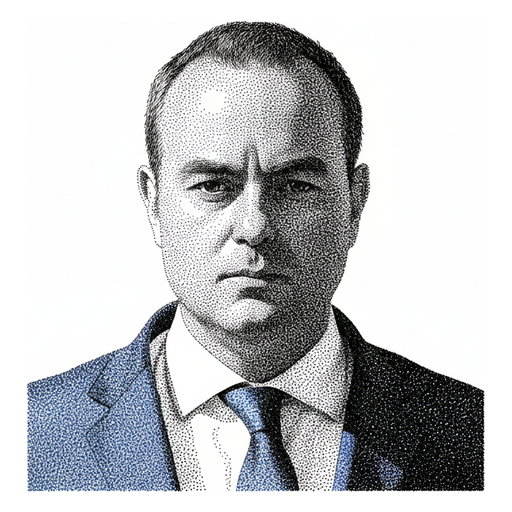 French government
Gave the first arrest count of 1,200 on the evening of 17 October and blamed the ultra-left13; ordered localised curfews and ruled out a blanket one in Paris but not a state of emergency47. Said the targeted curfews contributed to the calm of 19 October and may be extended40.
 French government
Raised the count to 1,800 on 18 October and said the march had been hijacked by opportunistic delinquents46; conceded police had lost control in some cities48; offered to resign and was refused47. His description of the violence as concerted could weigh on state recourse8.
 French government
Gave the preliminary estimate of at least 3,000 damaged businesses6 and promised that Bercy was mobilised for the shopkeepers hit49. The support fund and the partial unemployment scheme for affected staff run through his ministry and the economy ministry34.
 Insurers
Told BFM television on 19 October that the state must fulfil its mandate on internal security and that there should not be a second or third weekend like this6. Axa was among the insurers whose recourse actions against the state after the yellow vests reached the appeal courts5.
Signed the 2023 tallies that moved from 650 million euros ten days in to 730 million euros two months in14,15. Her federation extended the claim deadline to 30 days on 19 October34, and its first estimate for this event is the number the market is waiting for.
Set the 1 to 1.2 billion euro ceiling and the earnings-not-capital verdict11; made the same catastrophe argument in July 2023, when he expected losses to stay well below 1 billion euros2. Told the FT an event costing hundreds of millions is now expected each year6.
Portraits after photographs. Laurent Nuñez: Arthur Empereur, via Wikimedia Commons, CC BY-SA 4.0; Serge Papin: Bogdan Hoyaux / European Union, 2025 / EC - Audiovisual Service, via Wikimedia Commons, CC BY 4.0; Thomas Buberl: World Economic Forum, via Wikimedia Commons, CC BY 3.0.