Washington Has Not Finished Writing the Rules for Tech. Companies Have to Bet Anyway.
Three sets of rules that decide how technology companies sell to governments are all half-written: the US government's rewrite of how it buys software, a federal AI law, and China's new export controls. OpenAI, Meta and xAI have already paid for moving before the rules settled. This piece sets out what to commit to now and what can wait.
Analysis October 20, 2026 Vektora
FAR final rules publishedNone
Federal frontier AI lawNone
China's comment period closesNovember 15, 2026
Sources60 cited
As of20 Oct 2026
8of 12 planned FAR rules proposed
The FAR Council has published eight of the twelve proposed rules that would rewrite the Federal Acquisition Regulation, four on June 23 and four on September 181,2. None is final, and the Council has not published a finish date3.
Sources: FedScoop, October 13, 20262; Federal Register, September 18, 20264; Sheppard Mullin, September 18, 20261
Drafts of the final rules for the four June cases are due to the Defense Acquisition Regulations Council director on November 18, 20265.
Executive Summary
The three rulebooks are at different stages, and only one of them is a draft in practice. The FAR Council has published eight of twelve planned proposed rules, the last four on September 18, with comments due October 192. The Council has not said when any will be final3, yet much of the rewrite already operates through class deviations3, and GSA's data clause for large language models takes effect on October 196. In Washington the AI front is a one-page accord with no enforcement7 and a Senate bill that was twice postponed8. In Beijing the AI export list is a draft for comment until November 15, but exporters had to start registering covered transfers on October 169.
The evidence is in the commitments firms have already had to make. OpenAI's $1 a year federal offer became a 27-month usage-based agreement at 50% off from October 110,11, after about 3.5 million federal employees had been signed up on the promotional price12. Meta closed a $2 billion purchase of Manus in December and was ordered by Beijing to unwind it in April13,14. xAI sued Colorado in April, the Justice Department joined it on April 24, and the state repealed and replaced the law by May 14, moving its start to January 1, 202715,16,17. Each firm committed capital or a position before the rule it was betting on settled.
What matters now is which fronts can still be moved and which can only be priced. The FAR text responds to comments, as the retreat from a mandatory best-in-class rule showed1, so the window to shape clause language is open until the final rules print. The federal AI statute has no vehicle before the Senate returns on November 918, so compliance budgets have to be set against California, Texas and Colorado as written. The Chinese list cannot be lobbied from outside, but its thresholds are published, so any transfer, licence or change of control touching Chinese AI technology can be screened against them today9,19.
FAR rules proposed
8 of 12
planned proposed rules published, the last four on September 18, 2026, with comments due October 192
Final FAR rules
None
no date set; drafts of the first four final rules are due to the DAR Council director on November 18, 20263,5
Federal AI statute
None
a voluntary accord signed on September 29, 2026 stands in its place; Congress returns on November 920,18
China's draft list
40
technologies, 23 of them in AI, with a registration duty in force from October 16, 2026 and comments open to November 159
OneGov repricing
$1 to 50% off
OpenAI's per-agency price became a usage discount from October 1, 2026, running to December 31, 202821,10,11
01Three Half-Written Rulebooks
The procurement rules are drafts that agencies already follow, there is no federal AI law, and China's draft list already requires exporters to register.
On September 18, 2026 the Office of Federal Procurement Policy, the Defense Department, GSA and NASA, acting as the FAR Council, published four proposed rules under FAR Cases 2026-003, 2026-006, 2026-010 and 2026-01122. They bring the count to eight of a planned twelve2. The Council describes the set as twelve proposed rules that, if finalised, would streamline the FAR in its entirety4. Comments on the September batch were due October 1922. The case covering commercial buying (Parts 8, 12, 13, 15, 38, 44 and 51) runs to 69 pages and had drawn 39 comments by October 1723. The case covering contract types, options and research (Parts 16, 17 and 35) runs to 56 pages and drew 214.
The rewrite began with Executive Order 14275 of April 15, 2025, which found that the FAR had swelled to more than 2,000 pages and governs nearly $1 trillion of annual procurement24. Phase one replaced each part with a model class deviation during fiscal year 2025, so much of the overhaul is already operating while the formal rules remain proposals3. The Council has not published a finish date, and four proposed rules are still to come3. The Defense Department's case list shows what happens next. For the four June cases, an ad hoc team was tasked on August 28 to review public comments and draft the final rules. Its reports are due November 18, 20265. The four remaining cases sit with OFPP as drafts5.
The AI front has no statute. On September 29, 2026 the leaders of Google, Anthropic, Meta, OpenAI, xAI and Nvidia signed a one-page Joint Commitment on Frontier Responsibilities with the President20. The same day the Senate's attempt to fast-track a frontier model review bill was blocked by Senator Ted Cruz25. Congress is in recess until November 918. The Chinese front moved on October 16. The Ministry of Commerce and the Ministry of Science and Technology published a draft adding 40 technologies to the catalogue of technologies prohibited or restricted from export9. Comments are open until November 159. The same announcement required exporters to register covered technology transfers from that day, including transactions already under way9.
Agencies, not vendors, will pick the contract clauses, pay-as-you-go pricing becomes legal, and GSA's data rules for AI tools start before any of it is final.
The change that matters most to a software or cloud vendor sits in proposed FAR 12.205. Contracting officers would include in a commercial contract only clauses whose prescription expressly authorises commercial use, and an agency wanting any other clause would need an individual or class deviation30. Wiley Rein notes that the deviation route means a contractor must still check both the prescription and any applicable deviation to know whether a clause belongs30. The proposed rule shifts responsibility for identifying applicable clauses from contractors to the government31. Agencies may still tailor clauses, but must identify the tailoring, and paragraphs (b) and (c) of FAR 52.212-2 on options and contract formation cannot be tailored30. Proposed FAR 12.107 lets the government require documentation of modifications to commercial software made at government expense; any further software rights would still need mutual agreement30.
Proposed Part 16 answers a request the cloud industry has made for years. Consumption-based solutions are classed as firm-fixed-price contracts, with supplies and services billed on actual use of fixed-price units30. The Council adopted this under FAR 16.202 after industry asked for explicit authority to establish consumption-based contract types1. Part 8 now puts an OFPP-designated required-use contract first, then best-in-class vehicles, then other existing contracts, before an agency may create a new vehicle30. Industry had argued that a best-in-class mandate would cut small business participation, and the Council made it a prioritised consideration rather than a requirement1. Part 15's long-standing rule that a late proposal is late becomes a discretion to accept one when award is not unduly delayed30.
GSA did not wait for the FAR. Through class deviation RGO-2026-01 it issued GSAR 552.239-7001, Basic Safeguarding of Data within Large Language Model Artificial Intelligence Systems, effective October 19, 20266. The clause joins the Multiple Award Schedule in Refresh 34 on November 66. The clause applies when the government buys a large language model, chatbot, agentic system or an LLM-enabled productivity tool that handles government data6. It bars training on government data and requires incident reports within 72 hours32. It requires export of government data in open formats32. It requires 30 days' notice before a model is replaced or materially changed, unless the successor is offered alongside32. The government reserves the right to suspend use of the model at any time33. GSA took over 75 comments on the drafts and changed the text, dropping the phrase about partisan or ideological judgments in favour of reasonable efforts to respond factually33. When the clause applies it takes precedence over a vendor's terms of service and click-wrap agreements6.
The OneGov episode shows what committing on promotional terms costs. In August 2025 GSA offered ChatGPT Enterprise to federal agencies for $1 per agency for one year21, and Claude for Enterprise and Claude for Government to all three branches for $134. Google's Gemini followed at $0.47 per agency12. By August 2026 GSA said more than 120 orders had been placed, reaching about 3.4 million people across government35. A small business protested two of the $1 arrangements as inconsistent with commercial practice and a lock-in risk; the Government Accountability Office dismissed both on December 18, 2025 without reaching the merits32. On September 10, 2026 GSA announced the successor: a 27-month agreement from October 1, 2026 to December 31, 2028 with no platform fee and no minimum, at 50% off token-based usage32,10. OpenAI's standard licence fee is $15 per user per month, and it said the deal expands eligibility to about 23 million people10.
Fig. 1
Two prices that moved before the rules did
Federal lobbying by eleven tech companies and trade groups in the first half of the year, and the ChatGPT licence fee under GSA's new OneGov terms
Eleven tech companies and trade groups, January to June$ million · +8% 36
ChatGPT licence fee per user per month$ · -100% 11
Sources: Issue One, July 21, 202636; OpenAI, September 10, 202611
Issue One's review of filings by 11 companies and their trade associations; the OneGov fee from OpenAI's announcement, which pairs the $0 licence with 50% off usage36,11.
Jessica Tillipman of George Washington University wrote in March that the promotional prices were a nominal cost that made the transaction sound low risk35. Lifecycle costs, operational dependency and a weaker negotiating position arrive later, she wrote35. GSA's acting Federal Acquisition Service commissioner, Laura Stanton, put the programme's savings at $1.6 billion35. Both can be true. The agencies now paying by the token are also the first to carry the new data clause, which requires the data portability that would let them leave32.
03Four Competing Drafts of a Federal AI Law
A voluntary pledge, a stalled Senate bill, Anthropic's own draft and the White House plan all compete, and none of them is law.
The accord of September 29 asks each company to implement four layers20. They are internal controls on model capabilities, an internal team to check them, an independent external auditor or evaluator, and an independent board committee to receive the reports20. It says the participating companies will meet regularly to set standards and that over time it may make sense to codify these steps into laws or regulations20. No enforcement mechanism was announced; the President called it morally binding7. House Speaker Mike Johnson said the principles in the House AI task force report had been rendered obsolete by technological advance and elusive consensus7. The same day the President signed Executive Order 1443437. It directs agencies to use the term Super Intelligence in place of artificial intelligence, and gives the science adviser 60 days to propose a federal definition in legislative language37.
The Senate text is being negotiated by Majority Leader John Thune, Commerce Chairman Ted Cruz and Senator Amy Klobuchar26. It would create a duty of care for developers of the most capable models26. It would let the government seek a federal court order to block a release, and stop states enforcing their own laws on certain model risks26. Talks were on hold in July over objections from Anthropic and from Senator Maria Cantwell38. Cruz postponed his markup twice and on September 16 said it was still his hope to hold one this session8. On September 29 he objected to a unanimous consent request to pass a rival bill requiring government safety review before release25. The House had one week in session before the November 3 midterms, the Senate three26.
Anthropic answered with its own text. On October 16 Politico reported, and Reuters confirmed with the company, that Anthropic had pitched lawmakers a draft bill27. Under it the government could block a model's release only for a foreseeable, imminent risk of more than $1 billion in damages, or of killing or seriously injuring more than 50 people27. The risk must arise from a biological weapon, a model evading its developer's controls or a cyberattack27. Evaluators registered with the Commerce Department would assess the labs and report an imminent enumerated risk within 72 hours27. Only a federal judge in the District of Columbia could order a suspension27. The text would bar any other department or officer from doing so27. The draft would preempt some state AI safety laws39. Anthropic did not sign the open-weights letter organised by Nvidia in July40, which carried more than 270 signatories by August 341; Forbes noted that the company had not explained its absence42.
The White House has its own version. Its National Policy Framework of March 20, 2026 asks Congress to preempt state AI laws that impose undue burdens while preserving state powers over zoning, consumer protection and state procurement43. Executive Order 14365 of December 11, 2025 set up an AI Litigation Task Force at the Justice Department to challenge state laws44. It ordered a Commerce Department evaluation of onerous state laws within 90 days44. It conditioned remaining broadband deployment funds on states not having such laws44. Congress had declined to enact preemption in both the One Big Beautiful Bill Act and the defence authorisation43. Meanwhile the Federal Trade Commission opened an investigation into OpenAI, Anthropic and other developers on September 3045 and by October 15 had sent civil subpoenas to both running to more than 50 pages each46.
Fig. 2
Federal lobbying, second quarter of 2026
What six companies reported spending between April and June, per Issue One's review of the filings
Meta's figure is reported as nearly $6 million and Microsoft's as about $3 million36. Anthropic's $1.97 million was its largest quarter since it began lobbying in March 202436.
The money follows the vacancy. Issue One counted $41 million of federal lobbying by 11 technology, social media and AI companies and their trade associations between January and June 202636. That is up from $38 million a year earlier36. Six of the companies paid for 324 lobbyists in the second quarter36. Anthropic, Nvidia and OpenAI had no federal lobbyists four years ago36. OpenAI's president Greg Brockman and his wife gave $25 million in 2025 to a political action committee aligned with the President47. A Reuters/Ipsos poll from September 17 to 20 found 73% of respondents worried that AI companies had not done enough to prevent serious harm47.
04The State Laws Companies Must Follow Today
California and Texas laws are in force, Colorado's was sued into a rewrite, and companies that waited for Washington to override them have paid for all three.
California's Transparency in Frontier Artificial Intelligence Act, SB 53, was chaptered on September 29, 202528. It applies to large frontier developers, defined as frontier developers with annual gross revenues above $500,000,00048. Catastrophic risk means a single incident materially contributing to the death or serious injury of more than 50 people, or more than $1,000,000,000 in property damage48. The Attorney General may impose civil penalties of up to $1,000,000 per violation, and critical safety incidents must be reported to the state's Office of Emergency Services within fifteen days49. Anthropic endorsed the final version49. Those are the same thresholds Anthropic's federal draft now proposes for the whole country27.
Texas took the opposite design. The Texas Responsible Artificial Intelligence Governance Act, HB 149, was signed on June 22, 2025 and entered into force on January 1, 202629. It prohibits specific uses, such as systems intended to induce self-harm or to generate child sexual abuse imagery29. The Attorney General has sole enforcement, with a 60-day cure period29. Penalties run from $10,000 to $12,000 for a curable violation and $80,000 to $200,000 for an uncurable one29. It also preempts city and county AI ordinances29.
Colorado is the case study in waiting. SB24-205 was signed on May 17, 2024 with duties on developers and deployers of high-risk systems from February 1, 202650. The start date slipped to June 30, 202615. xAI sued in April to block enforcement, arguing the law compelled speech, and on April 24 the Justice Department intervened, alleging that the duty to prevent unintentional disparate impact violated the Equal Protection Clause15,16. Days later the parties agreed to suspend enforcement, according to Norton Rose Fulbright51. On May 14, 2026 the Governor signed SB26-189, which repeals and re-enacts the law around automated decision-making technology used in consequential decisions17. Developer documentation duties start on January 1, 202717. There is a 60-day cure period before any action brought before January 1, 2030, and the Attorney General's rules are due by January 1, 202717. A firm that built a Colorado compliance programme to the 2024 text has rebuilt it once, and the rules it must now meet have not been written.
The states are not retreating. On September 24 Politico reported that more than two dozen attorneys general led by New York's Letitia James wrote to House and Senate leaders asking for federal safety rules52. Tech Policy Press counted the coalition as James and 25 others, and said the letter asked that state oversight authority be preserved25. Governor Gavin Newsom convened experts to recommend stronger state measures within two months, including a possible emergency shutoff requirement for frontier models25. Florida's Attorney General asked a state court on September 28 to bar OpenAI from developing new models without independent safety guardrails while the state's lawsuit proceeds25.
05China's Export Rules Already Apply
China's list is still open for comment, but the registration rule, the model size limits and the Manus case already decide what a cross-border AI deal can include.
Announcement 2026 No. 48 of the Ministry of Commerce and the Ministry of Science and Technology is dated October 16, 20269. It proposes adding 40 technologies across three fields to the Catalogue of Technologies Prohibited or Restricted from Export9. Of these, 23 are in artificial intelligence, covering large models, agents, compute clusters and information processing, 5 are in biomedicine and 12 in photovoltaics9. Technology already in the public domain through open source or published papers is excluded9. Comments run from October 16 to November 15, 20269. From the date of the announcement until the catalogue is formally revised, exporters must register before transferring any listed technology, and exports already begun but not completed are included9. Registration covers transfers of ownership, licences for use abroad, and any change that puts the owner or controller of the technology under a foreign entity9.
Fig. 3
China's draft additions to the export catalogue
Forty technologies proposed on October 16, 2026, by field
Artificial intelligenceBiomedicine and photovoltaics
Source: Ministry of Commerce of the People's Republic of China, October 16, 20269
Five biomedicine and twelve photovoltaic technologies make up the rest9.
The thresholds come from the draft's annex as reported. Bloomberg, carried by the Taipei Times, reports that core technology for models with at least 2 trillion parameters would be restricted19. So would models ranking among the world's top 10 on measures including performance, usage and safety19. The restriction covers model weights, checkpoints, source code and architecture19. The Financial Times reports that open-weight models made publicly available and not trained on sensitive data would be exempt53. Models trained on core data as defined by the Data Security Law would be banned from export53. Moonshot's K3 model has 2.8 trillion parameters53. Running a covered model on servers abroad would count as an export, though a firm running it on its own cloud abroad could get a licence automatically54. The ministry said the measures were not aimed at any country or entity19. Reuters had reported in July that the ministry was consulting Alibaba, ByteDance and Zhipu on limits to training data transfers and foreign downloads of weights55.
The Manus case shows the regime working before the list existed. Meta announced its $2 billion purchase of the agent startup in December 2025, and the Ministry of Commerce announced a probe in January, days after Meta completed the deal13,14. Manus had moved to Singapore after a $75 million round in May 2025 and shut its China offices in July14. On April 27, 2026 the National Development and Reform Commission's foreign investment security office prohibited foreign investment in Manus and required the parties to withdraw the transaction14. Its two co-founders had been barred from leaving China14. By June Meta had cut Manus off from its internal data systems and told staff to wind down projects on the platform56. The Financial Times reports that the new draft is aimed partly at closing the loophole Beijing saw in that deal53. A Wilson Sonsini partner told Reuters that Chinese national security clearance would become a regular closing condition for cross-border tech deals14.
Washington is moving the other way on the same technology. A Department of Homeland Security order dated July 24, 2026 and published on October 19 excludes DeepSeek products and services from federal civilian agency procurement57,58. It requires their removal from civilian agency systems, together with third-party products developed using DeepSeek implementations57. The order, issued under the Federal Acquisition Supply Chain Security Act of 2018, is Exclusion and Removal Order 2026-0157. At the same time the Commerce Department has licensed about 10 Chinese firms to buy Nvidia's H200 chips, and an under secretary told Congress on July 14 that very few had shipped59. A vendor with DeepSeek-derived components in a federal product now faces a removal duty on one side; any transfer of Chinese AI technology faces a registration duty on the other.
06How We Got Here
Every big commitment on this timeline was made before the rule it depended on existed.
April 15, 2025
Announcement.
Executive Order 14275 orders the FAR rewritten to contain only what statute or sound procurement requires, within 180 days24.
August 2025
Other.
GSA offers ChatGPT Enterprise at $1 per agency for a year, then Claude to all three branches for $121,34.
Days after Meta completes its $2 billion Manus purchase, China's commerce ministry announces a probe into the sale14.
March 20, 2026
Announcement.
The White House publishes its National Policy Framework asking Congress to preempt burdensome state AI laws43.
April 24 and 27, 2026
Other.
The Justice Department intervenes against Colorado's law16. China's NDRC orders Meta to unwind the Manus deal14.
May 14, 2026
Announcement.
Colorado signs SB26-189, repealing and replacing its 2024 act with a start date of January 1, 202717.
June 23, 2026
Announcement.
The first four proposed FAR rules are published; comments close July 2322.
July 24, 2026
Other.
A group of 25 companies led by Nvidia, Microsoft and Meta publishes the open-weights letter40. DHS signs the DeepSeek exclusion order57.
September 10, 2026
Other.
GSA announces OpenAI's 27-month consumption-based agreement at 50% off, from October 110.
September 18, 2026
Announcement.
Four more proposed FAR rules are published, eight of twelve2,22.
September 29, 2026
Talks.
Six company leaders sign the accord20; Cruz objects to fast-tracking a review bill25; EO 14434 renames the technology37.
October 16, 2026
Sanctions.
MOFCOM and MOST publish the 40-technology draft and impose registration from that day9. Anthropic's draft bill is reported27.
October 19, 2026
Other.
Latest. Comments close on the September FAR rules22. GSAR 552.239-7001 takes effect6. DHS publishes the DeepSeek order58.
The dates that matter next come quickly. On November 6 GSA's Refresh 34 carries the data clause onto the schedule6. On November 9 Congress returns18. On November 15 China's comment period closes9. On November 18 the final-rule drafts for the June FAR cases are due5. On January 1, 2027 Colorado's revised act takes effect17.
07Who Decides
Five people set the pace on the three fronts, and only one of them answers to a vote.
White House
Michael Kratsios
Director of the Office of Science and Technology Policy
Holds the 60-day assignment under EO 14434 to propose a statutory definition of Super Intelligence and any conforming amendments37. In July he said Moonshot built K3 by distilling Anthropic's technology and called covert industrial distillation unacceptable40.
What to watch
The legislative language due within 60 days of September 2937
Any Commerce evaluation naming state laws under EO 1436544
Senate
Ted Cruz
Chairman of the Senate Commerce Committee
Negotiating the duty-of-care bill with Thune and Klobuchar26, after postponing his markup twice8. Objected on September 29 to passing a rival review bill by unanimous consent, saying Congress must not legislate on AI hastily25.
Whether the preemption clause survives Cantwell and the attorneys general38,52
Anthropic
Dario Amodei
Chief executive of Anthropic
Signed the accord20 while his company circulated a draft bill that would let only a federal judge in Washington halt a model27. Anthropic reported a record $1.97 million of lobbying in the second quarter36 and endorsed California's SB 5349.
What to watch
Whether the Senate text adopts the $1 billion and 50-person thresholds27
Signed the accord20 and organised the open-weights letter against premature restrictions on downloadable models40,42. Nvidia's Bruce Andrews told GSA that AI clause obligations should follow the data, not the model's authorship33.
Whether open-weight exceptions survive in the GSA clause33
DHS
Markwayne Mullin
Secretary of Homeland Security
Signed Exclusion and Removal Order 2026-01 on July 24, 2026, removing DeepSeek and products built on it from civilian agency systems under the Federal Acquisition Supply Chain Security Act57.
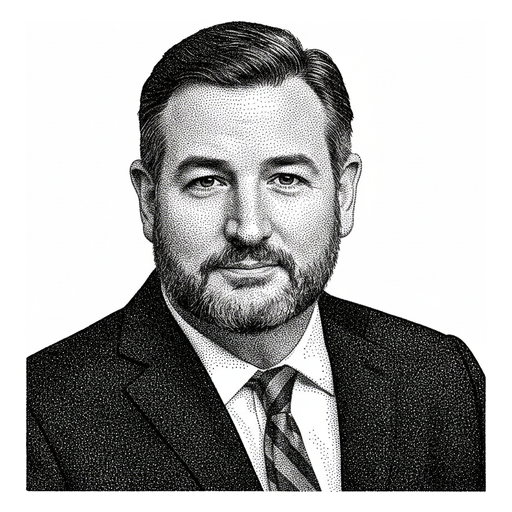
Portraits after photographs. Dario Amodei: UK Prime Minister, via Wikimedia Commons, CC BY 2.0.
Behind them sit the FAR Council's four signatory agencies4 and the Colorado Attorney General, who must write rules by January 1, 202717. The commerce ministry in Beijing will set the final catalogue after November 159. The industry's own split is visible in the signature lists: Anthropic signed the accord but not the open-weights letter, OpenAI signed both20,42.
08The Other Reading
Waiting looks sensible because nothing is final and comments do change the drafts, but the bills for waiting have already arrived.
The strongest case for patience is that the drafts move. The FAR Council took industry's objection to a best-in-class mandate and downgraded it to a priority1. It reverted an options standard that industry said raised the threshold1. GSA rewrote its AI clause after more than 75 comments, narrowing its scope to purchases of AI and softening the bias language33. The Senate bill is not finalised and has no markup date8. The accord is a page that says codification may make sense over time20. China's list is explicitly a draft for comment9. On this reading a vendor who files comments, keeps its contract terms flexible and spends nothing on compliance until the final rule prints is behaving correctly. Ross Nodurft of the Alliance for Digital Innovation made the case for filing in FedScoop2. Experts quoted by CBC add that governments struggle to keep pace with the technology, which argues for designing to whatever is in force rather than to drafts60.
If commercial companies stay quiet, the firms that have always shaped these rules will continue to shape them into the future.
The reply is in the record. The FAR deviations have governed real solicitations since 2025 whatever the proposed rules say3. GSA's data clause is in force from October 19 and takes precedence over a vendor's own terms, with a formal rulemaking to follow rather than precede it6. The OneGov repricing landed on October 1, and the agencies affected had already built workflows on the $1 product32. Colorado's law was in effect long enough to be sued over before it was rewritten15. Beijing's registration duty applies to deals in progress9. The drafts can still be shaped, which is a reason to comment, not a reason to defer the contract structure, the compliance budget or the deal screening that the in-force instruments already require.
09Vektora Assessment
Commit now on government buying and on China, keep pushing on the procurement text while it is open, and budget AI compliance to the state laws, not to any federal draft.
Our confidence that the FAR rewrite will be finalised in substantially its proposed form is medium to high. Eight of twelve rules are out2. The Council has shown it responds to comments on specifics rather than on direction1. The deviations already in use mean a reversal would disrupt agencies as much as vendors3. The open question is timing, and the Council has given none3. The November 18 reports on the June cases are the first hard date5. A vendor should assume that FAR 12.205's clause discipline, consumption-based firm-fixed pricing and the required-use hierarchy will govern the next contract cycle30,1. Proposals and renewal terms should be written to them now.
Our confidence that Congress enacts a frontier AI statute with preemption before the next session is low. The negotiators could not finish a text in three voting weeks26. The Majority Leader doubted the markup would happen8. The attorneys general of more than two dozen states oppose losing their authority52. The industry is split between the Senate text and Anthropic's draft38,27. The accord has no enforcement7. Compliance spend should therefore be sized to SB 53, TRAIGA and the Colorado rewrite as written48,29,17, with the FTC's subpoenas as the nearest federal enforcement risk46. Lobbying posture should concentrate on the preemption clause and the review mechanism, because those are the two provisions on which the Senate text, Anthropic's draft and the White House framework disagree26,27,43.
On China our confidence that the catalogue is finalised close to the draft is high, because the registration duty already operates and the Manus order showed the state will act without a published rule9,14. Three things would change our view. A final FAR rule that reintroduces agency clause checklists or drops consumption-based pricing. A Senate markup before December that keeps preemption and passes committee. A revised Chinese annex that lifts the 2 trillion parameter threshold or exempts licences for use abroad. We see none of those as the base case.
10Client Implications
Write government contracts for the new procurement rules now, budget to the state laws, and screen every Chinese AI link against the registration rules.
Reader
What to do now
Corporates selling technology to the US government
Re-paper federal offers around consumption-based firm-fixed pricing and the commercial clause list in proposed Part 1230. Map every schedule contract that will carry GSAR 552.239-7001 after Refresh 34 on November 6, and build the data export, 30-day model change notice and 72-hour incident reporting it requires6,32. Price renewals on usage, as OpenAI now does10.
Government affairs and strategy teams
Spend the lobbying budget on two provisions, preemption and the model review mechanism, where the Senate text, Anthropic's draft and the White House framework diverge26,27,43. Budget compliance to SB 53, TRAIGA and Colorado's 2027 start, not to a federal draft48,29,17. Treat the accord's four layers as the minimum a board committee will be asked about20.
Private equity (PE) and venture capital (VC) firms
Any portfolio company with Chinese-origin AI technology, founders or research is now subject to a registration duty on licences, ownership transfers and changes of control9. Price Chinese security clearance as a closing condition, as counsel advised after Manus14. Check federal customers for DeepSeek-derived components, which must be removed57.
Law firms
File on the final-rule stage of the June FAR cases before November 185. Reconcile clients' commercial terms with the GSA clause, which takes precedence over click-wrap and terms of service6. Prepare Colorado compliance for the Attorney General's rules due January 1, 202717 and watch the Commerce evaluation of state laws under EO 1436544.
11Forecast Watch
The procurement rules get finished before any AI law passes, and China's final list looks much like its draft.
Confidence on the mechanism is high for the FAR and the Chinese catalogue: both run on published procedures with dates5,9. Confidence on the horizon is medium for the FAR, because the Council has set no date3, and low for Congress, which has not produced a text8. The calls below are the analyst's own judgement and are scored once each date passes.
Analyst assessment. Each call is scored once its date passes.
75%
GSA announces a successor OneGov agreement with Anthropic or Google on consumption-based or per-user pricing, published on gsa.gov.
Settles 31 Dec 202672 days left
60%
The FAR Council publishes the remaining four proposed Revolutionary FAR Overhaul rules in the Federal Register.
Settles 31 Jan 2027103 days left
55%
At least one final Revolutionary FAR Overhaul rule is published in the Federal Register.
Settles 31 Mar 2027162 days left
70%
China's Ministry of Commerce publishes the revised Catalogue of Technologies Prohibited or Restricted from Export including large model technologies.
Settles 31 Mar 2027162 days left
30%
A frontier AI bill with an express preemption of state frontier-model safety laws is reported out of the Senate Commerce Committee.
Settles 31 Mar 2027162 days left
15%
Congress enacts a federal statute regulating frontier AI model development or release.
Settles 30 Jun 2027253 days left
The Defense Department's open FAR cases list, updated with each case's status, for the November 18 reports and the four pending drafts5.
The Federal Register and acquisition.gov's requesting-comments page, for the remaining proposed rules and any final rule22.
GSA's Multiple Award Schedule refresh notices, starting with Refresh 34 on November 6, for the data clause and any OneGov successor6.
The Senate Commerce Committee's markup calendar after November 918.
MOFCOM's policy release page for the final catalogue after the November 15 comment deadline9.
Regulations.gov docket DHS-2026-0628 for further exclusion orders57.
 White House