New York bans unsafe chatbot behavior toward minors, but the start date is disputed
Governor Kathy Hochul signed the law on October 28th, 2026. Reports give three different start dates, and no court challenge has been filed in the sources we found.
Alert analysis November 1st, 2026 Vektora
Alert typeStrategic Tension
Start dateReported three ways
Court challengeNone found in sources
Sources10 cited
As ofNov 1st, 2026
Executive Summary
New York has banned a dozen kinds of chatbot behavior toward users under 18, and the state attorney general can sue companies that break the rule. Kathy Hochul, the governor of New York, signed bill S.9051B on October 28th, 20261. Letitia James, the New York attorney general, enforces it. A violation could expose a chatbot developer to a lawsuit by her office2.
The start date is not settled. The Associated Press (AP), a news agency, reports that the law takes effect on January 1st2. News10, an Albany television station, reports June 1st, 20273. The bill text on the State Senate site says the one hundred eightieth day after it becomes law4. The governor's release says only "in the coming months"1.
A legal fight is possible but not yet visible. NetChoice, an internet trade group, argues that similar AI companion rules are content-based speech restrictions5. On October 15th, 2026 a federal appeals court refused NetChoice's facial challenge to a Georgia social media law6. A White House order set up a federal task force to challenge state AI laws, though it names child safety protections as an area it would not preempt by legislation7.
Alert type
Strategic Tension
Top civil penalty
$25,000 per violation
Users covered
Under 18
Reported start dates
Three
01Risk Matrix
Legal and compliance risk is the highest exposure, rated medium until a start date and a court test are known.
LegalMediumState attorney general enforces, with penalties and data destruction possible.
The attorney general can seek civil penalties of up to $25,000 per violation, damages, and destruction of unlawfully collected data or models trained on it1.
RegulatoryMediumSeveral banned categories are broadly worded.
Justine Gluck of the Future of Privacy Forum said several categories are broadly worded or undefined, which could complicate enforcement2.
EconomicLowNo fine or ban has been imposed yet.
The sources report no enforcement action under the new law1.
ReputationalMediumCompanies named in child safety suits face public pressure.
Eight states sued OpenAI earlier in October 2026 over harm to children2.
InvestmentLowCompliance cost is the main effect so far.
Companies must offer age checks that do not rely only on a government ID1.
02Forecast Watch
The next three months decide whether the law gets a legal test, a changed start date, or neither.
Confidence on the mechanism is high: the bill text and the governor's release agree on what is banned and who enforces it1,4. Confidence on the horizon is low, because the start date is reported three ways.
Analyst assessment. Each call is scored once its date passes.
20%
A trade group or company files a federal lawsuit challenging New York's S.9051B.
Settles Jan 31st, 202791 days left
35%
The New York Senate bill page for S9051 shows a chapter amendment that changes the start date.
Settles Mar 31st, 2027150 days left
50%
Another state enacts a law banning a list of chatbot features for minors.
Settles Jun 30th, 2027241 days left
New York Senate bill page for S9051: updated whenever the legislature acts4.
Attorney general website for complaints under the law: the law requires the office to maintain it1.
Federal court dockets for NetChoice filings: updated daily.
03The Signal
What moved is a signed law with named penalties, not a court ruling or an enforcement case.
Hochul signed S.9051B and a separate baby monitor bill on October 28th, 20261. The chatbot law became Chapter 368 of the Laws of 20268. The State Senate passed it 60 to 0 on June 4th, 20264.
Enacted, not in force. No source we found reports a company fined or sued under it.
Banned features include chatbots that pretend to be human, claim a romantic or authority relationship with a child, push unprompted emotional questions, or encourage self-harm1. Companies must also offer age checks and delete age data after use1.
04What Happened
A bill built with the attorney general and a children's media group went from committee to signature in eight months.
2026-02-25
Other.
The State Senate Internet and Technology Committee passed S9051, developed with the attorney general's office and Common Sense Media9.
2026-06-04
Other.
The State Senate passed the amended bill 60 to 04.
2026-10-15
Other.
The Eleventh Circuit refused NetChoice's facial challenge to Georgia's social media age law6.
Signed the bill and said companies that want to do business in the state must put children's safety first1.
New York
Letitia James
Attorney General of New York
Helped develop the bill and enforces it, including by lawsuit1.
New York
Kristen Gonzalez
State Senator, bill sponsor
Chairs the Senate Internet and Technology Committee and sponsored S90519.
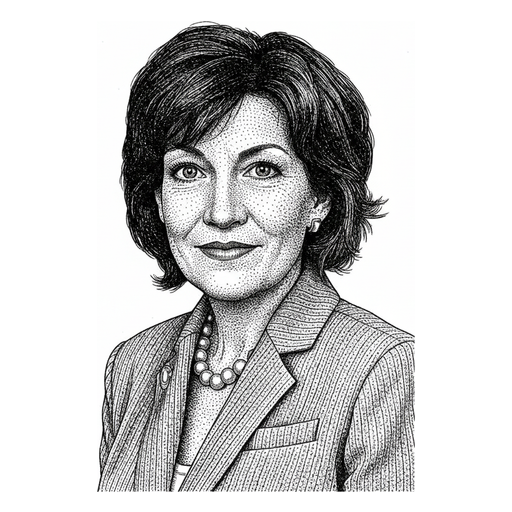
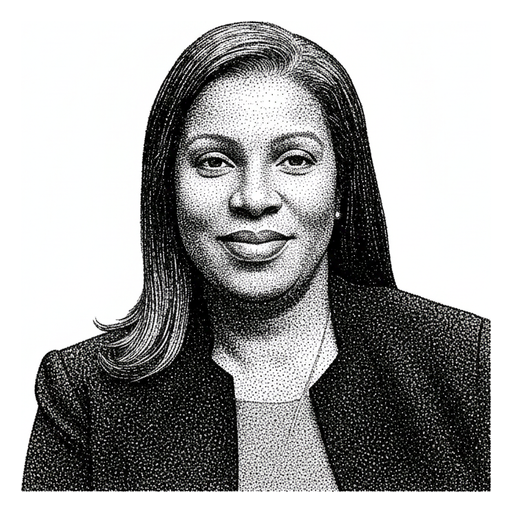
Portraits after photographs. Letitia James: WBLS, via Wikimedia Commons, CC BY 3.0; Kristen Gonzalez: NY Senate Photo, via Wikimedia Commons, CC BY 2.0.
05What's Being Overstated
Claims of a single start date and of a certain court fight both run ahead of the record.
"The law takes effect January 1st." AP says so2, but News10 says June 1st, 20273 and the bill text says the one hundred eightieth day after it becomes law4. A New York approval memo often means chapter amendments follow8.
"Industry will sue and win." The Eleventh Circuit held on October 15th, 2026 that NetChoice failed to carry its burden on a facial First Amendment challenge to Georgia's law6. A suit against a chatbot law could face the same hurdle.
"Washington will stop the states." The White House order directs a litigation task force to challenge state AI laws, but its legislative section does not propose preempting state child safety protections7.
06Why It Matters
A state law with a nationwide reach lands before Congress has passed any federal AI rule.
AP reports that Congress has done little to regulate AI and that state legislatures are filling the gap2. Gluck said California and New York take different approaches that other states could copy when legislatures reconvene next year2.
The attorney general may act against any person within or outside the state4. A chatbot company with no office in New York is therefore in scope if it serves users there.
Consumer AI and companion app makers carry the most exposure.
NegativePositiveConditional
Consumer AI chatbots
High
Negative: Design changes and age checks for New York users1
Age verification vendors
Medium
Positive: Demand for ID-free checks, which the law requires as an option1
Customer service bots
Low
Conditional: Exempt only if limited to direct answers on one purpose4
08Vektora Assessment
The law is real and enforceable on paper, but the start date and the court outlook stay open.
Confidence: medium. Sources include the bill text, the governor's release, the White House order and a federal appeals ruling, but the start date conflicts across reports.
The strongest alternative reading is that the law's broad terms make it vulnerable. Gluck said some categories raise questions about where ordinary conversational responsiveness ends and prohibited behavior begins2. NetChoice makes a similar argument against other states' AI companion bills5. The Eleventh Circuit ruling shows courts can decline facial challenges, so an as-applied case after enforcement is the likelier test.
What would change this view: a published chapter amendment, a filed lawsuit, or a first enforcement action by the attorney general.
09Client Implications
Companies that serve minors should decide now which features to switch off for New York users.
Consumer AI companies: map each banned feature against the product and plan for the earliest reported date8.
Investors: ask portfolio companies whether they can tell minors from adults without relying only on a government ID1.
Law firms: watch for a chapter amendment and for any filing by NetChoice4.
10Due Diligence Questions
Five questions to put to any company whose chatbot reaches minors in New York.
Does the chatbot ever claim to be human or to feel emotions?
Does it use health or personal details from earlier sessions?
How does it confirm a user is an adult, and are age records deleted after use?
Which New York start date does compliance plan against?
Who owns the response if the attorney general sends a complaint?
 New York
 New York
 New York