Pennsylvania's AI ad disclosure law starts December 21st with no cure period

The signed text sets a December 21st start, a fine cap of $3,000 and no warning step before enforcement. It also contains a wording that three law firm alerts say was removed.
Alert analysis
October 30th, 2026
Vektora
Alert typeStrategic Tension
Cure period in the textNone
Private lawsuits under the ActNot allowed
Sources9 cited
As ofOct 30th, 2026
Executive Summary

Pennsylvania's AI advertising law takes effect on December 21st, 2026, and gives advertisers no cure period. Governor Josh Shapiro signed it on October 22nd as Act 991. It began as Senate Bill 806, written by state Senator Nick Pisciottano, a Democrat from Allegheny County2. The Act is the Artificial Intelligence Deceptive Advertising Act. It requires a label on an ad when content made or significantly changed by artificial intelligence (AI) gives buyers a false picture of what is sold3. A cure period is a window to fix a violation before any penalty. The Act has none.

Only the state attorney general and the local district attorneys can enforce it. A court may award a civil fine of up to $3,000, plus attorney fees and court costs3. Private citizens cannot sue under the Act4,5. The Act exempts text-only ads. It also exempts parody and content that is evidently fictional3.

The record is less settled than the law firm alerts suggest. Holland & Knight, Loeb and Kelley Drye each say the intent wording was removed from the bill4,5,6. The bill text on the legislature's site still reads "knowingly, recklessly or willfully"3. Readers should check the signed text before relying on any summary.

Alert type
Strategic Tension
Takes effect
60 days after signing
Fine cap
$3,000
Enforcers
Attorney general and district attorneys
01Risk Matrix

Legal exposure is the main risk, and it starts December 21st.

LegalMediumEnforcement by the attorney general or a district attorney, with no cure step.

The text allows an injunction or a civil action once an enforcer has reason to believe an ad breaks the Act3. Holland & Knight says the Act has no warning letter, audit or cure process before enforcement4.

RegulatoryMediumKey terms are undefined, so enforcers set the line.

The Act does not define what makes a consumer perception false, according to Holland & Knight and Loeb4,5. Kelley Drye says it is unclear how regulators will enforce it6.

EconomicLowFine cap is low per case, and the count basis is open.

A court may award a fine of up to $3,0003. Holland & Knight notes the Act does not say whether the cap applies per ad, per airing or per day4.

ReputationalMediumA public suit by a prosecutor would name the advertiser.

Enforcers sue in the name of the Commonwealth of Pennsylvania3. No enforcement action has been reported in the stored record.

InvestmentLowCompliance cost is mostly review and labeling work.

The disclosure must say the ad contains content modified or generated using AI3. Loeb expects many advertisers to disclose when in doubt5.

02Forecast Watch

The first tests are guidance and a first court action, and neither is likely soon.

Calibration. Confidence in the mechanism is high, because the enforcers, the cap and the start date are in the statute text3. Confidence in the horizon is low, because no enforcer has said how it will read the trigger.

Analyst assessment. Each call is scored once its date passes.

6%

The Pennsylvania attorney general or a district attorney files a court action under the Artificial Intelligence Deceptive Advertising Act, shown in the attorney general's press releases.

Settles Jan 31st, 202793 days left
15%

The Pennsylvania attorney general publishes written guidance on the Act on pa.gov or attorneygeneral.gov.

Settles Jan 31st, 202793 days left
20%

A bill to amend or repeal Act 99 of 2026 is introduced in the General Assembly, shown on palegis.us.

Settles Jan 31st, 202793 days left
  • New entries on the General Assembly bill page for amendments, updated daily on palegis.us.
  • Press releases from the Pennsylvania Office of Attorney General, posted as issued.
  • Law firm alerts that report any enforcer statement on how the trigger applies.
03The Signal

The Act is signed law with a fixed date, but nothing has been enforced yet.

The operational record is short. The bill passed both chambers, the governor signed it on October 22nd, 2026, and the legislature lists it as Act 99 of 20261,7. The governor's release names SB 806 among the bills signed that day and says nothing more about it8.

Signed, not in force. Section 6 says the Act takes effect in 60 days3. Recording Law counts that from October 22nd to December 21st, 2026 and says the Act imposes no duty on anyone until then9.

What the Act asks of an advertiser is narrow. The ad must use synthetic content, meaning an image, video, audio clip or text significantly modified or generated by AI3. The use must create a false consumer perception about the nature, origin or authenticity of the goods or services3. Only then must the ad carry a clear disclosure.
04What Happened

Republican and Democratic senators co-sponsored the bill, and it became law within one session.

June 3rd, 2025
Announcement.
Senator Pisciottano's bill is referred to the Senate Communications and Technology Committee1.
June 10th, 2026
Other.
The Senate passes the bill after it is amended on third consideration1.
October 7th, 2026
Other.
The House gives final passage1. Senator Pisciottano's office says the bill goes to the governor2.
October 22nd, 2026
Announcement.
Latest. Governor Shapiro approves the bill. It becomes Act 99 of 20261.
December 21st, 2026
Other.
The Act takes effect, 60 days after signing3,9.
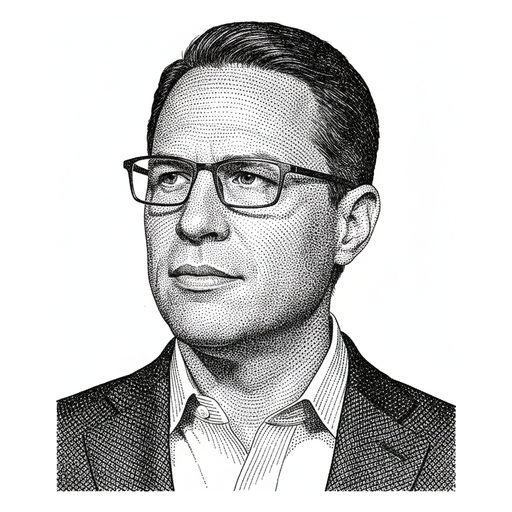
Woodcut portrait of Josh ShapiroSigned the Act

Josh Shapiro

Governor of Pennsylvania

Signed the Act on October 22nd, 2026, along with other bills8.

What to watch
  • Any executive statement on enforcement priorities.
Woodcut portrait of Nick PisciottanoSponsored the Act

Nick Pisciottano

Pennsylvania state senator, Democrat from Allegheny County

Prime sponsor of Senate Bill 806. He calls it a commonsense transparency standard2.
What to watch
  • Whether he asks the attorney general to explain how the trigger applies.
Engraved emblem for Pennsylvania Office of Attorney GeneralEnforces the Act

Pennsylvania Office of Attorney General

The state's top law enforcement office

With the local district attorneys, the only body that can bring a case under the Act3.

What to watch
  • Written guidance or a first filed case.

Portraits after photographs. Nick Pisciottano: Redhamjack, via Wikimedia Commons, CC BY-SA 4.0.

05What's Being Overstated

The Act is narrower than headlines and the sponsor's remarks suggest.

  • "Every AI ad needs a label." The text requires a disclosure only when synthetic content creates a false consumer perception about the goods or services3. Loeb says the sponsor appears to read it more broadly than the text does5.
  • "The intent wording was removed." Three law firm alerts say so4,5,6. The bill text on the legislature's site carries the amendment date of June 10th, 2026. It still has "knowingly, recklessly or willfully"3. Recording Law reads the enacted text the same way9.
  • "Fines start on signing." The Act is not in force until December 21st, 20269.
  • "Each ad costs $3,000." The text sets a cap on a fine a court may award3. The count basis is open, per Holland & Knight4.
06Why It Matters

Advertisers have about two months and open terms to work with.

Advertisers have about two months from signing to decide when a label is needed4. The Act does not say what makes a perception false or what counts as significant modification4. Loeb expects many advertisers to disclose when in doubt5.

Other states regulate narrower ground. Holland & Knight says New York's law, in force since June 9th, 2026, covers synthetic performers in ads4. Loeb says Pennsylvania applies to images, video and audio, but only with a false-perception trigger5.

07Sector Impact

Exposure is highest for firms that make and place AI-generated ads.

NegativeMixedConditional

Advertising agencies

High

Negative: New review and labeling work before December 21st

Consumer brands

High

Conditional: Exposed only where AI imagery shows a product falsely

Ad platforms and publishers

Medium

Mixed: Holland & Knight says duties may reach them4

AI creative tool vendors

Low

Mixed: Possible demand for built-in labeling
08Client Implications

Each reader type should map its AI-made ads before December 21st.

  • PE and VC firms: ask portfolio companies in consumer sales whether any ads for Pennsylvania buyers use AI images, video or audio.
  • Family offices: the direct financial exposure is small. Watch portfolio brands with heavy online advertising.
  • Corporates: check ad approval steps and agency contracts. Holland & Knight advises adding AI checks to ad review4.
  • Law firms: advise on the trigger and the open intent question, and read the signed text directly.
09Due Diligence Questions

Questions to put to a counterparty or portfolio company.

  • Use: Which current ads use AI-made or AI-altered images, video or audio shown in Pennsylvania?
  • Trigger: Has counsel judged whether any of them could give a false picture of the product?
  • Controls: Who approves ads, and does that step now ask about AI?
  • Contracts: Do agency agreements make the agency flag AI use?
10Vektora Assessment

Vektora rates the start date and enforcers as certain and the trigger as unsettled.

Confidence: medium. The start date, the enforcers and the fine cap come from the statute text3 and match Holland & Knight, Loeb and Kelley Drye4,5,6. The intent question rests on a conflict between the bill text and three firm alerts.

Primary assessment. The Act is a real but narrow disclosure duty. The date is fixed and the enforcer set is small. Whether enforcers will read it broadly is not known.

Strongest alternative. Loeb notes that an ad which misleads about a product is already unlawful under Pennsylvania's existing false advertising law, whether or not AI is used5. On that view the Act changes little in practice.

What would make this wrong. A published statement from the attorney general taking a broad or a narrow reading. Or a certified copy of Act 99 that differs from the bill text read here.

Vektora read the bill text of Printer's Number 1808 on the legislature's site. It could not open the PDF version and could not confirm that the printed text is the final enacted copy.

11Appendix: Deep Background

How the Act fits Pennsylvania consumer law and other states.

Pennsylvania already has a consumer protection law against unfair or deceptive practices, and it gives individuals a right to sue4. The new Act adds no private right of action4,5. It also says that making the disclosure does not limit any other legal recourse3.

Kelley Drye says the Pennsylvania law has a consumer protection angle, unlike the California and New York laws on synthetic performers, which appear designed to protect actors and models6.

This act shall take effect in 60 days.

Pennsylvania General Assembly3

12Sources
  1. Senate Bill 806 Information; 2025-2026 Regular Session. Pennsylvania General Assembly, October 22nd, 2026
  2. Pisciottano's Landmark AI Bill Establishes One of Nation's First Advertising Disclosure Standards. Senator Nick Pisciottano, October 7th, 2026
  3. 2025-2026 Regular Session SB 806 PN 1808 Bill Text (HTM). Pennsylvania General Assembly, June 10th, 2026
  4. Did AI Touch Your Ad? Pennsylvania May Require You to Say So. Holland & Knight, October 29th, 2026
  5. A New AI Disclosure Law from Pennsylvania. But What Does It Actually Cover? Loeb & Loeb, October 23rd, 2026
  6. Pennsylvania Enacts an AI Ad Disclosure Law: What Companies Need to Know Before December 21. Kelley Drye, October 28th, 2026
  7. Act No. 99 of 2026. Pennsylvania General Assembly, October 22nd, 2026
  8. Governor Shapiro Signs 58 Bills into Law. Office of Governor Josh Shapiro, October 22nd, 2026
  9. Pennsylvania AI Deceptive Advertising Act Signed as Act 99. Recording Law, October 26th, 2026