10%
The Okinawa Defense Bureau, the Yonaguni town government, the Ryukyu Shimpo or the Yaeyama Mainichi reports a US NMESIS launcher still on Yonaguni after the Keen Sword withdrawal period.
Confirmed force movement beyond routine posture
The move is an exercise deployment with withdrawal planned within about a week of the drill's end1. The Associated Press reported the launcher deployed2, but no official statement or photograph of it on the island has been published.
Legal change, executive order or regulatory action
No law, order or basing decision covers Yonaguni. The plan is a Defense Ministry exercise outline published on the town's website1.
A defence pact invoked, or an alliance rupture mechanism used
Keen Sword is a scheduled exercise held about every two years3. No defense commitment has been invoked.
Sanctions enacted, blockades, asset freezes (not threatened)
China has criticised the plan through state media and a foreign ministry statement on Yonaguni's planned air defenses4,5. No sanction tied to the deployment has been announced.
Sustained coalition formation or diplomatic realignment
Seven other nations take part in parts of Keen Sword, five of them for the first time: France, Germany, the Netherlands, New Zealand and the Philippines2.
The escalation test from the Vektora alert method, applied to the sources cited under each criterion.
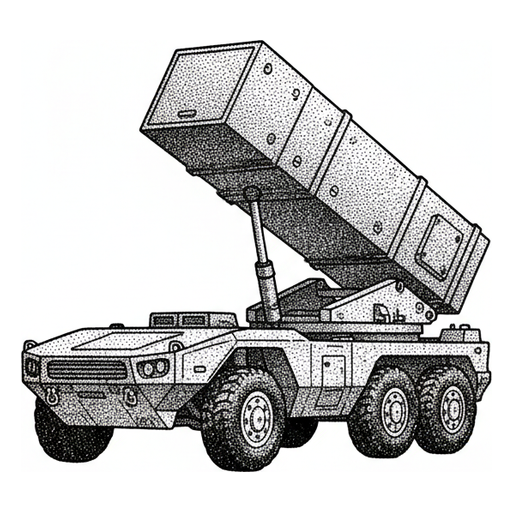
The US Marine Corps planned to put its NMESIS anti-ship missile launcher on Yonaguni, the Japanese island closest to Taiwan, for the Keen Sword exercise that ends on October 29th. NMESIS (the Navy-Marine Expeditionary Ship Interdiction System) is a remotely driven truck that carries two Naval Strike Missiles6. Keen Sword is the largest US-Japan field exercise, held about every two years, with about 45,000 Japanese and 12,000 American personnel this year2,7. Yonaguni, a small island with a Japanese army garrison, sits 110 kilometers east of Taiwan5,7.
The plan is set out in Japanese documents, but the launcher's arrival has not been officially shown. A Defense Ministry outline posted by Yonaguni town lists NMESIS, the MADIS air defense system and a US radar at the island's garrison, with about 60 US personnel1,8. The Associated Press reported the systems deployed when the exercise opened2, and the Okinawa newspaper Ryukyu Shimpo photographed what appeared to be the US radar being unloaded at Yonaguni airport on October 18th9. Neither government has said how many launchers went or how long they stay6.
What matters is whether the launcher leaves. The ministry's plan allows about a week after the exercise to withdraw1. Yonaguni's mayor, Tsuneo Uechi, says he will not accept training that becomes routine or leads to US forces staying on the island10. A recent precedent points the other way. A US Typhon missile launcher brought to Japan for exercises is now stored at Kadena Air Base on Okinawa11. Japan's defense minister, Shinjiro Koizumi, says that is not permanent12. If the launcher stays, US posture near Taiwan has changed; if it leaves on schedule, the exercise was a rehearsal.
NMESIS can strike ships at around 115 miles and could reach waters around Taiwan5,7. The deployment is limited to checking that the systems can be moved there, with no live firing10,13. A Chinese ballistic missile landed about 80 kilometers from the island in 20227.
Chinese state media and a Chinese military affairs expert warned the deployment raises the risk of miscalculation4. Relations have been strained since Prime Minister Sanae Takaichi said a year ago that Chinese military action on Taiwan could justify Japanese involvement2.
The town remains opposed and says the island cannot host large exercises7. The exercise follows the arrest of a US Marine over the robbery and murder of a Japanese woman on Okinawa, which renewed opposition to US bases2.
Earlier China-Japan tensions spilled over into the economy2, but no new measure has been linked to Keen Sword. Disruption on Yonaguni is limited to road and port use while equipment moves7.
An exercise deployment that withdraws on schedule1 adds little to the region's risk pricing. A standing US missile presence on Yonaguni would be a new fact for anyone with exposure to Taiwan Strait shipping or Japan-China trade.
Confidence on mechanism: medium. The plan, the withdrawal window and the mayor's terms are on the record1,10. Whether the launcher actually reached the island rests on one wire report2. Confidence on horizon: high for the withdrawal call, because the ministry's own schedule sets it1; low for anything about later exercises, which have not been announced.
Analyst assessment. Each call is scored once its date passes.
The Okinawa Defense Bureau, the Yonaguni town government, the Ryukyu Shimpo or the Yaeyama Mainichi reports a US NMESIS launcher still on Yonaguni after the Keen Sword withdrawal period.
Japan's Ministry of Defense or US Forces Japan announces that a US anti-ship missile launcher will be stationed or stored on Yonaguni beyond an exercise period.
A Ministry of Defense exercise plan published by the Okinawa Defense Bureau or the Yonaguni town government lists NMESIS on Yonaguni again for a new exercise.
These are separate events and do not sum to one.
What moved in the record is a plan, not a basing decision. On October 1st the Okinawa Defense Bureau, the Defense Ministry's office for the prefecture, briefed Yonaguni on the exercise7,10. The ministry's outline, posted on the town's website, lists NMESIS, MADIS, a TPS-80 radar and CH-53 helicopters at the Japanese army garrison, alongside Japan's own Type 88 anti-ship and Type 03 air defense missiles1. Heavy equipment comes in by sea through Kubura port, and residents were asked to avoid roads during the moves7,10.
The scope is narrow by agreement. According to Mayor Uechi, the defense side first wanted larger drills, and he asked for the minimum10. Because the island has no space, the training is limited to confirming that the systems can be deployed there in a crisis, and does not include setting them up for full operation10. Kyodo, the Japanese news agency, reported that no live firing is involved13.
Reported, not shown. The Associated Press reported on October 19th that NMESIS and MADIS were deployed to Yonaguni2. The same report placed Japan's Type-25 missile on Yonaguni, which Kyodo and the US military newspaper Stars and Stripes later placed at the Onohara training area in Nagasaki prefecture14,15. Ryukyu Shimpo photographed a C-2 transport unloading what appeared to be a US radar at Yonaguni airport on October 18th9, and reported NMESIS being flown to Ishigaki, the next island east, on October 17th16. We found no official statement or photograph of the launcher itself on Yonaguni.
Kilometers: distance to Taiwan from Yonaguni and Ishigaki, and the launcher's reported range
Source: Defence Security Asia, October 20th, 202617
Island distances describe locations, not engagement geometry. Other published ranges for the missile are longer.
 Yonaguni town
Disclosed the NMESIS plan on October 2nd and said the town still opposes the drills10. Asked for minimal training and says routine training or US forces staying on the island is unacceptable10.
 Japan
Said the US Typhon launcher would move to Kadena Air Base, but not permanently12. Announced in February the timeline for Japan's own air defense unit on Yonaguni17.
 Japan
Said a year ago that Chinese military action on Taiwan could justify Japanese involvement, which strained ties with Beijing2. Has played up the strength of the alliance after meeting President Donald Trump5.
 United States
Holds the NMESIS and MADIS systems in Japan18 and is the unit planned for Yonaguni with the US Army8. US Forces Japan declined to comment on the plan8.
Portraits after photographs. Shinjiro Koizumi: Ministry of Defense, via Wikimedia Commons, CC BY 4.0; Sanae Takaichi: Immediate source: MOFA/Japanese Embassy to South Africa, probable source: Cabinet Public Affairs Office, via Wikimedia Commons, CC BY 4.0.
Japan's Type-25 launcher trained at Onohara in Nagasaki prefecture, outside this map. Borders: Natural Earth.
Sources: Japan Ministry of Defense, via Yonaguni town, October 2nd, 20261; Ryukyu Shimpo, October 18th, 202616; Stars and Stripes, September 28th, 202611; The Japan Times (Bloomberg), October 2nd, 20265
The island's distance from Taiwan explains the concern. Yonaguni is roughly 110 kilometers from Taiwan, against about 240 kilometers for Ishigaki, where NMESIS went in 202517. At its reported range of about 185 kilometers, a launcher on Yonaguni could reach waters off northeastern Taiwan17. That is why Chinese commentary says the deployment would force China to factor the island into its contingency planning4.
The second issue is what stays behind. An analysis by Defence Security Asia, a regional defense news site, says the gap between exercise access and permanent basing is central. Reaching the island once proves little about sustained missile stocks or support17. The Typhon case shows how a temporary deployment can last: the US Army brought it for exercises in Kyushu, then the Defense Ministry said it would be stored at Kadena11. The Japan Times reported the storage as indefinite22, while Koizumi said it would not be permanent12.
demonstrating that launchers can reach Yonaguni does not establish that sustained stocks, support infrastructure or continuous American missile coverage exist there
Local politics limit what can stay. Yonaguni has hosted a Japanese army radar unit since 20167, but no US base. Its mayor has set his terms in public and says he will work with Okinawa's governor on transport safety10. Any move to keep US launchers there would have to pass a town government that opposes the exercises7.
Medium
Low
Medium
Low
Japan's Type-25 launcher is made by Mitsubishi Heavy Industries, the Japanese industrial group15. Japan is speeding up long-range strike capability15, and the Marines describe NMESIS and MADIS as a cornerstone of their modernization18.
| Reader | What to do |
|---|---|
| Private equity (PE) and venture capital (VC) firms | No change to Taiwan or Japan exposure on this alone. Note portfolio companies that depend on shipping through waters east of Taiwan, and revisit if a US launcher stays on Yonaguni after mid-November. |
| Family offices | Keep Japan and Taiwan allocations under existing scenarios. A standing US missile presence on Yonaguni would justify a review of how a Taiwan crisis scenario is weighted. |
| Corporates | For Japan-China supply chains, track Chinese official responses to Keen Sword rather than commentary. Okinawa operations should plan around local opposition to US forces, which rose after the Marine's arrest. |
| Law firms | No sanctions or export-control change is tied to the deployment. Diligence on defense suppliers to the Japanese army should note the shift to mobile island-based launchers. |
Confidence: medium. The plan, the withdrawal window and the town's position come from the Defense Ministry's own outline and from Japanese, US and Chinese reporting1,10,8,4. Arrival on the island rests on one wire report, which also placed the Type-25 on the island, a detail later reports contradict2,15.
Primary assessment. This is a rehearsal of moving US strike weapons to the island nearest Taiwan, done at the smallest scale the town would accept10. The ministry's schedule plans for withdrawal1, and nothing in the record points to a basing decision. The precedent that matters is the planning itself: Yonaguni is now on the list of places NMESIS can go, as Ishigaki was before it6.
Strongest alternative reading. The Typhon case shows that a launcher brought for exercises can be stored in Japan afterwards with no new agreement11. If Washington wants a standing presence near Taiwan, a stay presented as storage or a follow-on drill is the easiest route, and Chinese commentary already treats the island as a target in any conflict4.
Where we diverge from consensus. Most coverage asks what NMESIS on Yonaguni means for Taiwan. The more useful question is whether it leaves. On Yonaguni the decisive actor is the town, which has no US base and opposes any permanent US presence10.
Japan's army set up a radar and surveillance unit on Yonaguni in 20167. US forces first trained at the garrison in Keen Sword 202210, and in 2025 a planned US HIMARS rocket launcher deployment to the island was cancelled when plans were scaled back10. Japan plans to station its own surface-to-air missile unit there permanently; reports put the start at 2030 or 20315,6. A Chinese foreign ministry spokeswoman said last year that the plan would have this effect5.
create regional tension and provoke military confrontation.
The Japan Times (Bloomberg)5
NMESIS is the Marine Corps' ground-based anti-ship system, built for small units that hold islands rather than heavy armored forces7. The Hawaii-based 3rd Marine Littoral Regiment fielded it first and took it to the Philippines; it arrived in Japan in July 20256. The Japan-based carrier USS George Washington was sent to the Arabian Sea in August, and Defense News expected its absence to shift the scenario toward land-based mobile systems7. The carrier USS Theodore Roosevelt joined the exercise from Yokosuka instead2.
Over the coming days, I have no doubt that we will train as one team to test our concepts, refine our command and control, and validate our ability to deter aggression and prevail in crisis or conflict.
US Department of War23
Lt. Gen. George Rowell, the Marine deputy commander of US Pacific Command, said this at the opening ceremony on Ishigaki on October 19th23,24.