15%
The Central Elections Committee's official results give Likud, Shas, United Torah Judaism, Otzma Yehudit and Religious Zionism 61 or more seats between them.
Confirmed force movement beyond routine posture
The IDF chief put the military on its highest state of alert on 19 October, froze soldiers' leave from Thursday and reinforced Central Command with the Paratroopers Brigade headquarters and additional units1. The IDF is running at least 850 polling stations, a quarter of them mobile, at outposts inside Gaza, Lebanon and Syria2.
Legal change, executive order or regulatory action
The Knesset dissolved on 17 July on a scheduled date, the first full term since 19883,4. No emergency decree or new legal instrument has been issued for the vote. The laws passed in the July legislative blitz predate the campaign, and several are frozen or under petition at the High Court3.
A defence pact invoked, or an alliance rupture mechanism used
Egypt's president said Cairo would act to protect Saudi Arabia if asked and called parliament into emergency session, but no pact has been invoked and the offer is defensive5. Trump's endorsement of Netanyahu is a political act, not an alliance mechanism6.
Sanctions enacted, blockades, asset freezes (not threatened)
The United States is pressing a naval blockade of Iranian ports and extending sanctions, and Iran has restricted passage through the Strait of Hormuz and says it is moving toward complete closure7,8. These are enacted, not threatened, and they set the war-risk environment into which Israel votes.
Sustained coalition formation or diplomatic realignment
Coalition activity is around Saudi Arabia, not Israel's vote: a Greek Patriot battery at Yanbu was acknowledged on 17 October and Egypt is weighing support9,5. Nothing in the record shows a realignment tied to the election itself, so this is not counted.
The escalation test from the Vektora alert method, applied to the sources cited under each criterion.
The two criteria met describe the environment of the vote, not a crisis caused by it. The risk matrix follows that reading.
Israel elects its 26th Knesset on 27 October with neither bloc near a majority. The three polls published on 19 and 20 October give the parties backing Gadi Eisenkot 51, 55 and 54 seats. The parties backing Benjamin Netanyahu get 50, 51 and 48, against the 61 needed to govern10,11,12. An average of seven polls over the past week puts both blocs on 5113. The arithmetic turns on the Arab-majority lists, projected at 14 seats, whose support Eisenkot has ruled out13,14.
The army is on a war footing for the vote while three fronts stay open. IDF Chief of Staff Eyal Zamir placed the military on its highest state of alert on 19 October, froze leave from Thursday and sent the Paratroopers Brigade headquarters to the West Bank1. Soldiers began voting at 850 military polling stations on 20 October, including at outposts inside Gaza, Lebanon and Syria2. The same week, Iran's Revolutionary Guard said two tankers struck mines in the Strait of Hormuz and a Houthi strike killed 58 at a Yemeni government camp15,16. US Defense Secretary Pete Hegseth flew in unannounced to discuss Iran with Netanyahu17.
For readers committing capacity before the result, the vote is more likely to prolong the status quo than to change it. Under Israeli law the outgoing government keeps its full powers until a new one is sworn in, with no doctrine confining a caretaker to routine business4. The Gaza roadmap of 30 July, which ties Hamas disarmament to an Israeli withdrawal, has not been publicly accepted by Israel, and the technocratic committee meant to run Gaza is still outside the Strip18,19,20. Both Trump and Netanyahu have said they will not strike Iran before their respective elections, which puts the next decision on Iran after 3 November, whoever holds the first coalition mandate17.
Zamir ordered the leave freeze and the Central Command reinforcement on 19 October and told commanders the mission is to let the election happen on schedule and safely1. Netanyahu said this month he is not seeking to attack Iran before the vote, and Trump has said he will not attack before the US midterms17. Hegseth's unannounced visit on 19 October was to discuss Iran, per three Israeli officials17; Haaretz reports the two governments are discussing the possibility of renewing the war23.
The Board of Peace roadmap of 30 July makes Hamas disarmament and Israeli withdrawal proceed in verified phases18. Israel has not publicly agreed to it and the technocratic committee works from Cairo19,20. Trump gave Netanyahu his "complete and total endorsement" on 18 October, and said the US would have to do the Iran job itself under any other leader6,23. Vice President Vance declined to endorse23.
The TA-125 fell 3.6% in the week to 9 October while US indices rose24. The Tel Aviv Stock Exchange's own research finds the index fell an average of 5.3% in the three months before past inconclusive elections, against 0.2% before decisive ones24. All 15 economists polled by Reuters expect the Bank of Israel to hold at 3.25% on 21 October, with the shekel at a nine-month low against the dollar25. JPMorgan put the election swing at up to 3% either way26.
Jewish Power is forecast to win eight or more seats on its own, drawing a third of its support from first-time voters13,27. Britain, Australia, Canada, New Zealand and Norway sanctioned Ben-Gvir and Smotrich last year and the EU has debated the same27. Settlers attacked a delegation of European diplomats in the West Bank on 17 October28.
Foreign direct investment hit a record $26.2 billion in 2025, up 78% on 2024, and the Bank of Israel forecasts 4% growth this year29. Against that, war costs reached about 350 billion shekels by March before the Iran war, and Netanyahu wants a 183 billion shekel defence budget, about 9% of GDP29. The Bank of Israel says the next government must restore orderly budgeting29.
Confidence on the mechanism is high: the coalition arithmetic is published poll by poll, the formation rules are in the Basic Law, and the caretaker rule is settled10,30,4. Confidence on the horizon is medium. Israeli polls have underestimated Likud before, and late endorsements and withdrawals move single seats inside the margin of error26,11. A strike or attack before 27 October would reset the race31.
The first three calls are exclusive and sum to one. The rest are independent. Every call names where the answer will be published.
Analyst assessment. Each call is scored once its date passes.
The Central Elections Committee's official results give Likud, Shas, United Torah Judaism, Otzma Yehudit and Religious Zionism 61 or more seats between them.
The official results give Yashar, B'Yachad, the Democrats, Yisrael Beiteinu and the Reservists-Economic Party 61 or more seats between them.
Neither of those two groups reaches 61 seats in the official results.
President Isaac Herzog gives the first mandate to form a government to Gadi Eisenkot, announced by the President's Office.
A new government wins a Knesset investiture vote, recorded in the Knesset plenum record.
US or Israeli forces strike targets on Iranian territory, confirmed by CENTCOM or the IDF.
The National Committee for the Administration of Gaza begins operating inside the Gaza Strip, confirmed by the Board of Peace.
The Joint War Committee removes the Persian Gulf and the Strait of Hormuz from its listed areas, published on the LMA listed-areas page.
Watch for. Each of these would move the probabilities above.
Three things moved in the week to 20 October. The IDF went to its highest alert with leave frozen and the West Bank reinforced, and began early voting for soldiers at outposts beyond Israel's borders1,2. Iran changed tactics in the Strait of Hormuz, with attacks on commercial ships at their highest rate since the war began in February7. Two senior Iranian officials told Reuters the aim is to keep oil prices high through the US midterms7. The Houthis fired missiles and drones at Riyadh, Khamis Mushayt and the Eastern Province, and killed 58 at a government training camp in Shabwa5,9,16. Saudi Arabia postponed its flagship investment conference36.
Alert raised, no strike ordered. Netanyahu told Israeli media this month he is not seeking to attack Iran before 27 October, and Trump has said he will not attack before 3 November17. In September, when Netanyahu first warned of an attack before the vote, security sources told Kan, Haaretz and Army Radio that the IDF had identified no specific threat1. The Central Elections Committee ordered his airbase video removed as election propaganda1. The October alert is a readiness order, not a warning of a named attack.
Projected Knesset seats; a majority is 61 of 120
Source: Haaretz, October 19, 202610
Channel 13 and Channel 12 polls of 19 October as reported by Haaretz10. The Walla poll of 19 October, published 20 October, as reported by The Jerusalem Post; its opposition figure excludes the Arab-majority lists and the Reservists11. The Channel 13 margin of error is 3.1%, Channel 12's 4.4% and Walla's 4%10,11.
The diaspora story is real but small against the electorate. Israel has no absentee ballot, so a citizen abroad must be in the country on election day, and the influx of returning voters has alarmed Netanyahu's bloc4,37. The Fly&Vote initiative estimates at least 53,000 Israelis abroad will travel to vote38. Likud withdrew its election-bribery petition against it on 6 October, once it emerged that the group subsidises no fares and assists no more than 500 to 600 people38. The 7,331,981 citizens on the roll put that in proportion33. The one measured turnout so far, at diplomatic missions, rose from 69.6% to 86.7%21.
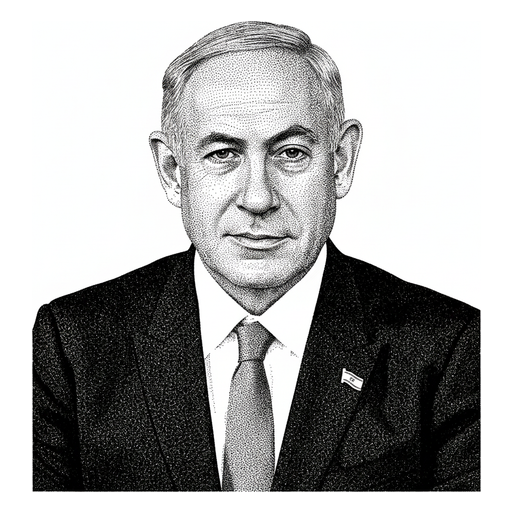 Likud
Seeking another term after 19 years in office while on trial for corruption12. Stays caretaker prime minister until a new government is sworn in, with the outgoing government's full functions12,4. Says he is not seeking to attack Iran before the vote, and told Israeli media that bringing down the Iranian government remains an objective17,31.
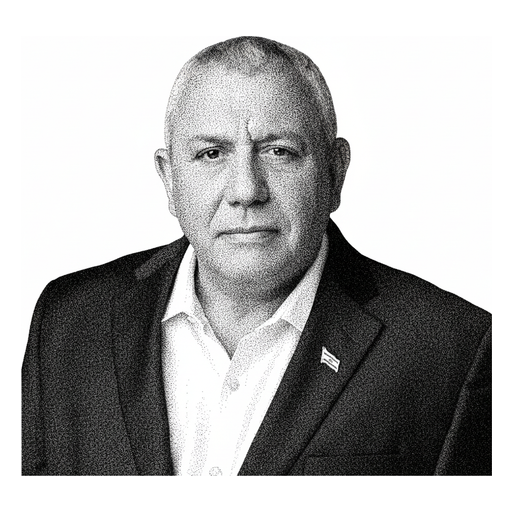 Opposition
Leads the largest party in the three latest polls10,11. Pledges to end Hamas rule within 18 months through Trump's framework or by force, and accuses Netanyahu of not dismantling Iran's nuclear programme45,31. Has said he will not align with any Arab party, which leaves his bloc short of 6114.
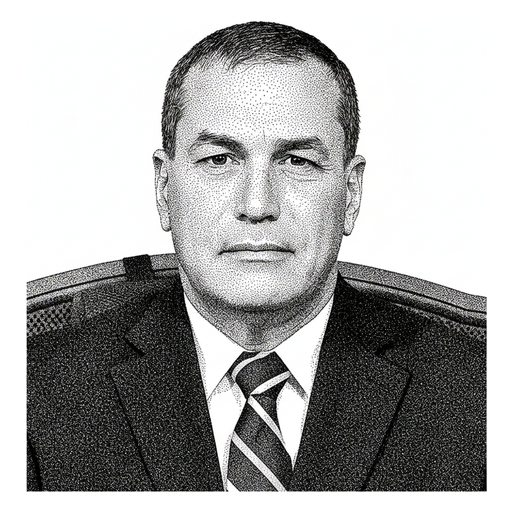 IDF
Ordered the highest state of alert, a leave freeze from Thursday and more senior officers in command centres, and said the mission is to let the election happen on schedule and safely1. Oversees 850 military polling stations, including inside Gaza, Lebanon and Syria2.
 Arab lists
Told Reuters his party can ensure a government of change and has put a Jewish former police official second on his list14. Was the first Arab Muslim minister in an Israeli coalition, under Bennett in 2021; the Arab-majority lists are projected at 14 seats, with Stat-Net projecting Arab turnout of 63% against 56% in 202214,13.
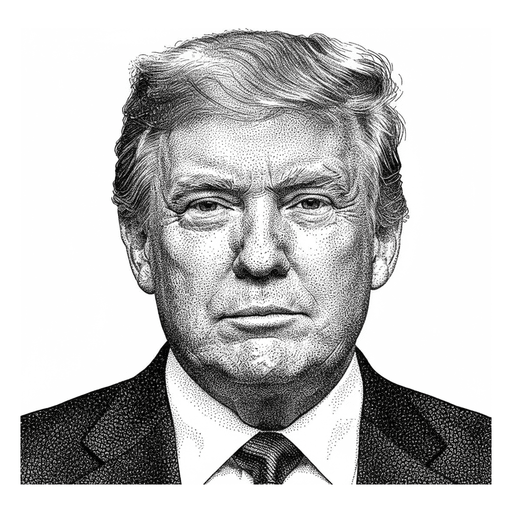 United States
Endorsed Netanyahu on 18 October and said the US would have to finish the Iran job itself under any other Israeli leader6,23. Has said the US will not attack Iran before the 3 November midterms, while Iranian officials say they are prolonging talks to deny him a win17,8. Chairs the Board of Peace for life39.
 United States
Met Netanyahu and Defence Minister Israel Katz at a southern airbase on 19 October in an unannounced visit to discuss Iran, per three Israeli officials; the Pentagon declined comment17,23.
Portraits after photographs. Benjamin Netanyahu: Avi Ohayon, via Wikimedia Commons, CC BY-SA 3.0; Gadi Eisenkot: Yahav Trudler, via Wikimedia Commons, CC BY-SA 3.0; Mansour Abbas: U.S. Embassy Jerusalem, via Wikimedia Commons, CC BY 2.0.
Markers sit on the city or area the cited source names. The Joint War Committee listed areas of the Red Sea and the Gulf are not drawn. Borders: Natural Earth.
Sources: Israel Democracy Institute, October 202632; The Times of Israel, October 15, 20262; The Times of Israel, October 19, 20261; Al Jazeera, October 17, 20265; Arab News, October 17, 20269; Reuters, October 19, 202616; Reuters, October 14, 20267
Israeli law gives the outgoing government the same functions until a new one is sworn in4. The High Court has never confined a caretaker to routine business; it has asked only for restraint in proportion to the public interest4. If neither bloc reaches 61, Netanyahu keeps the security agenda, the Gaza file and the relationship with Washington through the formation process43. That process has taken 20 to 100 days in the past and can run through three attempts before a new election is called30. Arab Center Washington's Joseph Mansour reads the disqualification of the Arab lists as part of a strategy in which deadlock itself is the win43.
The Iran decision is the largest single variable and it sits on the far side of two elections. Iranian officials say they are prolonging talks to deny Trump a pre-midterm win and expect bombing to resume sooner or later8. Iran's seven-day proposal to reopen Hormuz under its own control remains on the table8. Hegseth's visit on 19 October, a day after the endorsement, is the clearest sign that the two governments are planning for the period after 3 November17,23. Whoever forms Israel's government will inherit that planning, and the opposition's leaders have said they would not rule out renewed confrontation31.
For Gaza, the roadmap of 30 July makes every step conditional on verified completion of the one before18. It requires a timetable within 14 days of approval, decommissioning linked to phased Israeli withdrawal, and only the technocratic committee holding weapons at the end18. Hamas says it will implement nothing until Israel meets its obligations, and the Palestinian public opposes disarmament before a full withdrawal by 74% in the October PCPSR poll19,48. A caretaker government cannot bind a successor to that sequence, and a new government would need weeks to decide whether to. Either way the roadmap waits.
The economy gives the next government room but not time. Growth bounced to 15.4% annualised in the second quarter, inflation is 1.6% and the policy rate is at a four-year low of 3.25%25. Yet the shekel is at a nine-month low, the exchange fell 3.6% in a week while Wall Street set records, and the central bank says the budget process must be restored to order25,24,29. Markets have, by the exchange's own account, already priced the deadlock, so the day after the vote may not move them much24. The formation of a government, or the failure to form one, will.
High
High
Medium
Medium
Medium
Medium
War-risk pricing follows the Joint War Committee's listed areas and each underwriter's own rate, and the committee, which last reviewed the areas in September, plays no role in pricing34. In March, Hormuz transits were quoted at 1.5% to 3% of hull value, with the top of the range for ships seen as linked to the US, UK or Israel22. Rates had clustered at 0.15% to 0.25% the week before the war22. In July the southern Red Sea went to 1% to 2% from 0.3% and Jeddah and Yanbu to 1% from 0.25% after the Houthi embargo on Saudi Arabia42. The LMA counts almost 100 attacks on commercial tonnage since the Gulf conflict began and reproduces OFAC guidance that US persons may not pay Iran or the Revolutionary Guard for passage49. None of that moves on 27 October. Saudi Arabia's postponement of its Future Investment Initiative, with government staff in Riyadh told to work from home and embassies warning against the airports, is the measure of the Gulf exposure36,5. On the Israeli side, the defence budget Netanyahu seeks, 183 billion shekels or about 9% of GDP, has the outgoing opposition leader's backing in principle29. Foreign direct investment reached a record $26.2 billion in 202529.
| Reader | What to do |
|---|---|
| Private equity (PE) and venture capital (VC) firms | Hold Israeli portfolio valuations to the formation calendar rather than election night. The first mandate carries 28 days and a 14-day extension30. The exchange's research shows the return gap between decisive and deadlocked elections closes within months24. Keep Gulf-facing holdings, especially in Saudi aviation, hospitality and events, on the Houthi record rather than the Israeli result36. |
| Family offices | Treat the shekel as the instrument that moves on the result. JPMorgan's base case is a 2% to 3% rise on an opposition win and a 3% fall on a Netanyahu win, against implied volatility that priced about 1%26. Direct Israeli technology exposure has carried record foreign inflows through the war29. |
| Corporates | For Middle East shipping, budget war-risk additional premiums at the March Hormuz range and the July Red Sea range until the Joint War Committee changes its listed areas22,42. Confirm that no payment or guarantee touches Iranian passage, which OFAC says US persons may not make or receive49. For Israel operations, expect the leave freeze and reserve posture to outlast the vote if the coalition fight is long, and plan Gaza-related commercial flows around COGAT notices1,35. |
| Law firms | Diligence Israeli counterparties against a caretaker government with full powers but no mandate for new commitments, and against laws from the July blitz that are frozen or petitioned at the High Court4,3. For clients with Saudi or Gulf exposure, track the sanctions lists on Ben-Gvir and Smotrich, which five governments have applied and the EU has debated27. |
Confidence: medium. The seat arithmetic is consistent across every poll since the summer, the formation rules are written law, and the Iran timing has been stated by both leaders10,30,17. What we cannot know is the thing polls measure worst: whether Likud outperforms, as JPMorgan notes it often has, and whether small right-wing lists clear the threshold and so decide which bloc wastes votes26,46. Fifty-two sources, with the operational claims resting on the IDF statement, the Central Elections Committee, Reuters and the Board of Peace's own text.
Primary assessment. Neither bloc reaches 61. Herzog gives the first mandate to Eisenkot as leader of the largest party. Eisenkot cannot assemble 61 without the Arab lists and does not try. Netanyahu governs as caretaker through the deadline, with a second election in 2027 the live possibility Reuters and Arab Center both name14,43. On the ground this means the IDF posture of 19 October persists and the Gaza roadmap stays unsigned1. Commercial flows into Gaza continue at COGAT's discretion35. The Iran decision is taken in Washington and Jerusalem after 3 November by the same people who took the last one8.
Strongest alternative. Eisenkot forms a minority government with outside support from the Joint List and Ra'am on the terms Tibi has offered, a commission of inquiry into October 714. That would repeat the 2021 precedent in which Abbas sat in Bennett's coalition14. JPMorgan gave an opposition victory 55% in August26. That government would be more hawkish on Iran than its critics abroad expect and would still face the same roadmap sequence in Gaza31,18.
Where we diverge from consensus. The commentary treats the election as the hinge for the ceasefire and the Iran war. We read it the other way. The war footing is fixed by the Hormuz blockade, the Houthi campaign and the post-midterm US calendar7,8,16. The vote decides who administers those constraints, not whether they exist.
Forming a government. After consulting faction leaders the President names a Knesset member to form a government, usually but not always the leader of the largest faction30. In 2009 Shimon Peres chose Netanyahu over Tzipi Livni, whose party had one seat more30. The nominee has 28 days and may ask for a 14-day extension30. A second nominee gets 28 days with no extension. A third, if 61 members ask for one, gets 14 days, and then a new election is called30. Coalitions since 1992 have held between 61 and 78 seats; the 2021 Bennett coalition of eight factions held exactly 61, with the prime minister's own faction a tenth of it30.
The electorate and the threshold. There are 7,331,981 eligible voters, 543,177 more than in 2022, choosing among 38 lists33. Any list under 3.25% of valid votes is discarded; 417,400 ballots were lost that way in 202233,12. That is why Gantz withdrew on 19 October and why Likud and Religious Zionism are pressing Ofer Winter's People of Israel, polling at 2.9%, to do the same46,11. Most polling stations open from 7am to 10pm and election day is a national holiday12.
Published 20 October after Gantz's withdrawal; 601 respondents, sampling error 4%
Source: The Jerusalem Post (Walla poll), October 20, 202611
As reported by The Jerusalem Post11. People of Israel, at 2.9%, falls under the threshold. Changes of a single seat are inside the sampling error.
Within 18 months of taking office as prime minister, Hamas will no longer rule the Gaza Strip. We will bring about the destruction of Hamas’s military wing
The ceasefire and the roadmap. The 20-point plan's first phase ran from the 10 October 2025 ceasefire to the return of the last hostage remains in January 202639. The IDF withdrew to a line holding 53% of the Strip, with later stages meant to reduce that to around 40% and 15%39. The White House formed the National Committee for the Administration of Gaza and the Board of Peace's executive board on 15 January40. The 30 July roadmap sets the sequence18. A timetable is due within 14 days of approval, and an international committee verifies each phase before the next. Decommissioning of heavy weapons and tunnels starts after the committee enters and the force deploys, Israeli withdrawal proceeds in phases linked to it, and no weapons go to Israel or any non-Palestinian party18. Hamas says it will implement nothing until Israel meets its obligations, and Israel has not commented on the agreement19. By J Street's count Israel had built 40 outposts in Gaza by July, eight of them after the ceasefire, and the EU pledged nearly €900 million for early recovery20. COGAT resumed commercial goods on 19 October after merchants reported Hamas had dropped a fee of 10,000 shekels ($3,225) per truck, with payments now confined to documented bank transfers35.
Marine war cover. Hull war risk is an annual baseline policy; underwriters keep the right, not the obligation, to charge an additional premium for each transit of a listed area, and every quote is bespoke22. The Joint War Committee of Lloyd's and company-market underwriters lists the areas on independent advice and plays no role in rating; it last reviewed them in September 202634. In the Iran-Iraq war of the 1980s rates reached 5% for an extended period; Hormuz quotes reached 3% in March22. Reports that policies were cancelled mid-voyage confused primary hull war cover with charterers' liability extensions, which the P&I clubs cancelled for Iranian waters and reinstated by buyback22,49. The Office of Foreign Assets Control (OFAC) has said payments to or guarantees from Iran or the Revolutionary Guard for safe passage are not authorised49.
Netanyahu does not need to win the upcoming election. He only has to ensure that everyone else loses
Arab Center Washington DC43
The regional reads. Arab News's Yossi Mekelberg, writing from the Israel Democracy Institute survey, finds foreign affairs the decisive issue for Jewish Israelis who identify as right-wing50. Religion leads for 39% of those on the left and judicial reform for 22.5%; personal security leads for Palestinian citizens50. The PCPSR poll of 7 to 11 October finds 62% of Palestinians believe neither Hamas nor Israel won48. In the same poll 74% oppose disarming Hamas before a full withdrawal and 53% support a two-state settlement on 1967 lines48. Tehran Times argues that a Netanyahu defeat would change the policy little, and that the Israeli, American and Palestinian elections intersect in producing nothing for Palestinians47. The head of Iran's Basij told a rally that Netanyahu favours dragging the US back into war to preserve his standing51. WAFA reported the dissolution vote as a 62-member majority on a party-funding bill52.
Markets. JPMorgan's August note gave an opposition victory 55%, with a 2% to 3% shekel rise in that case and a 3% fall on a Netanyahu win26. It recalled that the currency weakened nearly 10% between the judicial overhaul proposals of early 2023 and October 726. The Tel Aviv Stock Exchange's research unit found the TA-125 fell an average of 5.3% in the three months before inconclusive elections and 0.2% before decisive ones24. The gap closed within months, and the index returned 16.4% on average in the year after an election24. The Bank of Israel estimated war costs at about 350 billion shekels, or $114.6 billion, in March, before the Iran war29. The benchmark index is up more than 110 percent over three years, with unemployment at 2.8%29.