80%
Jamaica's government confirms that a second group of third-country nationals deported from the United States has arrived under the transit arrangement.
DHS v. D.V.D. (emergency stay) 23 Jun 2025
Stayed the Boston injunction that required notice and a chance to raise fear of torture before a third-country removal1.
D.V.D. v. DHS (final judgment) 25 Feb 2026
Granted summary judgment and set aside the DHS third-country removal guidance; the judgment was stayed pending appeal2.
D.V.D. v. DHS (appeal) 18 Sep 2026
Affirmed the Boston ruling, except the duty to first seek removal to the countries named in each removal order1.
DHS v. D.V.D. (certiorari) 29 Sep 2026
Paused the appeals ruling, so removals continue, and set the case for argument in December3.
Jamaica has become the latest country to take people the United States deports to countries other than their own. A first group of 22 foreign nationals, from Ecuador and a European country, arrived in Kingston on October 134. Jamaica describes the deal as a transit arrangement: arrivals get 90-day landing status, and the International Organization for Migration (IOM) handles their onward travel, expected within 14 days4.
The deals are spreading across Africa, Latin America and the Caribbean, and each carries its own terms. Liberia has agreed to take up to 1,200 people, while Washington has committed $124m to Liberian health services5. Eswatini confirmed receiving $5.1 million6. Liberia says its deal involves no quid pro quo7, and Jamaica has not said what it receives in return8.
The legal ground is unsettled, and the policy runs while the Supreme Court decides. A district court in Boston set aside the Department of Homeland Security (DHS) guidance in February, and the First Circuit affirmed in September2,1. On September 29 the Supreme Court let removals continue and set the case for argument in December3. For investors and advisers, the exposure is legal and reputational, concentrated in the receiving governments and the organisations that work with them.
The Boston court set aside the DHS guidance and the First Circuit affirmed2,1. The Supreme Court paused that ruling and will hear the case in December3. Receiving states face their own suits: deportees sued Ghana's government over detention10, and the Uganda Law Society said it would file challenges11.
Jamaica has not released its memorandum of understanding, and a University of the West Indies lecturer has called for greater transparency4. Dominica's prime minister called a similar deal a pragmatic step to preserve relations with Washington12.
Human Rights Watch reports that people sent to Eswatini, Ghana and South Sudan were arbitrarily detained and faced ill-treatment13. Lawyers say deportees from Ghana were left in neighbouring Togo10.
Senate Democrats count more than $32 million sent directly to five governments9. Aid commitments reported alongside the deals are larger, such as $124m for Liberian health services5.
No investment restriction follows from the deals. The exposure runs through aid budgets and through firms and agencies that carry out transfers, such as the IOM in Jamaica4.
Confidence on mechanism: high. The deals, the payments that have been disclosed and the court record are documented in official statements and filings3,9,6. Confidence on horizon: medium. The Supreme Court sets its own timetable for a decision after argument, and partner governments can pause or renegotiate with little notice, as Jamaica's suspension clause allows4.
Analyst assessment. Each call is scored once its date passes.
Jamaica's government confirms that a second group of third-country nationals deported from the United States has arrived under the transit arrangement.
The Supreme Court hears oral argument in Department of Homeland Security v. D.V.D., as shown on the Court's argument calendar.
A government that has not previously received US third-country deportees publicly confirms an agreement to take them, as reported by Reuters or the Associated Press.
The Supreme Court decides Department of Homeland Security v. D.V.D. in the government's favour on the lawfulness of the DHS third-country removal guidance.
Jamaica suspends the transit arrangement, as announced by its Ministry of National Security.
The five calls are separate events and do not sum to one.
The operational record shows steady expansion of the network. Cameroon agreed through diplomatic notes in December 2025 and has received 46 people on five flights14. Uganda received its first flight, of 12 people, in April11. Liberia agreed in August to take up to 1,2007, and Jamaica took its first group this week4.
The scale is small against the administration's own target. The Migration Policy Institute (MPI) estimates about 15,000 third-country deportations in 2025, 13,000 of them to Mexico, against the 1 million annual deportations the administration has said it intends to achieve15. DHS data show more than 16,000 such deportations from January 2025 to August 2026, which Al Jazeera notes is likely an undercount5.
Transit, not resettlement. Most people sent to the paid third countries do not stay there. As of January 2026 the five governments paid directly had received about 300 people, 250 of them Venezuelans sent to El Salvador9. More than eighty percent of those sent to paid countries had already returned to their country of origin, or were in the process of doing so16. The Senate Democrats call the arrangements costly, wasteful and poorly monitored, with the United States paying more than $1 million per person in some cases16,9. Jamaica's arrangement is explicitly a transit route, with onward travel expected within 14 days4.
MPI estimate, people
Source: Migration Policy Institute15
Most third-country removals go to Mexico, which receives deportees at the border; the distant deals add hundreds, not thousands15.
 United States
Has said that most people offered a third country choose to return home instead, and called that the most important function of the agreements19.
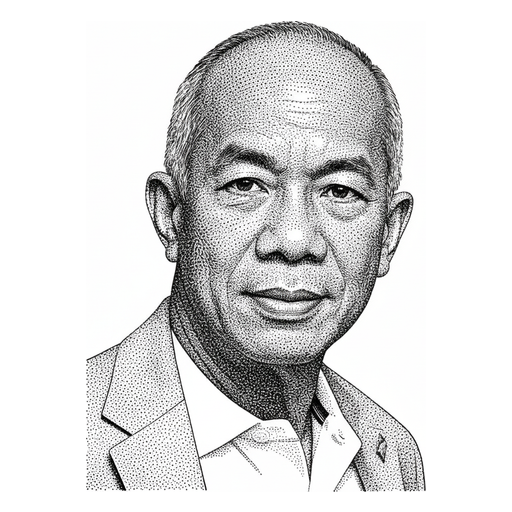 Jamaica
Confirmed the first group's processing and 90-day landing status, and said another group could arrive in about two weeks4. Has said Jamaica is not opening its borders to uncontrolled migration8.
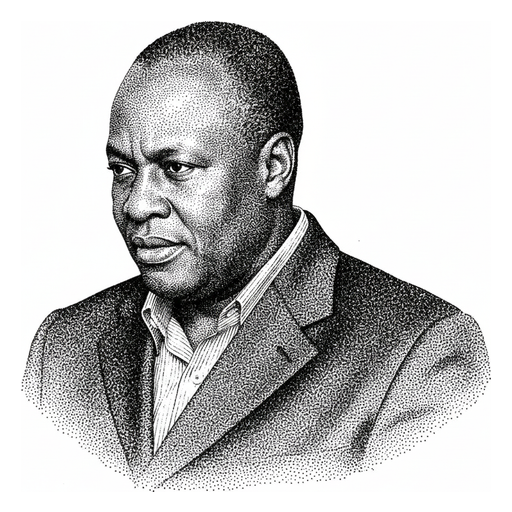 Ghana
Said Ghana accepted West African deportees because West Africans do not need a visa to enter Ghana18.
 US Senate Democrats
Released the committee Democrats' report finding the deals costly and poorly monitored16.
Selected African arrangements named in the sources. Jamaica and El Salvador are covered in the timeline. Borders: Natural Earth.
Sources: Reuters, August 18, 20267; Reuters, September 10, 202518; Third Country Deportation Watch, September 10, 202614; The Guardian, April 2, 202611; Reuters, August 4, 202517; Reuters, November 18, 20256
The arrangements link immigration enforcement to foreign aid and visas. Al Jazeera reports that Washington offered to extend certain visas for Liberians from 12 to 36 months alongside its health funding5, and that Cameroon's agreement sits beside $400m in planned health support5. A government weighing a request now has to price in aid, visas and its relationship with Washington together.
The receiving governments carry legal and political risk at home. Eswatini's government faces a court challenge from human rights lawyers6, deportees have sued Ghana's government10, and academics and commentators in Jamaica are pressing for the text of its agreement4,8. Those disputes can outlast the US litigation.
The vast majority do so, and that is really the most important function you have in those agreements.
The administration's own account points to deterrence rather than volume: Secretary Rubio says most people offered a third country choose to go home19, and MPI reads the policy as aimed at encouraging self-deportation15. If that is the purpose, the number of countries signed matters more than the number of people sent.
High
Medium
Medium
Low
Low
| Reader | What to do |
|---|---|
| Private equity (PE) and venture capital (VC) firms | Check portfolio companies in charter aviation, detention services and government logistics for contract exposure to third-country transfers, and for the reputational risk attached to them. |
| Family offices | Treat aid-dependent recipient states, such as Liberia and Eswatini, as carrying added political risk while their agreements remain unpublished and contested in court. |
| Corporates | Organisations delivering US-funded aid in recipient countries should confirm whether any funding is conditioned on migration cooperation, and how that is disclosed. |
| Law firms | Monitor Department of Homeland Security v. D.V.D. for the December argument and the decision, and track parallel suits in Ghana, Eswatini and Uganda. |
Confidence: medium. The agreements, disclosed payments and court record come from official statements, filings and agency reporting across 22 sources, with key facts corroborated by at least two outlets. The terms of most agreements remain unpublished, and DHS has not made public data on the total number of agreements or transfers21.
Primary assessment. The administration will continue to add partner countries and run transfers at least until the Supreme Court decides Department of Homeland Security v. D.V.D. The numbers will stay small next to total deportations15, because the policy's main effect, by the administration's own account, is to persuade people to return home19.
Strongest alternative interpretation. The administration argues that it has undisputed authority to remove people to countries that agree to accept them22. On its account, the deals give it a lawful option when a home country will not take someone back. On this reading the payments buy cooperation that saves detention costs, and the Supreme Court's two stays signal how the merits will go.
Where we diverge from consensus. Coverage frames the deals as countries being paid per deportee. The disclosed money mostly comes as aid commitments, Jamaica's deal has no disclosed payment at all4, and Liberia denies a quid pro quo7. The pressure on partners is real, but it works through the wider relationship rather than a price per person.
Under federal immigration law, a person ordered removed generally goes to the country they designate, usually their home country21. If that is not possible, they go to another country to which they have a connection21. The statute's final category, any country whose government will accept the person, applies only if removal to the earlier categories is impracticable, inadvisable or impossible1.
The Boston court's final judgment declared that DHS must first seek removal to the countries designated in each removal order1. It also found that the guidance failed to provide the notice and hearings required for claims under the Convention Against Torture1. The First Circuit affirmed most of that ruling, and the Supreme Court will now hear the government's appeal1,3.
Earlier agreements took a different form. In its first term the administration signed asylum cooperation agreements with Guatemala, Honduras and El Salvador, aimed at asylum seekers at the border15. The current deals serve interior enforcement and range from transit arrangements, like Jamaica's, to incarceration, as in El Salvador15.
The Senate report's example of the cost is a Jamaican sent to Eswatini for more than $181,000, despite a US court's finding that he should be returned to his homeland. Weeks later he was flown 7,000 miles back to Jamaica, also at US expense, and the Jamaican government said it never objected to his return9. Human Rights Watch reports that people sent to Eswatini, Ghana and South Sudan were arbitrarily detained there13. Orville Etoria, a Jamaican held at Matsapha Correctional Complex, a maximum-security prison in Eswatini, described his first weeks there in a deposition13:
At first, the conditions were extremely restrictive: mealtimes were tightly controlled and our movement was severely limited.
Human Rights Watch13
As reported by Al Jazeera, US dollars, millions
Source: Al Jazeera, October 15, 20265
These are aid commitments made around the time of the deals, not payments per deportee5.