Houthi Missiles Shut Riyadh's Airport and Hit Aramco's Headquarters. Washington Is Condemning, Not Shooting.

Since 12 October the Houthi campaign has moved from Riyadh's airport to Saudi Aramco's head office, and Saudi-led forces are now striking Houthi fuel sites near Sanaa. The United States condemns the attacks, but President Trump has tied any American response to the period after the 3 November midterm elections.
Alert analysis
October 15, 2026
Vektora
Alert typeActive Military Escalation
Escalation test4 of 5 criteria
US strikes on the HouthisNone announced
Sources32 cited
As of15 Oct 2026
Met

Military mobilisation

Confirmed force movement beyond routine posture

Riyadh is using around 100 fighter jets in the Yemeni counteroffensive1, and Turkey and Pakistan agreed a rapid deployment of forces to the kingdom2.

Met

Formal policy action

Legal change, executive order or regulatory action

Saudi Arabia's aviation regulator suspended operations at Riyadh's main airport3, and EASA widened its conflict zone bulletin for Saudi airspace4.

Met

Treaty or alliance trigger

A defence pact invoked, or an alliance rupture mechanism used

Saudi Arabia, Turkey and Pakistan agreed on 5 October to implement the collective defence commitments of the Mecca pact2.

Met

Economic coercion

Sanctions enacted, blockades, asset freezes (not threatened)

The Houthis announced a maritime embargo on Saudi Arabia in July, imposed a blockade of its Red Sea ports and have struck Saudi vessels5,1,6.

Not met

Multi-state alignment shift

Sustained coalition formation or diplomatic realignment

The Mecca pact is counted above. No new state has joined offensive operations, and Washington has so far declined to join the war7.

Escalation test4 of 5 met · Active Military EscalationAn alert needs two criteria met before it calls a crisis

The escalation test from the Vektora alert method, applied to the sources cited under each criterion.

Executive Summary

The Houthi campaign against Saudi Arabia has widened from civil aviation to the national oil company. A ballistic missile hit an office tower at Saudi Aramco's headquarters in Dhahran on the night of 13 October7. People with knowledge of the damage told Reuters that fire spread between the sixth and 10th floors8. Riyadh's King Khalid International Airport, struck four times since 8 October, stays closed until 17 October9,10. The Houthis say more attacks on airports and oil sites will follow9.

Saudi Arabia has already escalated against the Houthi mainland; the open question is Washington. The Saudi-led coalition struck a Houthi fuel depot outside Sanaa and the Ras Isa oil terminal on 13 October, and the Saudi cabinet said the Houthis would bear the consequences11,12. The United States condemns the attacks and reportedly supplies intelligence and targeting support13,5, but has not joined the strikes. President Trump wrote that he would act after the elections14.

What is at stake is the reliability of Saudi Arabia as a hub for flights, energy and investment. Cancellations across all Saudi airports reached 46.4% on 12 October15. Several foreign carriers have suspended Riyadh services into November or later16, and the kingdom's flagship investment conference is due at the end of the month17. Exposure is concentrated in aviation, Saudi-linked shipping and events in Riyadh.

Alert type
Active Military Escalation
four of five escalation criteria met1,3,2,6
Riyadh airport
Closed to 17 Oct
operations suspended by the civil aviation authority3,10
Saudi flights cancelled, 12 October
46.4%
across all Saudi airports, per Cirium15
Brent crude, 14 October
$106.58
per barrel in early Asian trading18
US strikes on the Houthis
None announced
intelligence and targeting support only, as reported5
01Risk Matrix

Military, economic and reputational risk is high and rising; diplomatic risk is medium because no outside power has yet joined the offensive.

MilitaryHighStrikes in both directions, now reaching energy sites.

Houthi missiles hit Riyadh airport and Aramco headquarters5,7, while the coalition struck Houthi fuel facilities near Sanaa and at Ras Isa11. Saudi Arabia is using around 100 fighter jets in the Yemeni counteroffensive1.

DiplomaticMediumWide condemnation, but no outside power fighting.

The UN Secretary-General and the UN human rights chief condemned the airport attacks19,20. Iran has offered to mediate, and Washington has so far rebuffed Saudi efforts to bring it directly into the war7.

EconomicHighThe capital airport is shut and Aramco headquarters is damaged.

Riyadh airport is closed until 17 October10. Aramco operations continued with some staff working from home8. The head of the International Monetary Fund (IMF) warned of spillovers "for everybody, everywhere"18.

ReputationalHighAttacks coincide with Riyadh's showcase events.

The World Petroleum Congress opened in Riyadh during the attacks, some delegates drove in from Bahrain or Jordan, and officials insist the Future Investment Initiative will go ahead17.

InvestmentHighAviation and Saudi-linked shipping carry the most exposure.

Foreign carriers have pushed Riyadh suspensions to the end of October or later16. Insurers count transits along the Saudi Red Sea coast as entering a war-risk listed area21.

02Forecast Watch

Expect the Saudi-Houthi exchange to continue through the US midterms, with any American strike more likely after 3 November than before it.

Confidence on mechanism: high. Each side states its reasons on the record: the Houthis call their attacks retaliation for Saudi strikes9, and the Saudi cabinet has promised consequences12. Confidence on horizon: medium. The US decision rests with one person who has given only a loose timetable14, and the ground war in Yemen can shift quickly1.

Analyst assessment. Each call is scored once its date passes.

10%

US forces carry out strikes on Houthi targets in Yemen before the US midterm elections, as announced by US Central Command or the White House.

Settles 2 Nov 202618 days left
35%

US forces carry out their first strikes of this round on Houthi targets in Yemen after the US midterm elections, as announced by US Central Command or the White House.

Settles 31 Dec 202677 days left
55%

No US strike on Houthi targets in Yemen is announced by US Central Command or the White House.

Settles 31 Dec 202677 days left

The three calls above form one exclusive set and sum to one. The calls below are separate events and do not sum to one.

Analyst assessment. Each call is scored once its date passes.

60%

Saudi Arabia's General Authority of Civil Aviation announces that scheduled passenger flights have resumed at King Khalid International Airport in Riyadh.

Settles 31 Oct 202616 days left
85%

EASA keeps a conflict zone bulletin for Saudi airspace in force past the current expiry of CZIB-2026-09-R1, by revision or reissue on its conflict zone page.

Settles 17 Nov 202633 days left
30%

The Turkish Grand National Assembly ratifies the Mecca Joint Defence Agreement.

Settles 31 Dec 202677 days left
15%

Saudi Arabia and the Houthis announce a ceasefire or truce, through either party or the UN Special Envoy for Yemen.

Settles 31 Dec 202677 days left
  • US Central Command and White House statements, daily, for any announced strike in Yemen or a change in the support role.
  • Saudi Press Agency statements from the General Authority of Civil Aviation, as issued, for the Riyadh airport reopening date and any new closures.
  • EASA's conflict zone advisories page, at each revision, for the Saudi bulletin's scope and expiry.
  • US Embassy Riyadh security alerts, as issued, for changes to the airport restriction on US government staff.
  • Houthi military spokesman statements, carried by Reuters and the Houthi-run Saba agency, daily, for named targets and any attack on US interests.
  • Lloyd's Market Association Joint War Committee circulars, as issued, for changes to the Saudi listed areas.
03The Signal

Since 12 October the targets have moved from aviation to energy, and Saudi retaliation has moved to Houthi fuel supplies.

This alert picks up from our 12 October scenario brief on the flare-up and our analysis of the Saudi-UAE rift, and covers what has changed since.

Three things moved. First, the Houthis hit Saudi Aramco. The energy ministry reported a limited fire in an administrative building at the Dhahran headquarters, while Reuters sources described a missile hit on an office tower and extensive damage7,8. Second, the coalition struck Houthi fuel infrastructure after a rare evacuation warning, hitting the al-Sabaha depot outside Sanaa and the Ras Isa oil terminal11. Third, President Trump moved from saying the United States "may" join Saudi strikes to a warning that he would act after the elections13,14.

Claimed, not confirmed. The Houthis claim further hits on Riyadh airport and an Aramco refinery in Riyadh on 14 and 15 October22,23. Saudi authorities report intercepting missiles and drones over Riyadh in the same period, with debris injuring four people and damaging 15 homes11. Treat Houthi claims of a direct hit as unverified until Saudi authorities or independent reporting confirm them.

Four
Strikes on Riyadh airport since 8 October
296,800
Flights at King Khalid in 2025
More than 120
Coalition strikes after the airport attack
Fig. 1

Flights cancelled after the Riyadh airport attacks

Share of scheduled flights, per the aviation analytics firm Cirium, percent

0%50%100%99.0%King Khalid International AirportAll Saudi airports, 12 October

Source: Reuters, October 12, 202615

The Riyadh figure is "more than 99%" after the 10 October strike, as reported by the Los Angeles Times17.

04What Happened

A week of strikes on Riyadh airport led to Saudi strikes on Houthi fuel sites and a Houthi hit on Aramco headquarters within 24 hours.

Background
Jul 2026
Other.
An informal four-year ceasefire begins to unravel after an air strike on Sanaa airport; the Houthis announce a maritime embargo on Saudi Arabia5.
Sep 2026
Strike.
The Houthis push pro-government forces from areas overlooking the Bab al-Mandab Strait5.
5 Oct
Talks.
Saudi Arabia, Turkey and Pakistan agree to implement the Mecca pact and deploy forces to the kingdom; a Yemeni government counteroffensive opens the same day2,24.
8 Oct
Strike.
Two attacks hit Riyadh airport facilities and a Saudia aircraft, killing three Saudi citizens25.
10 Oct
Strike.
A ballistic missile hits Terminal 3; the aviation authority reports 12 dead and 309 injured26.
11 Oct
Strike.
A projectile hits Terminal 4, killing a Pakistani national; King Fahd International Airport in Dammam is also attacked27,5.
12 Oct
Announcement.
The aviation authority extends the Riyadh airport suspension; a notice to airmen keeps it closed until 17 October3,15.
13 Oct
Strike.
The Saudi cabinet vows consequences; the coalition strikes Houthi fuel sites near Sanaa and at Ras Isa; President Trump warns he will act after the elections12,11,14.
13 Oct
Strike.
A Houthi ballistic missile hits Aramco's headquarters complex in Dhahran7.
14 Oct
Talks.
Latest. Iraq's prime minister pledges in Riyadh that Iraq will not be used to launch attacks on Saudi Arabia; the Houthis vow further strikes on airports and oil sites28,9.
Woodcut portrait of Mohammed bin SalmanSaudi Arabia

Mohammed bin Salman

Crown Prince and Prime Minister, Saudi Arabia

Chaired the 13 October cabinet session that said the Houthis would bear the consequences of their attacks12. Has called on the United States and other allies to help defend the kingdom17.

What to watch
  • Whether Riyadh widens strikes from fuel depots to Houthi leadership targets
  • Any public request for direct US strikes
Woodcut portrait of Khalid bin SalmanSaudi Arabia

Khalid bin Salman

Minister of Defence, Saudi Arabia

Took part in the 5 October Mecca pact meeting in Riyadh, which agreed the rapid deployment of Turkish and Pakistani forces2. Described the measures as collective deterrence against the Houthis24.

What to watch
  • Arrival and role of Turkish and Pakistani forces
  • Any request under the pact beyond air defence
Woodcut portrait of Abdulaziz bin SalmanSaudi Arabia

Abdulaziz bin Salman

Minister of Energy, Saudi Arabia

Told the energy congress in Riyadh that the events of recent weeks were serious and that "Our response must be equally serious"5.
What to watch
  • Ministry statements on damage to Aramco sites
  • Any change to export routes or volumes
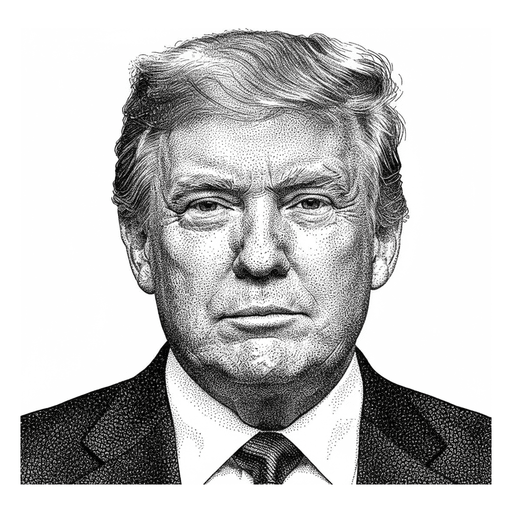
Woodcut portrait of Donald TrumpUnited States

Donald Trump

President of the United States

Said on 10 October that the United States may join Saudi strikes13. On 13 October accused the Houthis of trying to drive up oil prices before the midterms and wrote that he would act after the elections14.
What to watch
  • Any US strike in Yemen before or after 3 November
  • Whether he asks Turkey to intervene, as he suggested14
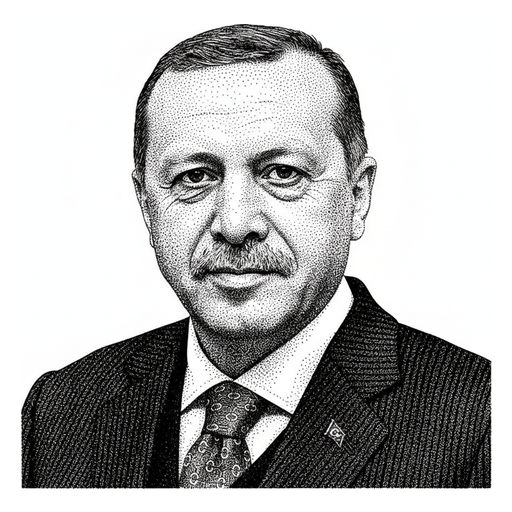
Woodcut portrait of Recep Tayyip ErdoganTurkey

Recep Tayyip Erdogan

President of Turkey

Turkey committed to deploy forces under the Mecca pact2. Sending troops abroad needs parliamentary approval, and parliament had not ratified the pact as of 9 October24.

What to watch
  • A ratification vote in the Turkish parliament
  • Whether Turkish forces arrive in the kingdom
Houthis

Yahya Saree

Military spokesman, Houthi movement (Ansar Allah)

Has warned airlines and passengers away from Saudi airports except for travel to Mecca and Medina, and said attacks deep inside Saudi Arabia will continue5,11.

What to watch
  • Named new target categories
  • Any claimed attack on US forces or ships
Fig. 2Where the strikes landed, 8 to 15 October
  • Houthi strikes in Saudi Arabia
  • Coalition strikes in Yemen
  • Strait and coast
RiyadhTaizTaizJeddahSanaaAdenSaudi ArabiaYemenEthiopiaOman
200 km

Borders: Natural Earth.

Sources: Reuters, October 14, 20269; Reuters, October 13, 20267; BBC News, October 13, 20265; BBC News, October 14, 202611

05What's Being Overstated

The Mecca pact, an imminent US war and a Houthi hold on Saudi oil are all larger in the coverage than in the record.

  • "The strikes are a test timed against the Mecca pact." A Turkish analysis argues the escalation is partly aimed at disrupting the pact before it consolidates29. The operational record fits the war on the ground better. The pact was activated on 5 October, the same day the Saudi-backed counteroffensive began24, and the Houthis describe each wave as retaliation for Saudi air strikes5,9.
  • "The Mecca pact puts Turkish and Pakistani troops into the war." Pakistan has said its forces and Turkey's will play a supporting role while Saudi forces do the fighting24. Turkey cannot send troops abroad without parliamentary approval24. The record so far is air defence and reconnaissance, not combat.
  • "The United States is about to strike." The president has said "we may" and that he would act after the elections13,14. No US strike in Yemen has been announced, and analysts quoted by Fortune describe the current US stance as waiting out the midterms30.
  • "The Houthis have crippled Saudi oil." Aramco headquarters was damaged, but sources told Reuters operations continued normally8. The Saudi cabinet also reported crude flows restored through the East-West pipeline12.
  • Casualty figures vary by source. The aviation authority reported 12 dead on 10 October26; later reporting gives 135,9. One outlet has reported at least 20 across the attacks30. This alert uses the official and Reuters figures.
06Why It Matters

The campaign targets the places Saudi Arabia needs foreigners to trust, and the main brake on it is a US decision that is on hold until after the elections.

The targets have shifted from remote facilities to the capital's airport and the oil company's head office. A Turkish analyst reads this as a move from symbolic resistance to coercion, aimed at a deal on salaries, recognition and an end to Saudi support for the Yemeni government29. The Washington Institute describes the same goal as a victor's peace that would include war reparations1.

Saudi air defence is stretched. According to reports cited by the Los Angeles Times, Saudi Arabia used some 86% of its 2,800 interceptor missiles during the Iran war, leaving almost 40017. Pakistani and Turkish air defence units free Saudi aircraft for the offensive in Yemen, but analysts doubt they can cover the whole country17,24.

The aviation impact will outlast the closure. Before the attacks the airport handled about 813 flights a day31. EASA's revised bulletin cites the risk of misidentifying civil aircraft while air defences are active, and applies to the whole Jeddah flight information region at all altitudes4. OPSGROUP's founder called the level of attack on civil aviation unprecedented15.

No nation, even one as capable and confident as ours, can safeguard them alone
Los Angeles Times, 13 Oct 202617

Amin Nasser, Aramco's chief executive, said this at the energy congress in Riyadh about the kingdom's energy supplies17. The next night the building that houses his office was hit8.

07Sector Impact

Airlines and Saudi-linked shipping carry the most immediate exposure; air defence suppliers stand to gain.

NegativePositiveMixed

Airlines serving Saudi Arabia

High

Negative: Suspensions now run into November and 2027 for some carriers

Saudi airports and ground services

High

Negative: Capital airport shut; EASA bulletin covers the Jeddah flight region at all altitudes

Marine war-risk insurance

Medium

Mixed: Higher premiums on Saudi Red Sea transits, and higher loss risk

Saudi energy and petrochemicals

Medium

Negative: Headquarters damaged; operations reported normal

Riyadh events and hospitality

High

Negative: Conferences go ahead with remote attendance and road travel

Air and missile defence suppliers

Medium

Positive: Interceptor stocks reported depleted
08Client Implications

Anyone with people, assets or events in Saudi Arabia should plan for disruption through at least the US midterms.

ReaderWhat to do
Private equity (PE) and venture capital (VC) firmsReview portfolio exposure to Saudi aviation, tourism and events, and to suppliers dependent on Riyadh airport. Treat late-October deal meetings in Riyadh as at risk of moving online.
Family officesSeparate Saudi energy exposure, where operations are reported normal, from consumer and travel exposure, where disruption is already visible. Watch the US decision after 3 November as the next turning point.
CorporatesPlan staff travel around Jeddah, Dammam and road or rail links, as the US Embassy suggests, and check whether policies cover missile debris and airport closures. Review Red Sea shipping cover for Saudi ports.
Law firmsExpect force majeure claims from airlines, event organisers and contractors, and review war-risk exclusions in aviation and marine policies. Note Saudi rules against filming or sharing impact sites10.
09Due Diligence Questions

The useful questions are about how long a counterparty can operate with Riyadh airport closed and Saudi airspace under warning.

  • Operations: Which staff, sites or deliveries depend on King Khalid International Airport, and what is the plan if it stays closed past 17 October?
  • Insurance: Do aviation, cargo and property policies exclude war, missile debris or acts of a non-state armed group, and what notice do insurers require for Saudi Red Sea transits?
  • Contracts: Which contracts carry force majeure or termination rights triggered by airport closures or travel advisories?
  • Security: Does the counterparty follow Saudi civil defence alerts, and does it have shelter procedures for staff in Riyadh, Dhahran and the south-west?
  • Energy supply: Does the business rely on Aramco supply from Red Sea terminals, and what alternatives exist if those terminals are hit?
  • Events: Are October and November events in Riyadh insured for cancellation, and is remote attendance planned?
10Vektora Assessment

The Saudi-Houthi exchange is likely to continue for weeks, and a US strike is possible after 3 November but is not the most likely outcome this year.

Confidence: medium. This assessment rests on 32 sources, including statements from Saudi Arabia's aviation authority, the US Embassy in Riyadh, EASA and the UN. The core facts (the airport strikes, the closure, the Aramco hit and the coalition strikes) are confirmed by Saudi officials and corroborated by Reuters, the BBC and AP26,7,11,27. The extent of the Aramco damage rests on unnamed Reuters sources8.

Primary assessment. Both sides have moved up a rung since 12 October, from airports to energy and from military targets to fuel supply. Neither has a clear way to win quickly. An energy risk analyst told Fortune that Houthi weapons are well protected underground30, and the Washington Institute judges a decisive military victory by either side highly unlikely1. The United States is the actor most able to change the balance, and the president has tied his decision to the period after the midterms14.

Strongest alternative reading. The Houthis may be reaching the limit of what they can sustain, and Saudi air defences, reinforced by Pakistan, Turkey and others, may cut the rate of hits within weeks1,24. On that reading the airport reopens on schedule and the exchange settles back into lower-intensity cross-border fire.

Where we diverge from consensus. Much coverage asks whether the United States will be drawn in. The more immediate driver is the ground war in Yemen: the Houthis tie each wave to Saudi air strikes5,9, so the tempo of the counteroffensive sets the tempo of attacks on Saudi cities. A US decision matters most if it changes that ground war, which air power alone is unlikely to do1.

  • What would make this wrong: a Houthi attack that kills US service members or hits a US ship, which could bring US strikes forward regardless of the elections. The Houthis have threatened American interests18; the death of a US national at the airport on 10 October did not change the US position26,14.
  • Or: a negotiated pause, for example through the mediation Iran has offered7, which would make the US calls moot.
11Appendix: Deep Background

This round grew out of the Iran war and the collapse of the 2022 truce, and the Houthis entered it better armed than in 2015.

The Saudi-Houthi war dates to 2014, when the Houthis took Sanaa; a Saudi-led air campaign followed, and the Yemen Data Project tracked some 377,000 deaths17. A truce signed in 2022 largely held until July 2026, when an air strike on Sanaa airport stopped an Iranian plane carrying Houthi officials from landing17. The Yemeni government claimed that strike; the Houthis blamed Saudi Arabia and resumed missile and drone fire5,17.

The Iran war raised the stakes. With the Strait of Hormuz largely closed, Saudi Arabia moved exports to its Red Sea coast, which the Houthi advance on the Bab al-Mandab then threatened17,5. The Houthis also used the truce years to expand drone manufacturing and diversify supply, per the Washington Institute1.

The United Kingdom told the UN Security Council in September that the Houthis bear full responsibility for the escalation and that Iranian support enables their attacks32. The Joint War Committee of the London insurance market widened its Red Sea listed area in late July after Houthi attacks on Saudi vessels6. Its circular JWLA-034 removed the exemption for transits along the Saudi Red Sea coast21.

Humanitarian conditions frame the ground war. The World Food Programme counts over 18 million Yemenis facing acute food insecurity, and the recent fighting has displaced 200,000, per the Washington Institute1.

Fig. 3

Deaths in strikes on King Khalid International Airport, by day

As first reported by Saudi authorities

051015128 October10 October11 October

Source: Saudi Press Agency (General Authority of Civil Aviation), October 11, 202626

Figures for 8 October25 and 11 October27. Later reporting puts the 10 October toll at 135.

I’ll be there after the elections, and I will never forget!
Reuters, 14 Oct 202614
12Sources
  1. The latest cycle of Saudi-Houthi escalation is different, and more dangerous. The Washington Institute for Near East Policy, October 14, 2026
  2. Saudi Arabia, Turkey and Pakistan activate Mecca Pact amid war with Houthis. Middle East Eye, October 5, 2026
  3. GACA: Suspension of operations at King Khalid International Airport extended for safety checks. Saudi Press Agency (General Authority of Civil Aviation), October 12, 2026
  4. Conflict Zone Information Bulletin CZIB-2026-09-R1: Airspace of Saudi Arabia. European Union Aviation Safety Agency (EASA), October 9, 2026
  5. Saudi minister vows 'serious response' to Houthi attacks on airports. BBC News, October 13, 2026
  6. Joint War Committee widens Red Sea war risk area. The Insurer, July 30, 2026
  7. Saudi Aramco headquarters attacked, limited fire reported. Reuters, October 13, 2026
  8. Saudi Aramco headquarters suffered extensive damage in Houthi attack, sources say. The Straits Times (Reuters), October 14, 2026
  9. Yemen's Houthis vow more attacks on Saudi airports, oil facilities after Aramco HQ hit. Reuters, October 14, 2026
  10. Security Alert: U.S. Mission to Saudi Arabia, October 13, 2026. US Embassy and Consulates in Saudi Arabia, October 13, 2026
  11. Houthi missile hits Aramco building after Saudi-led coalition strike on Yemen fuel depot. BBC News, October 14, 2026
  12. Saudi Arabia says Houthis will face consequences for attacks on Kingdom. Al Arabiya English, October 13, 2026
  13. US State Department: Washington condemns Houthi attacks, reaffirms Saudi security commitment. Kurdistan24, October 10, 2026
  14. Trump says Houthis trying to drive up oil prices ahead of midterms. Reuters, October 14, 2026
  15. Saudi capital’s airport to remain shut this week as airlines cancel flights. Reuters, October 12, 2026
  16. Airlines cancel flights to Saudi Arabia after Riyadh airport attacks. Reuters, October 13, 2026
  17. Saudi Arabia faces a grim choice as Houthis intensify attacks on airports and oil sites. Los Angeles Times, October 13, 2026
  18. Houthis claim Riyadh airport missile attack as US CENTCOM rejects Iran’s allegations (live). Gulf News, October 14, 2026
  19. Guterres condemns deadly Houthi strike on Riyadh airport. UN News, October 11, 2026
  20. UN rights chief condemns Houthi attacks on Saudi airports, urges de-escalation. Arab News, October 13, 2026
  21. Joint War Committee amends Listed Areas, including Saudi Arabia (circular JWLA-034). NNPC Marine Insurance, August 4, 2026
  22. Yemeni army targets Aramco, King Khalid Airport in Riyadh. Mehr News Agency, October 14, 2026
  23. Houthis renew attacks on King Khalid airport in Riyadh and Aramco facilities. Middle East Monitor, October 15, 2026
  24. Mecca pact: Pakistan and Turkey have answered Saudi Arabia’s call for help, but don’t expect them to fight the Houthis. The Conversation, October 9, 2026
  25. GACA: Two attacks target King Khalid International Airport facilities and a Saudia aircraft. Saudi Press Agency (General Authority of Civil Aviation), October 9, 2026
  26. GACA follow-up statement on the attack targeting King Khalid International Airport. Saudi Press Agency (General Authority of Civil Aviation), October 11, 2026
  27. Airport in Saudi capital of Riyadh is struck again as toll rises. AP, October 11, 2026
  28. Iraq will not become a launchpad for attacks on Saudi Arabia, vows prime minister. Arab News, October 14, 2026
  29. Israel as symbol, Saudi Arabia as target: Houthis’ calculus. Daily Sabah, October 15, 2026
  30. The Houthis’ Saudi attacks are unprecedented. The US response is to wait until the midterms. Fortune, October 15, 2026
  31. EU aviation body widens Saudi airspace warning after Houthi attacks. Reuters, October 9, 2026
  32. The Houthis bear full responsibility for the escalation in Yemen: UK statement at the UN Security Council. UK Foreign, Commonwealth and Development Office, September 15, 2026