85%
USTR opens the public hearing on the 14 excess-capacity investigations on its scheduled start date, as shown in the USTR docket or press releases.
Source: Wiley Rein, November 25th, 20261
Day counts are worked out from today's date when the page opens.
The US has proposed new tariffs on 14 economies, but none of them is in force yet. On November 25th, 2026 the Office of the US Trade Representative (USTR) found that industrial policies in 14 economies burden US commerce2. USTR is led by Jamieson Greer, and the 14 include China, the European Union (EU), Japan, Vietnam and Singapore2. It proposed tariffs from 15% for the EU, Japan, Korea, Switzerland and Taiwan to up to 35% for Vietnam2. Written comments are due January 5th, 2027 and a public hearing starts January 25th, 20271. US importers pay the duties. Exporters in the 14 economies risk losing price room in the US market.
For most of the 14, the headline rate is a ceiling that tracks a trade deal they already signed. The new duty replaces, rather than adds to, the forced-labor tariffs of 10% or 12.5% that USTR imposed in July3. Countries pay the higher of the two rates, not the sum4. Several rates also move with talks. Vietnam falls to 20% and India to 17% if each signs a deal1. The EU, Japan and Switzerland can rise to 20% if USTR judges their commitments not enough1.
China is where stacking is real and where the final number is most open. China's proposed 20% would be added to duties of roughly 25% from President Donald Trump's first term3. If the US-China truce that expires on January 10th is not extended, USTR's alternative rate for China is up to 40% when combined with the forced-labor tariff1,5. Trump and Chinese President Xi Jinping are expected to meet in December6,7.
USTR found the practices of 14 economies actionable under Section 301 and proposed tariffs for public comment2. The duties would not take effect until after the January 25th hearing3.
The European Commission rejects the premise that Europe is a source of overcapacity8. Singapore said it is very disappointed9. China called overcapacity a false proposition10. Tokyo called the proposal regrettable6.
Stephen Innes, writing for Investing.com, puts the rise in the US effective tariff rate at about 1.4 percentage points, from 7.8% to 9.2%11. Fitch Ratings expects the rate to move from around 7% toward double digits12.
The administration chose Section 301 after the Supreme Court in February struck down its broad duties under a national emergencies law3. The Court of International Trade is expected to rule soon on a challenge to earlier Section 301 tariffs7.
Mechanism: high confidence. The notices set out how each rate works and when it can change2,1. Horizon: medium confidence. The China truce, the Trump and Xi meeting and the Vietnam and India talks all fall in the next two months, and any of them can move the dates6.
Analyst assessment. Each call is scored once its date passes.
USTR opens the public hearing on the 14 excess-capacity investigations on its scheduled start date, as shown in the USTR docket or press releases.
The US and China publicly extend their trade truce beyond its expiry date, as announced by the White House, USTR or China's Ministry of Commerce.
The US and Vietnam announce a concluded Agreement on Reciprocal Trade, as published by USTR or Vietnam's Ministry of Industry and Trade.
No final excess-capacity Section 301 tariff takes effect on goods from any of the 14 economies, per the Federal Register.
USTR's final action sets a combined Section 301 rate above 20% on all non-exempt Chinese goods, per the Federal Register.
What moved is a formal finding. USTR determined that the practices of 14 economies are unreasonable and burden US commerce, which makes them actionable under Section 3012. Section 301 of the Trade Act of 1974 lets the trade representative impose tariffs in response to unfair trade practices, after a review and consultations4. The investigations began on March 11th, 2026 and covered 16 economies2. USTR took testimony from nearly 140 witnesses and 1,070 comments2.
Proposed, not imposed. Every rate in the notices is a proposal open for comment. USTR told Malaysia the rate was only indicative, with a final rate due in the first quarter of 20276.
Percent, before comments and hearing
Source: Office of the United States Trade Representative, November 25th, 20262
Rates for most economies are net of existing Section 301 tariffs. China's 20% applies to goods not in the notice's annexes.
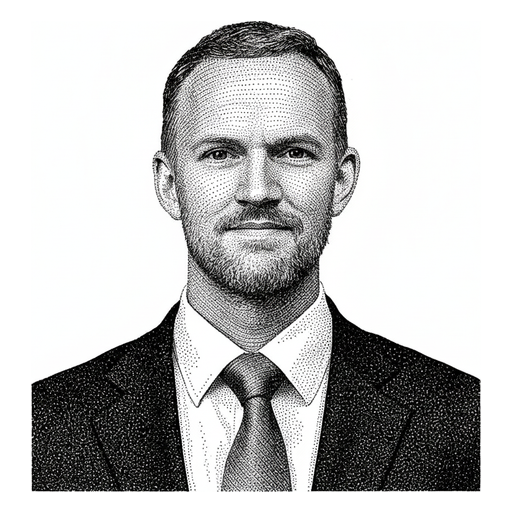 United States
Made the determinations and proposed the rates2. He told CNBC the caps match trade deals reached over the past year3.
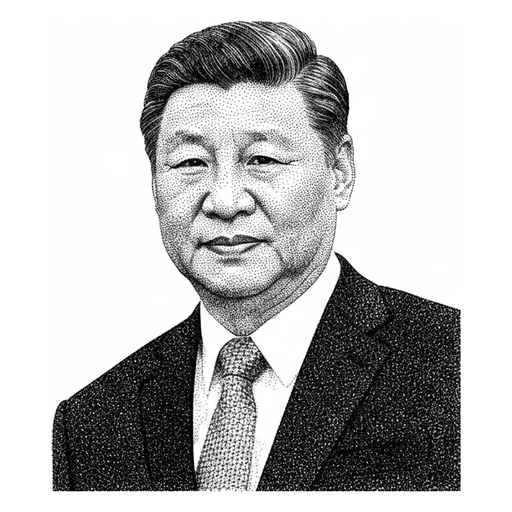 China
His truce with Trump expires on January 10th5. The two are expected to meet in December6,7.
 Singapore
Said a 20% rate would lift the effective levy on Singapore's US exports to 10.3% from 7.8%9.
Portraits after photographs. Gan Kim Yong: Foreign, Commonwealth & Development Office, via Wikimedia Commons, CC BY 4.0.
Olof Gill, deputy chief spokesperson of the European Commission, responded on November 25th, 20268:
We will study the findings. At the same time we strongly reject the premise that Europe is a source of structural overcapacity.
The administration is rebuilding its tariff schedule on Section 301, a law that has been tested in court, after the Supreme Court ruling in February3. Nathaniel Halvorson, a former USTR official now at the law firm Baker McKenzie, told Reuters that bipartisan support for countering excess capacity would make the tariffs hard to undo3.
Senator Ron Wyden, an Oregon Democrat expected to chair the Senate Finance Committee from January, said he would use every tool at his disposal to end the tariffs3.
For deal partners, the practical change is small. Innes estimates Thailand's effective rate rises from 4.7% to about 5.7% and Taiwan's from 2.2% to 2.7%11. For China, the change is larger, because goods such as semiconductors and smartphones would again face an additional 10% tariff11.
Allies push back on the method. L. Daniel Mullaney, a former assistant US trade representative now at the Atlantic Council, said that punishing allies almost as much as China will not help build a common front on excess capacity7.
High
Low
High
Medium
Low
| Reader | What to do |
|---|---|
| Private equity (PE) and venture capital (VC) firms | Test portfolio companies that import from China against the 40% alternative rate and the extra 10% on technology goods1,11. |
| Family offices | Weight exposure to Vietnam and India by the outcome of their trade talks, which decides between the low and high rates2. |
| Corporates | File comments by January 5th, 2027 if a product belongs on an exemption list1. Check each annex by country of origin1. |
| Law firms | Review whether goods under Section 232 tariffs from China lose their shield under the China notice1. |
Confidence: medium. The mechanism is documented in USTR's own notices and three law-firm and news readings that agree on it2,1,4. The timing depends on the China truce and on talks with Vietnam and India, which no source can settle yet6.
Primary assessment. For the EU, Japan, Korea, Taiwan and Switzerland, the proposal keeps rates at levels their deals already set3. The open questions are China, Vietnam, India and Singapore. For those four, the January calendar decides the number2.
Strongest alternative reading. Innes argues the proposal is less aggressive than expected and that the inflation risk is overdone, since the effective rate stays below the 11% that applied before the Supreme Court ruling11. We agree for most partners. We diverge on China, where the extra 10% on technology goods and the missing Section 232 exemption add cost11,1.
What would make us wrong. A truce extension that also caps China's combined rate below 20%, or final notices that drop the alternative rates.
For most partners the notice sets a combined rate. A Bangladeshi product already paying a 10% forced-labor tariff would pay an extra 8%, for a combined Section 301 rate of 18%1. For the EU, Japan, Korea, Switzerland and Taiwan the 15% also absorbs the most-favored-nation (MFN) duty, the ordinary customs rate1.
For China, goods paying the 12.5% forced-labor tariff would pay an extra 7.5% to reach 20%1. Under the alternative, they could pay an extra 27.5%, for a combined 40% under the two Section 301 actions1. The tariffs from the first-term technology transfer investigation continue on top1.
Greer set out the case in USTR's announcement on November 25th, 20262:
For decades, many of our trading partners have adopted industrial strategies built on targeting manufacturing, wage and labor suppression, financial and other support, non-market economy inputs, and other market distorting practices that tilt the trade balance in their favor while eroding America’s manufacturing base,
Office of the United States Trade Representative2
Percent, estimates by Stephen Innes
Source: Investing.com, November 26th, 202611