Article 69 · Energy
Data centers accounted for 46 percent of recent grid auction costs, Pennsylvania says. State officials decide who pays
AI data centers are server buildings that can draw as much power as 100,000 homes. State officials decide who pays for the grid upgrades they need, and voters picked several of those officials on November 3rd, 2026.
Why a state capital can set a household power bill
A data center is a building full of computer servers that store data and run online services, including AI tools. The largest ones need large amounts of electricity and cooling.
The International Energy Agency estimates that a typical AI data center uses as much electricity as 100,000 homes. The GridSight, a research site that tracks data center votes, cites that estimate.
Someone has to pay for the grid upgrades that this demand needs. The New York governor's office says large new loads such as data centers can put those costs on ratepayers.
In the US, the Federal Energy Regulatory Commission (FERC) oversees wholesale power. State-level utilities set the retail rates that homes and businesses pay, Quartz reports.
That puts many of the decisions in state capitals such as Austin, Harrisburg, Columbus and Atlanta. Officials there decide which projects get permits and grid connections, and who pays for the upgrades. Figure 1 shows the lever each of the four states used.
Our October 23rd, 2026 analysis traced those levers before the US midterm elections. The elections were held on November 3rd, 2026, and they changed who holds several of them.
FERC has acted on data centers too. In mid-June, FERC ordered regional grid operators to show within two months how their pricing structures can make way for more data centers, Quartz reports.
What Pennsylvania's data centers already cost
Pennsylvania is on the grid run by PJM Interconnection, a regional grid operator. Across PJM's last four capacity auctions, data centers accounted for nearly $29.4 billion in capacity charges.
That was 46 percent of total auction costs, State Capital Lobbyist, a Pennsylvania policy news site, reports. It says this demand has already had a measurable effect on Pennsylvania consumers.
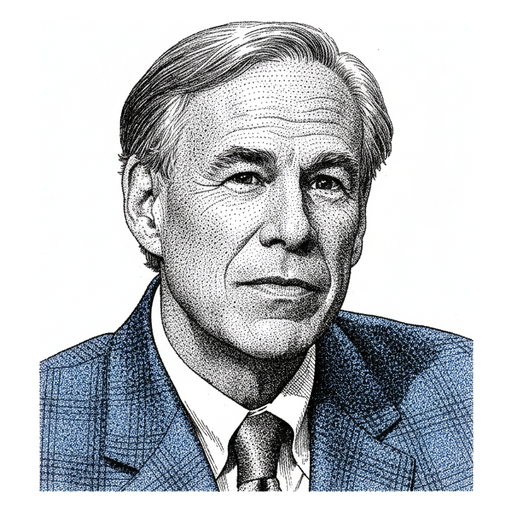
Governor Josh Shapiro, pictured below, signed Executive Order 2026-05 on August 18th, 2026. It covers data centers with peak demand above 25 megawatts.
Under the order, developers must bear all transmission, distribution, interconnection and network-upgrade costs that their project's load causes, Greenberg Traurig, a law firm, writes.
A developer that wants a state permit review must sign a binding Consent Order and Agreement with the Department of Environmental Protection. The project also needs local approval, the governor's office says.
Shapiro won a second term on November 3rd, 2026, Spotlight PA, a Pennsylvania news site, reports. Democrats, his party, also won both chambers of the state legislature.

Josh Shapiro
Governor of PennsylvaniaSigned Executive Order 2026-05 on August 18th, 2026. Won a second term on November 3rd, 2026.
Texas paused grid hookups, then elected a new governor
ERCOT, the Electric Reliability Council of Texas, is the state's grid operator. The Public Utility Commission of Texas (PUCT) is the state regulator.
On August 3rd, 2026, Governor Greg Abbott ordered the PUCT and ERCOT to audit every data center seeking a grid connection. His office said ERCOT was considering more than 474 gigawatts of requests.
That is more than five times the state's record peak demand. About 90 percent of the new requests came from data centers, his office said. Any project that fails the requirements must be denied a connection.
The Texas Commission on Environmental Quality is the state's environmental permitting agency. On September 21st, 2026, Abbott told it to halt all permits sought by data centers until the audit ends.
ERCOT plans to file its audit reports on December 10th and present them to the PUCT on December 17th. Capacity, a data center trade publication, reports the dates.
On November 3rd, 2026, Gina Hinojosa defeated Abbott in the race for governor, the Texas Tribune reports. She takes office on January 19th, 2027. The Legislature convenes on January 12th, 2027.
Hinojosa, pictured below with Abbott, pledged a moratorium on all data center approvals until the Legislature passes laws to protect Texans. She also said she would push to keep Texans from paying more for electricity because of data centers.
Abbott controls the data center orders until she takes office, King & Spalding, a law firm, writes. It says both candidates called for data centers to bear more of their own costs.
Greg Abbott
Governor of Texas until January 19th, 2027Ordered the grid audit on August 3rd, 2026 and the permit halt on September 21st, 2026.
Gina Hinojosa
Governor-elect of TexasPledged a moratorium on data center approvals until the Legislature passes new laws.
Ohio: a utility rule and the most local votes
On July 9th, 2025, the Public Utilities Commission of Ohio adopted a data center tariff for AEP Ohio, the local utility. A tariff is a utility's published set of prices and terms.
Under it, a data center pays a one-time fee of between $10,000 and $100,000 for a load study. A customer that cancels must repay 100% of the buildout costs, AEP Ohio says.
An industry group has challenged the tariff. The Ohio Supreme Court was weighing that challenge, RTO Insider, an electricity industry publication, reported on October 15th, 2026.
Ohio held 21 of the 41 local data center measures on the November 3rd, 2026 ballot, The GridSight counts. Figure 2 shows four results around Columbus. Granville banned data center construction, and Grove City now requires a public vote on large projects.
Amy Acton, elected governor of Ohio on November 3rd, 2026, campaigned on a conditional moratorium on new data centers. It would last until developers cover all their utility costs, among other conditions, Capacity reports.
Republicans kept majorities in both chambers of the Ohio legislature, according to Capacity. Acton has not said whether she would act by executive order.
Yes votes on four data center limits near Columbus, Ohio
Who sets Georgia's power rates after November 3rd
The Georgia Public Service Commission (PSC) is a five-member elected body. It sets rates and rules for Georgia Power, Atlanta News First reports. Commissioners have final say over how much customers pay.
Two seats were on the November 3rd, 2026 ballot. Commissioner Peter Hubbard kept his District 3 seat, and Sheila Edwards won District 5, Georgia Public Broadcasting reports.
With Commissioner Alicia Johnson, the two hold three of the five seats. That gives Democrats a majority on the commission for the first time in 30 years, The Current, a Georgia news site, reports.
Georgia Power's next long-term plan is due in 2028. A rate case follows, the first since 2022, in which the commission and the utility settle what customers pay. Commissioners expect an earlier update to the plan to supply data centers.
Keisha Lance Bottoms, elected governor of Georgia, has promised a temporary statewide pause on data centers. Capacity reports that the pause would assess the effect on electricity bills.
Local votes in 10 states went toward limits
Voters in 10 states decided 41 local data center measures on November 3rd, 2026. In 40 of them, the result went toward limits on development, The GridSight's unofficial count shows.
All 13 questions that would have helped a project failed. Some asked voters to uphold a rezoning that officials had already approved. In Wilmington, Ohio, voters overturned four such rezonings near a planned Amazon Web Services campus.
The one result that went toward development came in Harwood, North Dakota. Voters there rejected an extra review step for large industrial projects.
Dates on the record
Most of the next dates fall in Texas, where the audit ends before the new governor takes office. Figure 3 lists them, with Georgia's next long-term power plan.
Two more local votes, on bonds for data centers in Clarksville, Arkansas, are set for December 1st, 2026, The GridSight lists.
What comes next
- December 10th, 2026ERCOT plans to file its data center audit reports.
- December 17th, 2026ERCOT plans to present the reports to the PUCT.
- January 12th, 2027The 90th Texas Legislature convenes.
- January 19th, 2027Gina Hinojosa takes office as governor of Texas.
- 2028Georgia Power's next long-term plan is due at the PSC.