Article 45 · New York's law on AI chatbots and children
New York bans a dozen chatbot behaviors toward kids, but reports give three start dates
New York's new law bars AI chatbots, the conversation programs sold as companions, from a dozen behaviors with users under 18. The state attorney general can sue. Reports disagree on when it starts.
What New York banned
On October 28th, 2026, Kathy Hochul, the governor of New York, signed a law that limits how AI chatbots may talk to children. A chatbot is a program that holds a written conversation with a person. The Associated Press (AP), a news agency, calls the products it covers companion chatbots. The law protects every user under 18.
The bill is S.9051B. Letitia James, the New York attorney general, helped develop it and enforces it. State Senator Kristen Gonzalez sponsored it in the Senate. Common Sense Media, a children's media watchdog group, backed it. Hochul and James are pictured below.

Kathy Hochul
Governor of New YorkSigned the bill on October 28th, 2026.
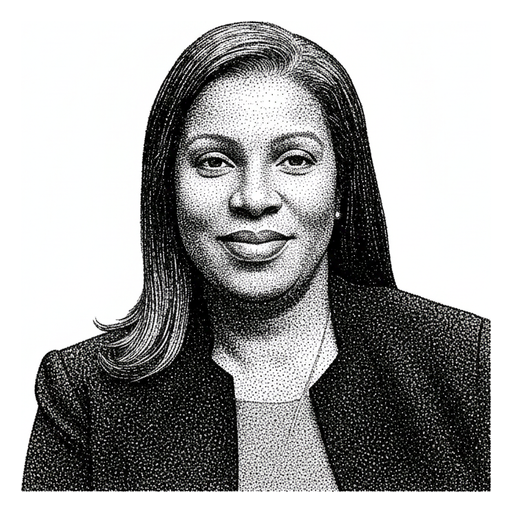
Letitia James
Attorney General of New YorkHelped develop the bill and can sue companies that break it.
What chatbots may not do to children
AP counts a dozen definitions of unsafe companion features. The governor's office summarizes the ban in plain terms. Companies may not offer these features to anyone under 18, or to any user until the company has confirmed the user is not a minor.
- Pretending to be a real person, to be alive or to have human emotions.
- Claiming a personal, romantic, professional or authority-figure relationship with a child.
- Asking unprompted emotional questions, or using a child's private health information from earlier conversations.
- Promoting or helping with suicide, self harm, eating disorders or drug and alcohol use.
- Encouraging children to keep secrets or isolate themselves.
- Any sexually explicit content.
Who enforces it, and what it can cost
James's office can sue a company that breaks the rule. It can ask a court for civil penalties of up to $25,000 per violation. It can also seek damages, restitution and the destruction of unlawfully collected data or any AI model trained on it.
The law requires age checks. Companies must offer more than one way to verify age, including at least one that does not depend only on a government ID. They must delete age information after they use it. The attorney general must also run a public website where New Yorkers can file complaints.
Justine Gluck, a policy analyst at the Future of Privacy Forum, a nonprofit focused on data protection and AI governance, told AP that several categories are broadly worded or undefined. That raises questions about "where ordinary conversational responsiveness ends and prohibited behavior begins," she said.
Three start dates
The sources disagree on when the law starts.
The governor's release says only that the rules apply "in the coming months." Captain Compliance, a site that explains compliance rules, notes that a New York approval memo often means agreed amendments follow. It also puts the 180th day at late April 2027.
- AP reports that the law takes effect January 1st.
- News10, an Albany television station, reports June 1st, 2027, and says the date gives tech companies time to comply.
- The bill text on the State Senate website says the law takes effect on the 180th day after it becomes law.
Will anyone sue?
The sources we found report no lawsuit against the law and no company fined under it.
NetChoice, an internet industry trade group, has argued in testimony on a Connecticut bill that limits on AI companions and implicit age checks break the First Amendment as content-based speech rules.
Washington is also in play. A White House order of December 11th, 2025 told the US attorney general to set up an AI Litigation Task Force to challenge state AI laws. The same order says the federal recommendation it asks for shall not propose preempting state laws on child safety protections.